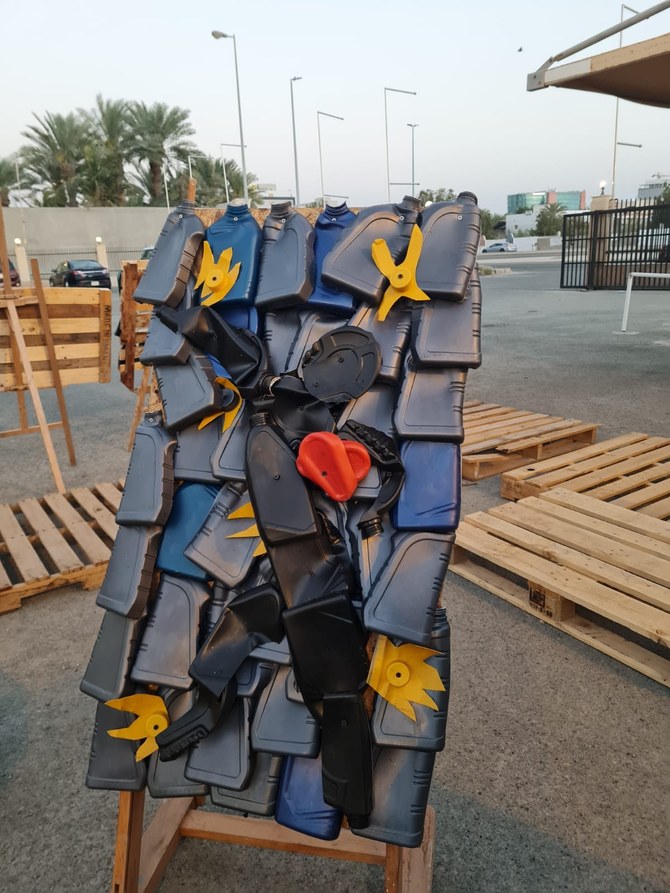


JEDDAH: Jordanian American artist and activist Meedo Creisat is on a mission to transform recycling into art in Saudi Arabia, with a belief that there are “no limits” to creating beauty from waste.
Creisat, born in Jordan and raised in the US, works as an interior designer in Jeddah, but prefers to label himself an “activist by passion,” with his specialty lying in making recycled art through a process known as upcycling.

He has taken part in art exhibitions around the world, including in the Kingdom. He also moved to Bristol, England, and took part in a select educational program offered by the UN.
Creisat began crafting beautiful structures from an early age. He now uses materials that others throw away to make sculptures, paintings and furniture.
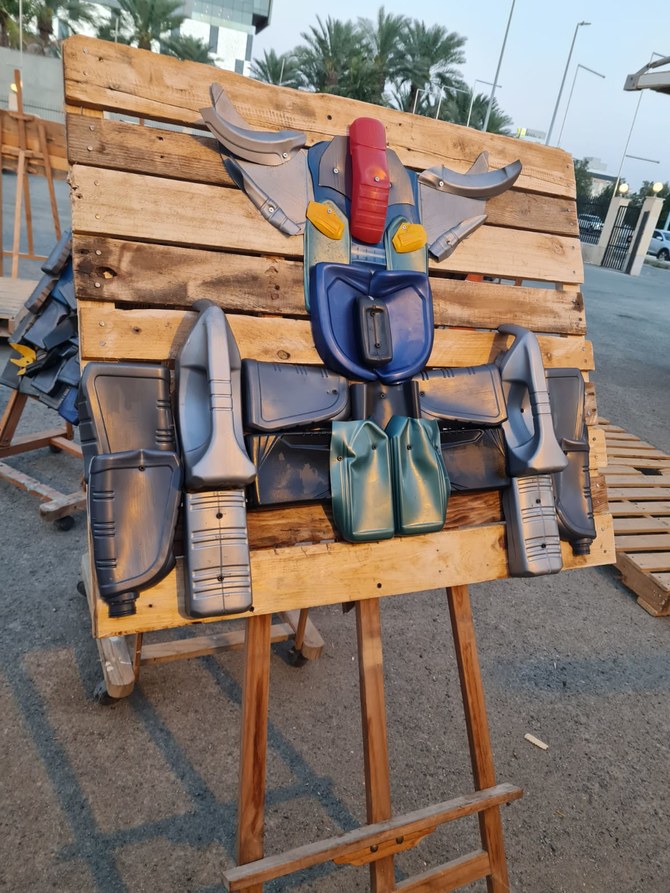
His typical working materials include oil cans, toys, cables, plastic cutlery, scrap metal and colored pieces of plastic.
Arab News caught up with Creisat during his solo event at the Eco-Friendly Exhibition, which concluded on Saturday.
The event was organized by the Saudi Environment Society at the Saudi Arabian Society for Art and Culture.
Creisat said: “Basically, it started when my wife, who works as a professor at Jeddah University, and I rented a place with an empty roof, and by that time, our social life was very limited. We thought to use our free time in something positive and also make use of our rooftop. So we started to go out to the streets of our neighborhood and stop by garbage cans to pick up trash to upcycle these wasted items.
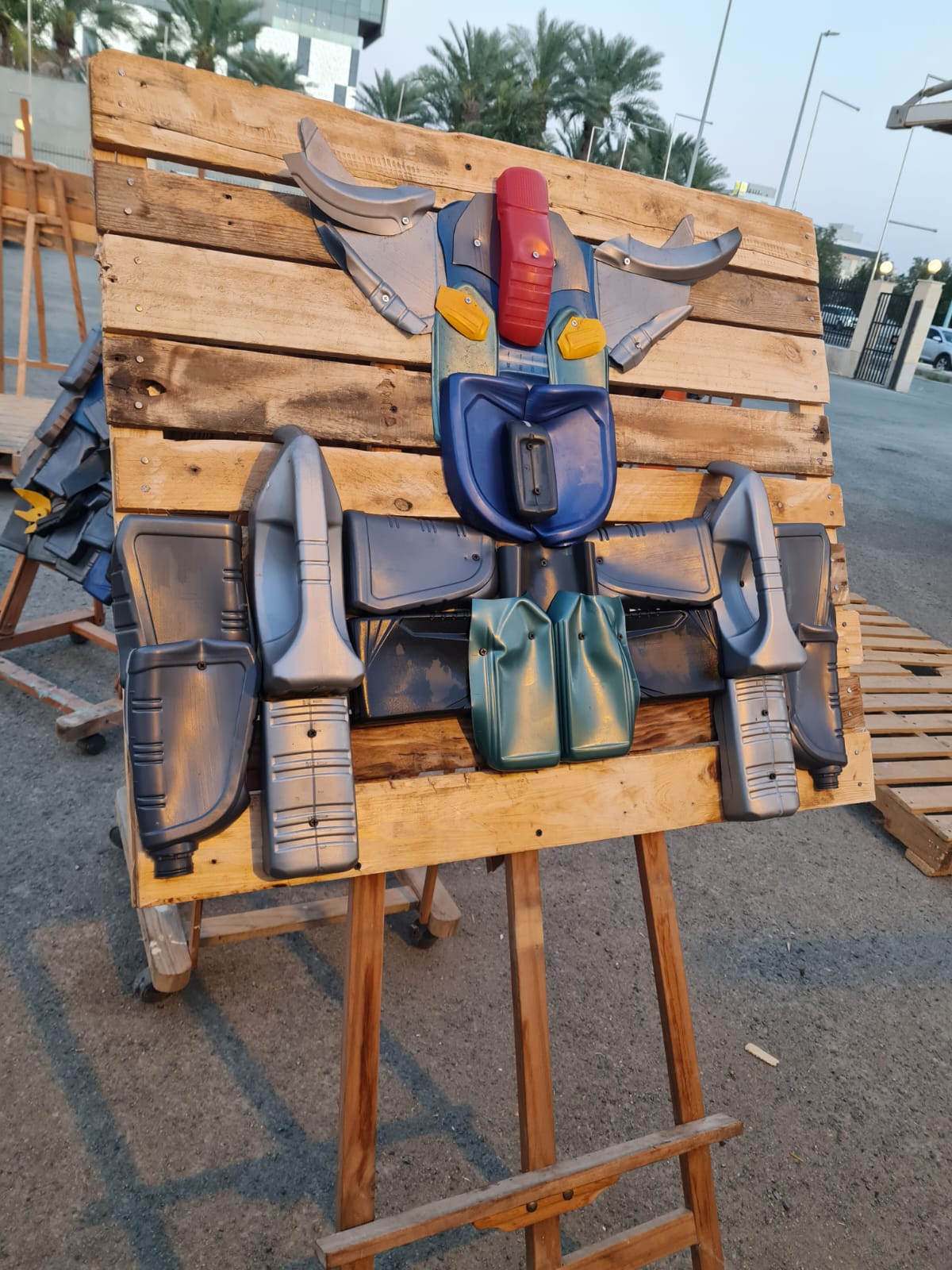
“Artists can use just about any material to create a masterpiece — and by any, I mean even junk. It is called recycled art and is created using common things that you usually throw in the junk, which makes recycled art not just beautiful, but also eco-friendly as well,” he added.
He said that the Kingdom has faced huge issues with waste and that his initiative aims to promote eco-friendly behaviors to tackle the problem.
“With this exhibition, I simply thought to myself that I’m going to have to do something visually appealing, so people will look at it and explore the story afterward and discover what it’s made from,” he said.
“I wanted to make sure it didn’t look like rubbish. I hope, in some small way, I can help communicate to others the issue and emphasize the issue of waste in the streets, and in our neighborhood,” he added.
While living for 15 years in the Kingdom, Creisat focused on projects that reflect his love of history and passion for environmental sustainability.
Against the historical backdrop of the ancient Al-Hajr site in AlUla, Creisat helped develop the AlUla Trails experience at the 2019/2020 Winter at Tantora Festival.
He created environmentally friendly installations for the trails, including furniture, shelters and enclosures using locally sourced, reclaimed materials.
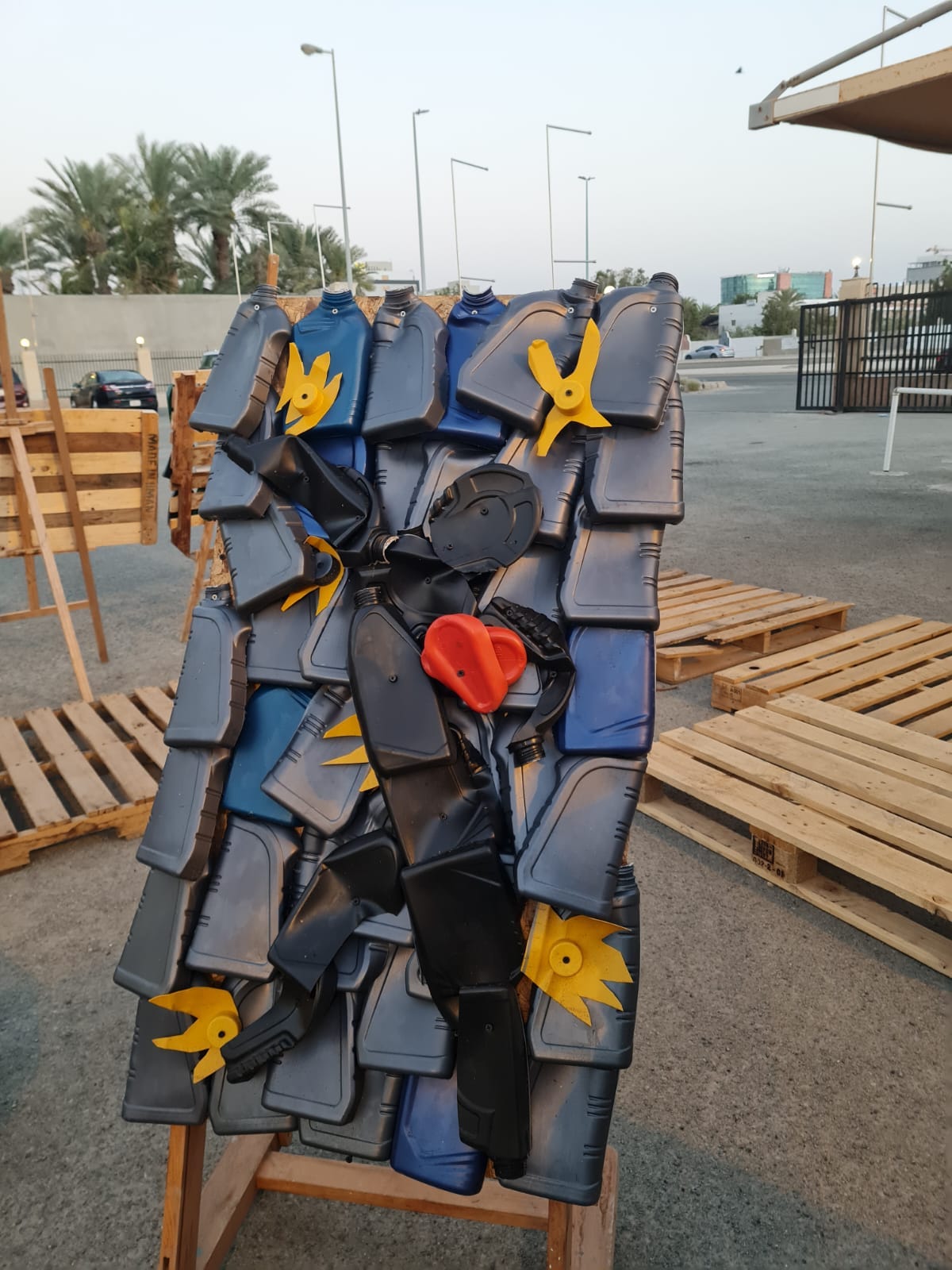
In May-July 2021, Creisat further explored the potential of reclaimed materials in his solo Meedo/Redo art exhibit at the Qaf Gallery in Jeddah.
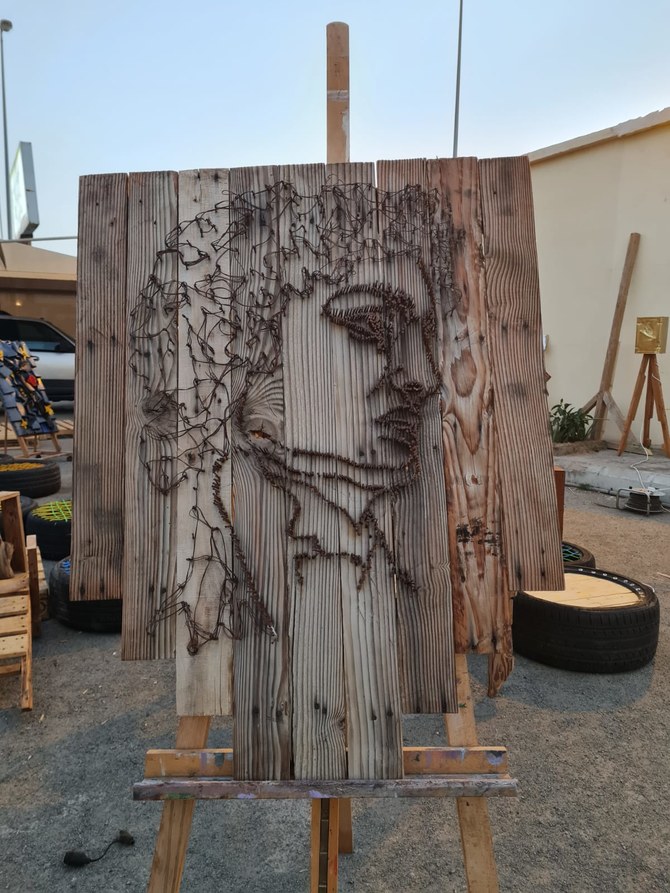
The exhibit featured numerous artworks made from reclaimed shipping pallets, motor oil cans, site-specific lighting and furniture pieces to create a fully immersive environment that encouraged visitors to reflect on themes of consumerism, waste, ecology and recycling.
Saudi interior designer and art activist Dima Al-Rifai, a member of the House of Arts, played a major role in organizing Creisat’s exhibition and spreading the message of the House of Arts to all people.
She told Arab News that the House of Arts has volunteer expats who work in international schools, King Abdullah University of Science and Technology, private universities in Jeddah, as well as government ministries.
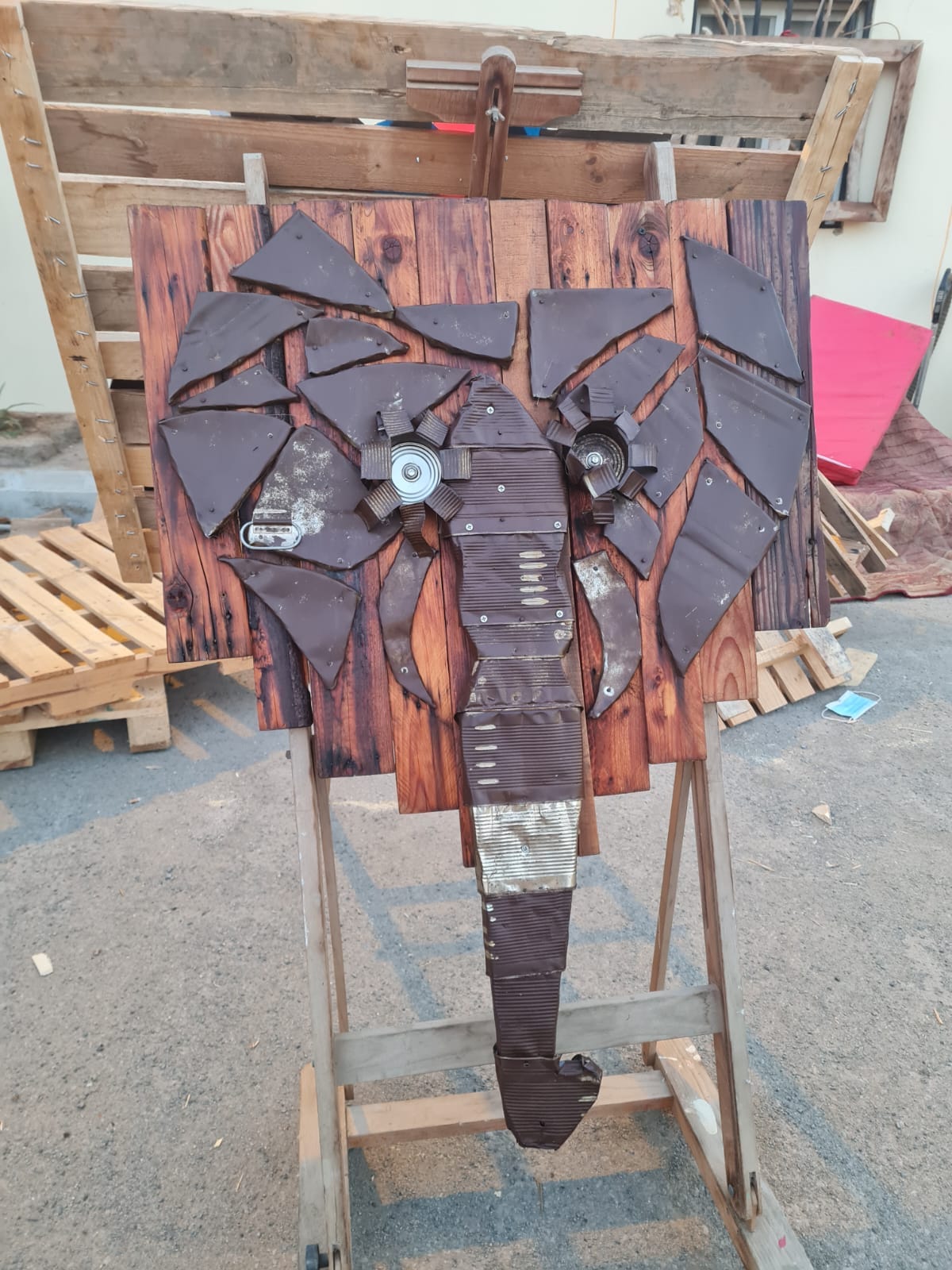
“We are social people. We all help each other to collect these wasted items and materials from trash cans. We focus on rebuilding these items to have a function rather than throw them away. We believe that manufacturers have a hard time creating these items, so we took the initiative to upcycle these wasted items for a creative art exhibition to convey our message to people,” she said.
She added that instead of adding to existing waste or ignoring it, artists like Creisat give waste a “new, sophisticated form” for everyone to admire and enjoy.
“Our vision is to make a workshop to teach children who are the targets of our initiative, because knowledge is planted in children better than adults,” Al-Rifai said.
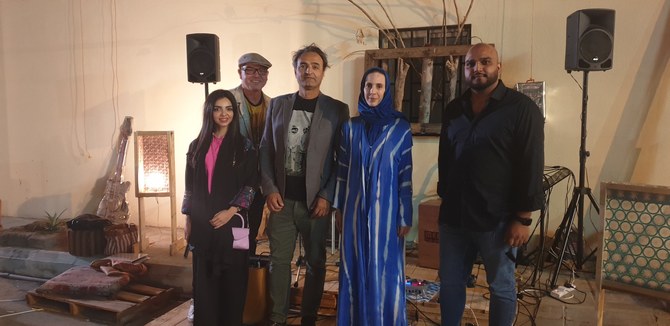
In addition to donating waste items and material to artists, members of the House of Arts also contributed to an open music night on the sideline of Creisat’s exhibition.
His exhibition featured local singers such as Lucy & Andy, DJ Barrystrew, Golda, Diem & Andy, Farhan, Abdulaziz, Zeo_Bas, The Pineapples, and Walter & Andy.