

Former Iran detainee criticizes UK PM’s ‘opportunism’ after release

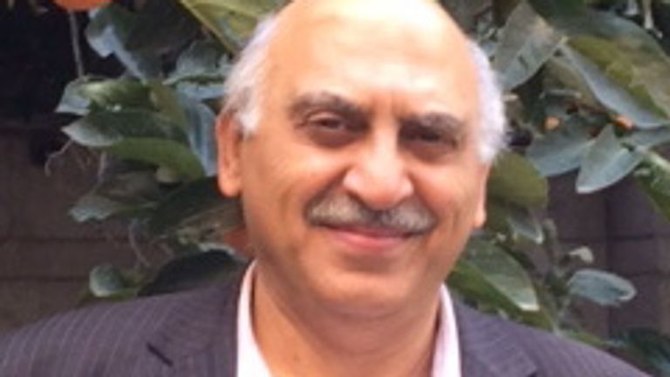
Anoosheh Ashoori was released from prison after his family paid Tehran $35,000. (Amnesty International)
Short Url
Updated 25 March 2022
Follow

Former Iran detainee criticizes UK PM’s ‘opportunism’ after release

  • Anoosheh Ashoori was released from detention last week, after 5 years behind bars
  • ‘He did not expend even five minutes to give a telephone call to my family … Now he’s eager to see us. How would you interpret that?’

LONDON: A British-Iranian dual national recently released from a lengthy detention in Iran has criticized British Prime Minister Boris Johnson for only getting in touch with him after his release.

Anoosheh Ashoori, 67, was held in Tehran’s notorious Evin prison for five years, allegedly for spying on behalf of the Israeli government.

He returned to the UK last week alongside Nazanin Zaghari-Ratcliffe, a fellow British-Iranian national.

Ashoori told Sky News that he felt let down by the British leader, but praised the “fantastic job” that civil servants had done behind the scenes.

In 2020, he had managed to record an audio message while behind bars pleading for Johnson’s help.

“I risked my safety but I managed to convey that message to him,” said Ashoori.

“Unfortunately he did not expend even five minutes to give a telephone call to my family.” 

However, on Monday, Ashoori received an invitation to meet with the prime minister.

He told Sky News: “Now he’s eager to see us. How would you interpret that?

“I think that there’s a bit of opportunism involved in it.”

Asked if he would meet with the prime minister, Ashoori said: “I’m not sure.”

Though both London and Tehran deny it, it is thought that the release of Ashoori and Zaghari-Ratcliffe was contingent upon the payment of a historic debt owed to Iran worth around $530 million.

Ashoori said: “That was not a ransom, that was a debt that the British government owed and it should have been paid. And if it had been paid, none of this would have happened.”

He also revealed that his family had to pay a £27,000 ($35,000) fine for his release — and that they received no assistance from the Foreign Office on this, instead being forced to max out credit cards.

A crowdfunder established to help the family pay has now raised more than £38,000, leaving Ashoori “bowled over by the generosity, support, and absolute kindness of strangers.”

The remaining money will be used by the family to help campaign for those who remain in Evin prison to be released, including Morad Tahbaz, a British-US national who Ashoori knows personally.

Ashoori told Sky that he feels a responsibility to help Tahbaz — whose plight was also raised by Zaghari-Ratcliffe — having witnessed prison conditions that include bed bugs, the smell of open sewers, and dental care from a dentist known for “pulling 10 teeth in 10 minutes.” 

A government spokesperson told Sky News: “From the prime minister down, this government has been committed to securing the release of Anoosheh Ashoori.

“It was always entirely in Iran’s gift to do this, but UK ministers and diplomats were tireless in working to secure his freedom and are delighted that he is now home.

“Our consular team were in close regular contact with Anoosheh’s family, with officials available to them at any time throughout his ordeal.”


After nearly 7 weeks and many rumors, Bolivia’s ex-leader reappears in his stronghold

Updated 20 February 2026
Follow

After nearly 7 weeks and many rumors, Bolivia’s ex-leader reappears in his stronghold

  • Morales was Bolivia’s first Indigenous president who served from 2006 until his fraught 2019 ouster and subsequent self-exile
  • He dismissed rumors fueled by local politicians and fanned by social media that he would try to flee the country

LA PAZ: Bolivia’s long-serving socialist former leader, Evo Morales, reappeared Thursday in his political stronghold of the tropics after almost seven weeks of unexplained absence, endorsing candidates for upcoming regional elections and quieting rumors he had fled the country in the wake of the US seizure of his ally, Venezuela’s ex-President Nicolás Maduro.
The weeks of hand-wringing over Morales’ fate showed how little the Andean country knows about what’s happening in the remote Chapare region, where the former president has spent the past year evading an arrest warrant on human trafficking charges, and how vulnerable it is to fears about US President Donald Trump’s potential future foreign escapades.
The media outlet of Morales’ coca-growing union, Radio Kawsachun Coca, released footage of Morales smiling in dark sunglasses as he arrived via tractor at a stadium in the central Bolivian town of Chimoré to address his supporters.
Morales, Bolivia’s first Indigenous president who served from 2006 until his fraught 2019 ouster and subsequent self-exile, explained that he had come down with chikungunya, a mosquito-borne ailment with no treatment that causes fever and severe joint pain, and suffered complications that “caught me by surprise.”
“Take care of yourselves against chikungunya — it is serious,” the 66-year-old Morales said, appearing markedly more frail than in past appearances.
He dismissed rumors fueled by local politicians and fanned by social media that he would try to flee the country, vowing to remain in Bolivia despite the threat of arrest under conservative President Rodrigo Paz, whose election last October ended nearly two decades of rule by Morales’ Movement Toward Socialism party.
“Some media said, ‘Evo is going to leave, Evo is going to flee.’ I said clearly: I am not going to leave. I will stay with the people to defend the homeland,” he said.
Paz’s revival of diplomatic ties with the US and recent efforts to bring back the Drug Enforcement Administration — some 17 years after Morales expelled American anti-drug agents from the Andean country while cozying up to China, Russia, Cuba and Iran — have rattled the coca-growing region that serves as Morales’ bastion of support.
Paz on Thursday confirmed that he would meet Trump in Miami on March 7 for a summit convening politically aligned Latin American leaders as the Trump administration seeks to counter Chinese influence and assert US dominance in the region.
Before proclaiming the candidates he would endorse in Bolivia’s municipal and regional elections next month, Morales launched into a lengthy speech reminiscent of his once-frequent diatribes against US imperialism.
“This is geopolitical propaganda on an international scale,” he said of Trump’s bid to revive the Monroe Doctrine from 1823 in order to reassert American dominance in the Western Hemisphere. “They want to eliminate every left-wing party in Latin America.”