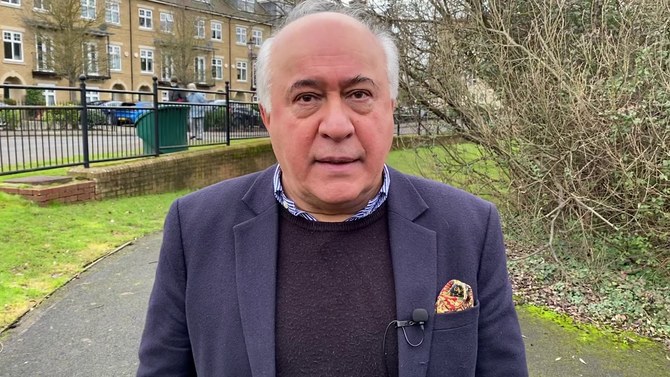
ISLAMABAD: Kaveh Moussavi, the CEO of the asset recovery firm Broadsheet LLC, has issued an apology to former Pakistani Prime Minister Nawaz Sharif for being part of a “witch-hunt” against him by the country's anti-corruption watchdog, saying "not one rupee" of wealth allegedly looted from Pakistan could be traced back to the ex-PM.
Broadsheet LLC was hired in 2000 by the Pakistani government and its anti-corruption agency, the National Accountability Bureau (NAB), to recover assets stolen by previous governments. The contract was terminated in 2003.
In 2016, Broadsheet sued Pakistan in the London Court of International Arbitration over non-payment of its dues and won an award of $21 million in 2019. Islamabad appealed the decision in the London High Court and the award was increased to over $30 million.
General Pervez Musharraf, then military ruler, had established the NAB in 1999 to investigate corruption allegations against public officials, after a military coup that deposed Sharif.
In an interview to Geo News this week, Moussavi admitted his firm had not found a “scintilla of evidence” against Sharif during forensic investigations that lasted over two decades.
"We found no assets, no cash relating to the Nawaz Sharif family." Moussavi said. "We found a lot of plundered assets, but not one rupee of that could be connected to the Nawaz Sharif family."
Based on "fraudulent misrepresentations" by NAB, anyone who had levelled accusations against Sharif owed him an apology, Moussavi said.
"I have no hesitation in issuing him an apology on the record, in the full glare of TV cameras. The facts do not sustain the position that Prime Minister Sharif was corrupt, they do not," the Broadsheet CEO said.
"Quite the contrary, when you have investigated someone for all these years and I have not come up with a scintilla of evidence that he has one rupee of ill-gotten gains. At a minimum, you have to say I am sorry Mr Sharif for having made these accusations and being part of it."
He described Pakistan's anti-corruption watchdog as a "corrupt organization."
"It really is a badge of honour for the Nawaz Sharif family that NAB should have come after them," Moussavi said. "I almost wished they came after me because ... you know a person by their enemies."
The Broadsheet CEO said the Pakistani anti-graft body was set up as a "witch-hunt" against Musharraf's political opponents and Sharif was its "biggest target."
"If after 22 years I can tell you this, you can be pretty sure there is nothing else to be found, because there was nothing to be found," Moussavi added.
NAB has not responded to the CEO’s latest statements.
Sharif, a three time prime including the last stint which began in 2013, was disqualified from office by Pakistan’s supreme court in July 2017 after the Panama Papers data leak linked Sharif’s children to the purchase of London properties through offshore companies in the British Virgin Islands in the mid-1990s. As the children were minors at the time, the purchases were assumed to have been made by Sharif.
Pakistan authorities thus accused Sharif of using a complex series of transactions and shell companies to funnel public funds embezzled at home into assets abroad.
The supreme court ruled in April 2018 that Sharif's disqualification should be for life. He still faces multiple criminal proceedings and lives in exile in London. He says the corruption cases against him are politically motivated.


![]()

'Not one rupee': Asset recovery firm's CEO apologizes to Pakistan's Sharif over corruption ‘witch-hunt’
Short Url
https://arab.news/ywn4r
'Not one rupee': Asset recovery firm's CEO apologizes to Pakistan's Sharif over corruption ‘witch-hunt’
- Kaveh Moussavi says firm hadn't found “scintilla of evidence” against Sharif during investigations spanning over two decades
- Describes Pakistan's anti-corruption watchdog as "corrupt organization," NAB has not yet commented on Moussavi's remarks
Latest updates


© 2026 SAUDI RESEARCH & PUBLISHING COMPANY, All Rights Reserved And subject to Terms of Use Agreement.