

UK to make nuclear 25% of power mix by 2050; Volkswagen AG invests $7.1 in North America amid EV push: NRG matters

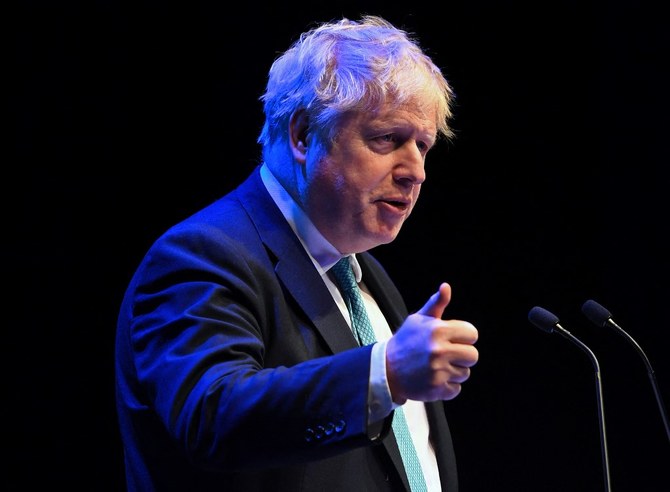
UK Prime Minister Boris Johnson (AFP)
Short Url
Updated 22 March 2022
Follow

UK to make nuclear 25% of power mix by 2050; Volkswagen AG invests $7.1 in North America amid EV push: NRG matters

RIYADH: On a macro level, the industry is still suffering from the rippling effects of the military conflict between Russia and Ukraine. Countries like Greece, Bulgaria, and the UK are scurrying to secure alternative energy supplies. Meanwhile, firms such as First Quantum Minerals Ltd. and Volkswagen AG continue injecting significant amounts into clean energy, signaling a green future ahead.

Looking at the bigger picture: 

  • The long-delayed pipeline between Greece and Bulgaria is set to start commercial operations in September, Reuters reported, citing Bulgaria’s Prime Minister Keril Petkov. The gas pipeline linking the two countries aims to aid Sofia's dependency on Russia post its invasion of Ukraine.
  • UK Prime Minister Boris Johnson has announced schemes to make nuclear power 25 percent of the country’s electricity mix by the year 2050, Bloomberg reported. The move would help boost the renewable industry as well as divert dependency from Russian fossil fuels.

Through a micro lens: 

  • Canadian-based mining and metals company First Quantum Minerals Ltd. is planning to power its copper mines in Zambia through $500 million worth of solar and wind energy installation, Bloomberg reported. The installation is funded by transitional energy projects-focused Chariot Ltd. which, in itself, is backed by French multinational integrated oil and gas company TotalEnergies SE.
  • German multinational automotive manufacturer Volkswagen AG has announced an investment of $7.1 billion over the next five years in North America amid its electric vehicle push. Founded in 1937, the car maker plans to add as much as 25 new models in the region by 2030, including its classic Microbus.

Acwa signs key terms to develop 5GW of renewable energy capacity in Turkiye

Updated 23 February 2026
Follow

Acwa signs key terms to develop 5GW of renewable energy capacity in Turkiye

JEDDAH: Saudi utility giant Acwa has signed key investment agreements with Turkiye’s Ministry of Energy and Natural Resources to develop up to 5 gigawatts of renewable energy capacity, starting with 2GW of solar power across two plants in Sivas and Taseli.

Under the investment agreement, Acwa will develop, finance, and construct, as well as commission and operate both facilities, according to a press release.

The program builds on the company’s first investment in Turkiye, the 927-megawatt Kirikkale Independent Power Plant, valued at $930 million, which offsets approximately 1.8 million tonnes of carbon dioxide annually, the statement added.

A separate power purchase agreement has been concluded with Elektrik Uretim Anonim Sirketi for the sale of electricity generated by each facility.

Turkiye aims to boost solar and wind capacity to 120GW by 2035, supported by around $80 billion in investment, while recent projects have already helped prevent 12.5 million tonnes of CO2 emissions and reduced reliance on imported natural gas.

Turkiye’s energy sector has undergone a rapid transformation in recent years, with renewable power emerging as a central pillar of its strategy.

Raad Al-Saady, vice chairman and managing director of ACWA, said: “The signing of the IA (implementation agreement) and PPA key terms marks a pivotal moment in Acwa’s partnership with Turkiye, reflecting the country’s strong potential as a clean energy leader and manufacturing powerhouse.”

He added: “Building on our long-standing presence, including the 927MW Kirikkale Power Plant commissioned in 2017, this step elevates our partnership to a new level,” Al-Saady said.

In its statement, Acwa said the 5GW renewable energy program will deliver electricity at fixed prices, enhancing predictability for grid planning and supporting long-term industrial investment.

By replacing imported fossil fuels with domestically generated clean energy, the initiative is expected to reduce Turkiye’s exposure to global energy market volatility, strengthening energy security and lowering long-term power costs.

The company added that the economic impact will extend beyond the anticipated investment of up to $5 billion in foreign direct investment, with thousands of jobs expected during the construction phase and hundreds of high-skilled roles created during operations.

The energy firm concluded that its existing progress in Turkiye reflects a strong appreciation for Turkish engineering, construction, and manufacturing capacity, adding that localization has been a strategic priority, and it has already achieved 100 percent local employment at its developments in the country.