Veteran journalists recall 1974 OIC Lahore summit where Pakistan finally recognized Bangladesh

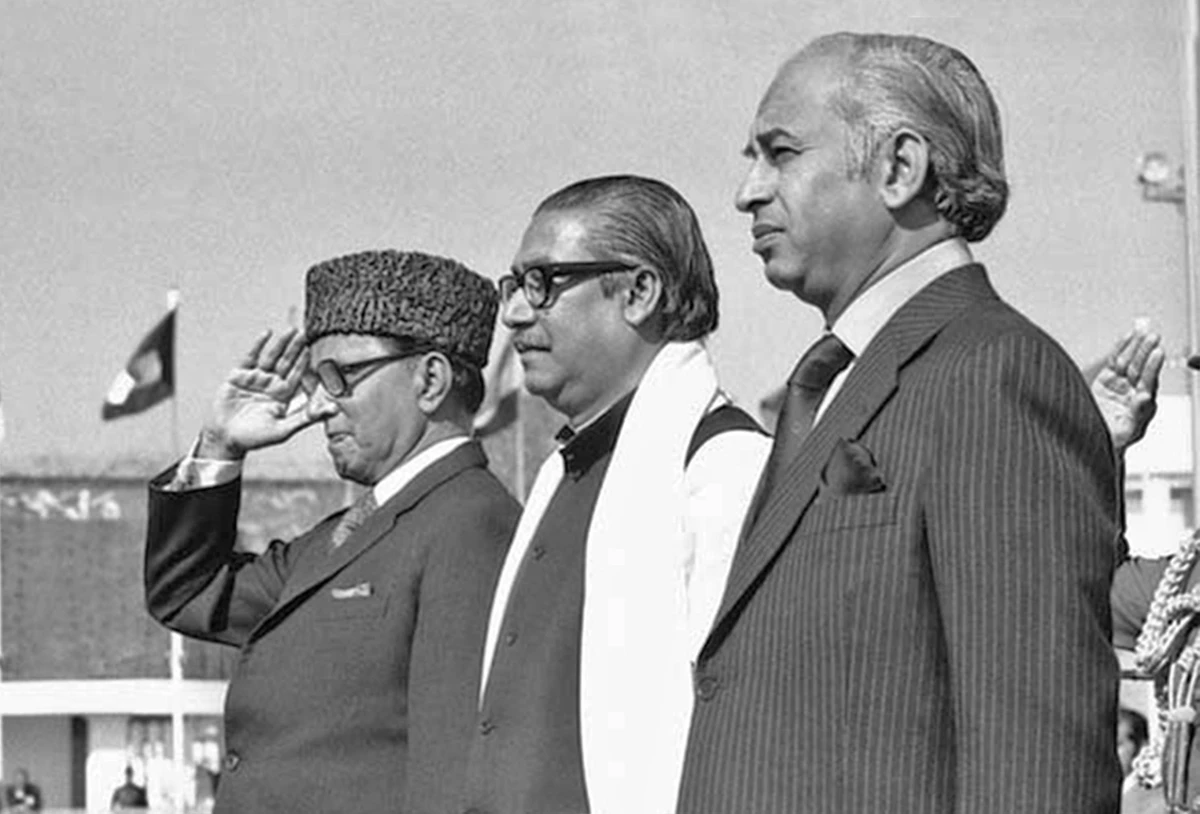
Pakistan's President Fazal Ilahi Chaudhry (L) and Prime Minister Zulfikar Ali Bhutto (R) and Bangladesh's Prime Minister Sheikh Mujeeb-ur-Rehman stand at attention during the national anthems of both countries in Lahore, Pakistan, Feb. 23, 1974. (AP)
Short Url
Updated 21 March 2022
Follow

Veteran journalists recall 1974 OIC Lahore summit where Pakistan finally recognized Bangladesh

  • Pakistan will host the 48th session of the OIC Council of Foreign Ministers on March 22-23
  • Then PM Zulfiqar Ali Bhutto announced decision to recognize Bangladesh at second OIC summit

KARACHI: Ahead of a meeting of foreign ministers from Islamic countries to be held in Islamabad tomorrow, Tuesday, veteran Pakistani journalists who covered the 2nd summit of the Organization of Islamic Conference, held in Lahore in 1974, recalled how the event had given rise to new hopes for unity in the Muslim world, especially as it was at the conference that Pakistan finally recognized Bangladesh.
The OIC, with 57 member states, is the second largest intergovernmental organization in the world after the United Nations and considered the collective voice of Muslims around the world.
Pakistan will be hosting the 48th session of the OIC Council of Foreign Ministers on March 22-23, which coincides with the Pakistan Day parade held every year on March 23 to commemorate the Lahore Resolution, which was adopted on the same day in 1940 and laid the foundation for a Muslim-majority state in South Asia. The visiting OIC delegates have been invited to attend the parade as “guests of honor.”
Pakistan along with Saudi Arabia has been a key founding member of the OIC and hosted the second OIC summit in Lahore on February 20-22, 1974.
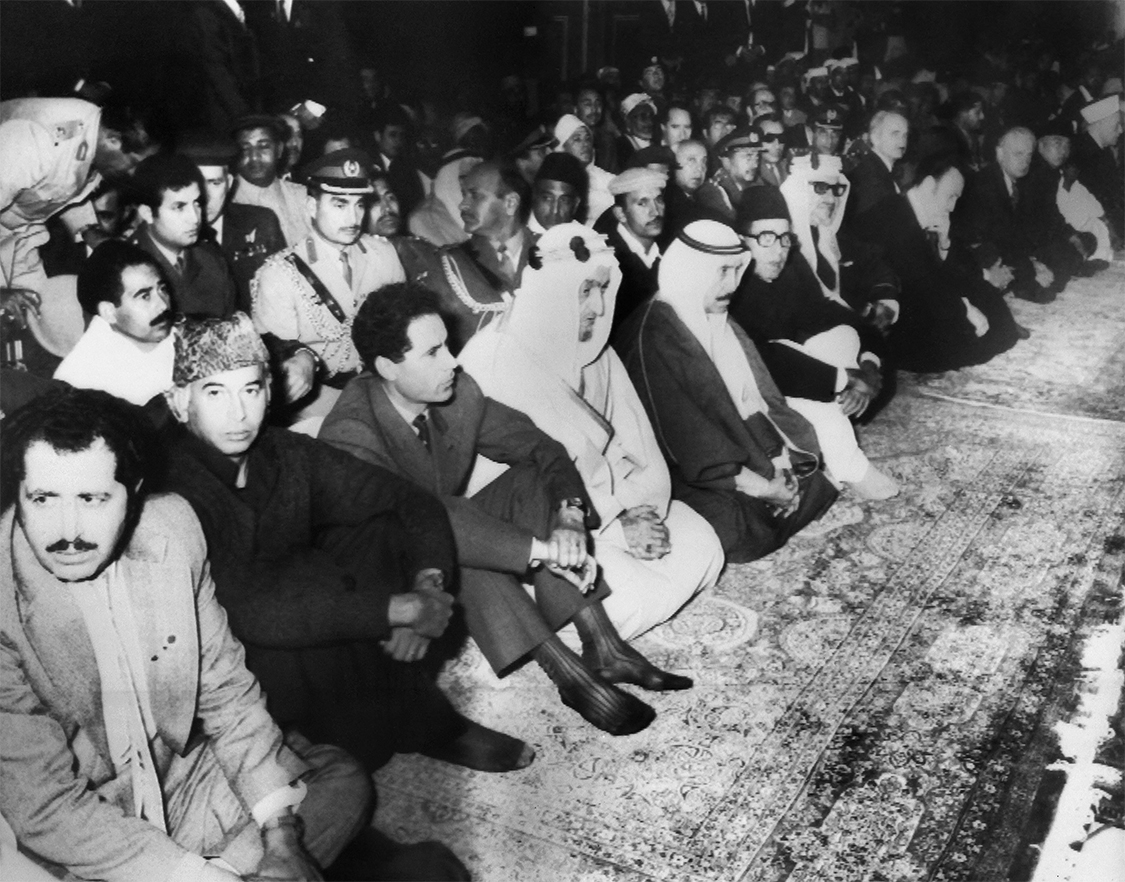


A picture taken in Lahore on February 22, 1974, shows Faisal bin Abdul-Aziz Al Saud, King of Saudi Arabia (4th L), Emir of Kuwait Sheikh Sabah Al Salim Al Sabah (5th L), Libyan Colonel Moammar Kadhafi (3rd L) and Pakistani President Ali Bhutto (2nd L) during the prayer prior to the opening ceremony of the 2nd Islamic Summit Conference (OCI). (AFP)

Hussain Naqi, one of around 350 reporters and photographers who covered the summit, told Arab News the 1974 summit had set Muslim nations on a path of unity, self-reliance and cooperation.
“The conference indeed was the high point of Muslim unity and it helped resolve a pending issue of the recognition of Bangladesh,” he said.
Pakistan had initially not invited Bangladesh to attend the summit. The two Muslim countries used to be two halves of the same nation until Bangladesh broke away after the 1971 war.

Zafar Ahmed, a senior photojournalist who covered the summit for Daily Hilal-e-Pakistan, recalled the events surrounding the decision to recognize Bangladesh.
“The lawmakers from Sindh [province] were flown into Lahore through C-130 aircraft, whereas legislators of other provinces also came in for a briefing by [then Prime Minister Zulfqar Ali] Bhutto,” Ahmed said. “On the evening of February 19, Bhutto announced he had decided to recognize Bangladesh on the advice of Pakistan’s friends [heads of Muslim states].”
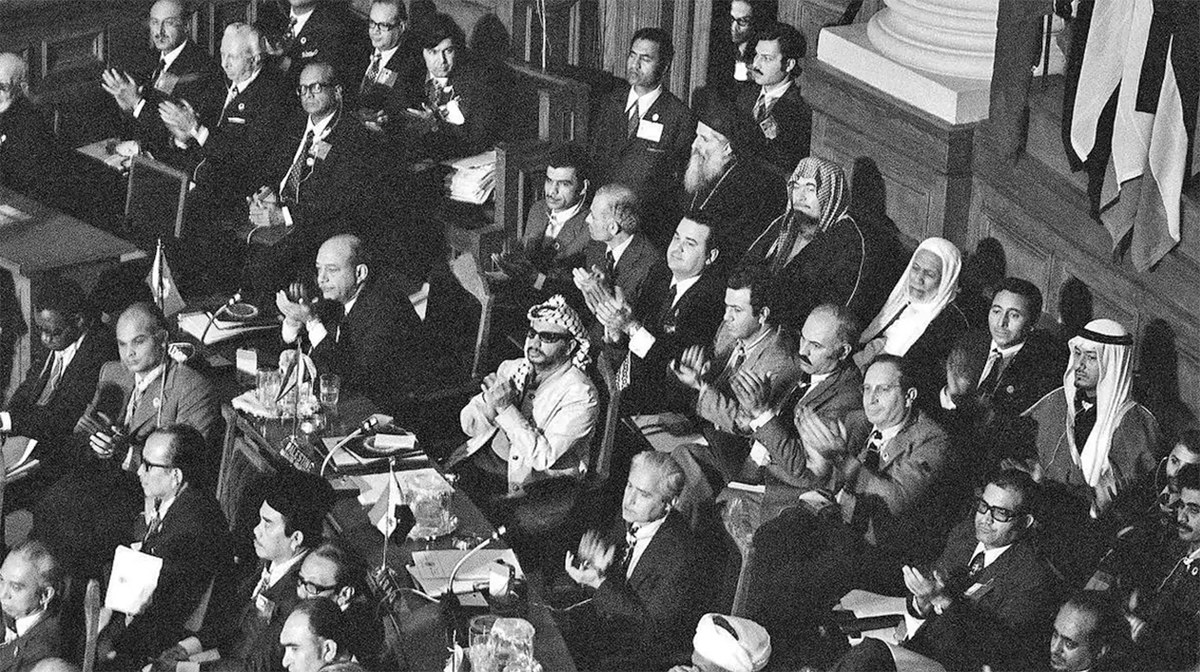


Delegates listen to a speech during the opening of the Islamic Summit in Lahore, Pakistan, on Feb. 23, 1974. (AP)

He said the plane of the then Algerian president was flown to bring Bangladeshi president Sheikh Mujeeb-ur-Rehman to Lahore. 
It was a cold evening, Ahmed said, as he and four other photojournalists arrived at the airport to capture the historic moment.
“It was in the morning at around 8:30am the next day that we noticed some movement and Sheikh Mujeeb eventually arrived at 10:05am,” Ahmed, who stayed at the airport through the night, said.
The Bangladeshi president was received by then Pakistan president Fazal Ilahi Chaudhry as Bhutto, then the chairperson of the OIC conference, was presiding over a session.
“On the last day, Sheikh Mujeeb addressed the summit, which was held at the Punjab Assembly,” Ahmed added.
Ahmed said top leaders of the Muslim world, including Yemen’s Muammar Qaddafi, Egypt’s Anwar Sadat and the UAE’s Rashid bin Saeed Al-Maktoum, was present at the summit but it was Saudi Arabia’s King Faisal who was “the highlight of the event.”
“It was the participation by King Faisal,” he said, “which made news and moved the whole world.”
Ali Ahmed Khan, another veteran journalist then with the BBC Urdu service, said the conference had conveyed a message of Muslim unity and cooperation.
“It was a demonstration of Muslim unity against Western colonialism,” Khan said, “and gave hope to the people of Muslim countries that the forum will resolve their issues, with the Palestine issue at the top.”

Pakistan PM orders accelerated privatization of power sector to tackle losses

Updated 15 December 2025
Follow

Pakistan PM orders accelerated privatization of power sector to tackle losses

  • Tenders to be issued for privatization of three major electricity distribution firms, PMO says
  • Sharif says Pakistan to develop battery energy storage through public-private partnerships

ISLAMABAD: Pakistan’s prime minister on Monday directed the government to speed up privatization of state-owned power companies and improve electricity infrastructure nationwide, as authorities try to address deep-rooted losses and inefficiencies in the energy sector that have weighed on the economy and public finances.

Pakistan’s electricity system has long struggled with financial distress caused by a combination of factors including theft of power, inefficient collection of bills, high costs of generating electricity and a large burden of unpaid obligations known as “circular debt.” In the first quarter of the current financial year, government-owned distribution companies recorded losses of about Rs171 billion ($611 million) due to poor bill recovery and operational inefficiencies, official documents show. Circular debt in the broader power sector stood at around Rs1.66 trillion ($5.9 billion) in mid-2025, a sharp decline from past peaks but still a major fiscal drain. 

Efforts to contain these losses have been a focus of Pakistan’s economic reform program with the International Monetary Fund, which has urged structural changes in the energy sector as part of financing conditions. Previous government initiatives have included signing a $4.5 billion financing facility with local banks to ease power sector debt and reducing retail electricity tariffs to support economic recovery. 

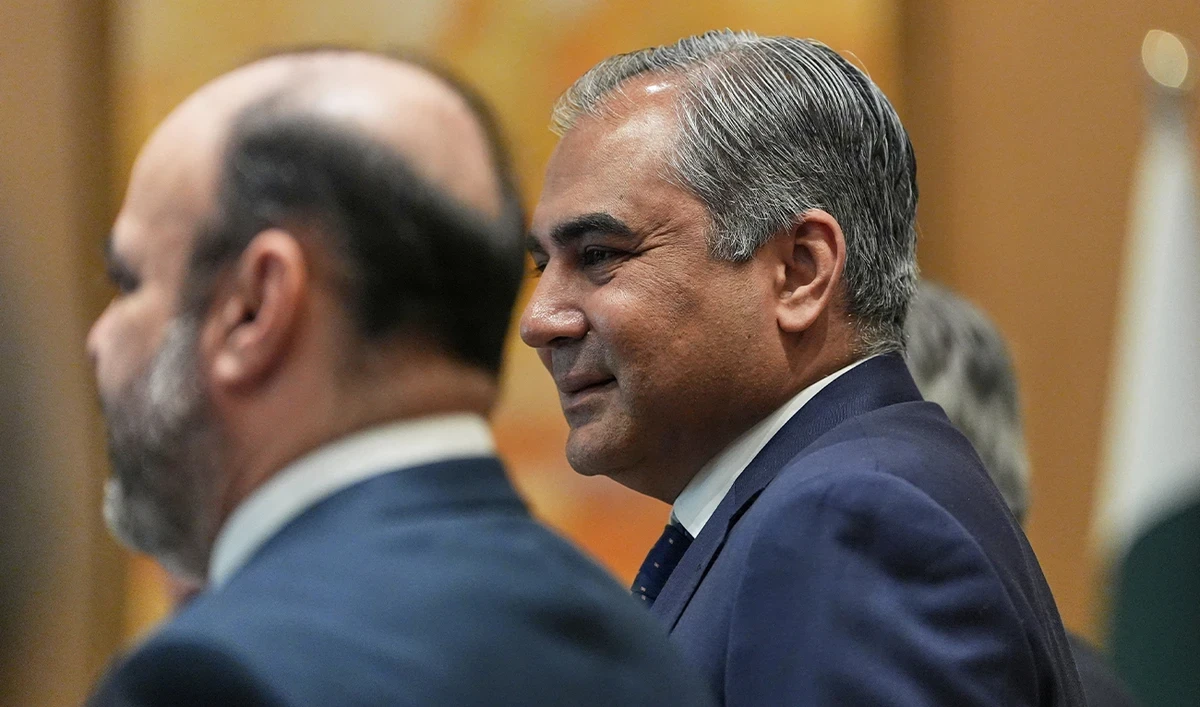
“Electricity sector privatization and market-based competition is the sustainable solution to the country’s energy problems,” Prime Minister Shehbaz Sharif said at a meeting reviewing the roadmap for power sector reforms, according to a statement from the prime minister’s office.

The meeting reviewed progress on privatization and infrastructure projects. Officials said tenders for modernizing one of Pakistan’s oldest operational hubs, Rohri Railway Station, will be issued soon and that the Ghazi Barotha to Faisalabad transmission line, designed to improve long-distance transmission of electricity, is in the initial approval stages. While not all power-sector decisions were detailed publicly, the government emphasized expanding private sector participation and completing priority projects to strengthen the electricity grid.

In another key development, the prime minister endorsed plans to begin work on a battery energy storage system with participation from private investors to help manage fluctuations in supply and demand, particularly as renewable energy sources such as solar and wind take a growing role in generation. Officials said the concept clearance for the storage system has been approved and feasibility studies are underway.

Government briefing documents also outlined steps toward shifting some electricity plants from imported coal to locally mined Thar coal, where a railway line expansion is underway to support transport of fuel, potentially lowering costs and import dependence in the long term.

State authorities also pledged to address safety by converting unmanned railway crossings to staffed ones and to strengthen food safety inspections at stations, underscoring broader infrastructure and service improvements connected to energy and transport priorities.