


LONDON: A coalition of human rights groups has issued a joint statement condemning moves by Iran to introduce widespread censorship and state control of the nation’s internet infrastructure.
This week Iranian Parliament moved to ratify the “draconian” Regulatory System for Cyberspace Services Bill — previously known as the User Protection Bill — which, if passed, “will violate an array of human rights of people in Iran, including the right to freedom of expression and right to privacy.”
In a joint statement signed by Human Rights Watch, Amnesty International, the Committee to Protect Journalists, Global Voices, and dozens of other rights groups, signatories urged Tehran to “immediately withdraw the bill in its entirety.”
The statement said: “We further call on the international community, along with states engaged in dialogue with Iranian authorities, to ensure that the promotion and protection of human rights in Iran is prioritized, including by urging Iran’s Parliament to rescind the bill as a matter of urgency.”
If passed, the bill would place Iran’s internet infrastructure and national gateways under the control of the country’s unelected leadership, armed forces, and security architecture.
Despite setbacks in the Iranian Parliament, which at times manages to exert limited and sporadic influence within the country, authorities are likely to push through the bill by using an “unusual” article within Iranian law that allows legislation to be ratified for a limited period of time of between three and five years.
“This unusual Article 85 process, and the moves to ratify it on Feb. 22, demonstrate that the authorities remain adamant to take forward this regressive legislation despite the domestic and international outcry,” said the joint statement.
If implemented, the bill would see a taskforce established to manage information flows in and out of the country.
The “Secure Gateway Taskforce” would, in effect, be under the direct control of the office of Supreme Leader Ayatollah Ali Khamenei.
It would be composed of representatives from the General Staff of the Armed Forces, the Intelligence Organization of the Islamic Revolutionary Guards Corps, the Ministry of Intelligence, the Ministry of Information and Communications Technology, the Passive Defense Organization, the police and the Office of the Prosecutor General of Iran.
“Delegating such control over internet and communications access to entities that repeatedly commit serious human rights violations with complete impunity will have chilling effects on the right to freedom of expression in Iran,” warned the joint statement.
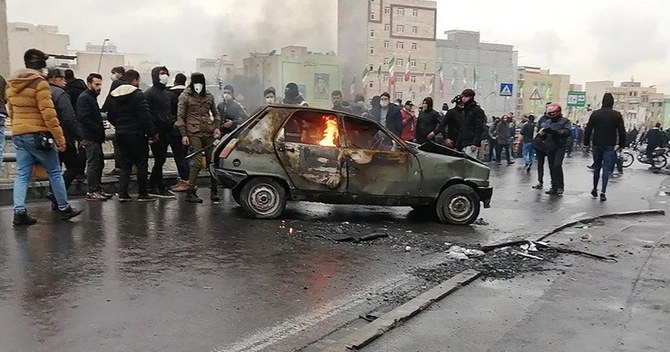
The signatories pointed out that many of the organizations listed in the taskforce have “perpetrated gross violations of human rights and crimes under international law,” including “the unlawful use of lethal force, mass arbitrary detentions, enforced disappearances, and torture and other ill-treatment to crush the nationwide protests in 2017, 2018, and November 2019.”
Iranian authorities regularly cut off internet access to the Iranian people during times of crisis, but sporadic information does usually make its way out.
If the new laws are passed, it would be more difficult for Iranians to anonymously document human rights abuses or government crackdowns on protests within the country.
“Indeed, Iran’s deadly repression of nationwide protests in November 2019 took place amid the darkness of a week-long near-total Internet shutdown,” said the rights groups, adding: “Alarmingly, passage of the bill will make internet shutdowns and online censorship even easier and less transparent.”


