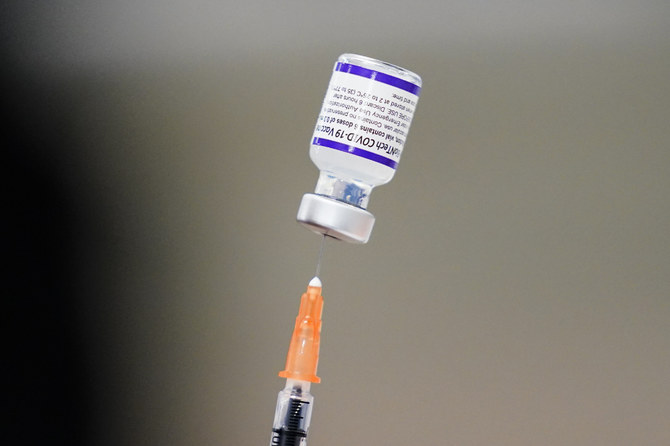
WASHINGTON: Pfizer and its partner BioNTech asked US regulators Tuesday to authorize an additional booster dose of their COVID-19 vaccine for seniors, saying data from Israel suggests older adults would benefit.
Currently the US urges two primary shots followed months later by a booster dose for everyone age 12 and older. The new application seeks to add a fourth shot only for the over-65 population that has been hit hardest by the pandemic.
The Food and Drug Administration and the Centers for Disease Control would have to approve the request. If so, a key question would be how soon seniors would be advised to roll up their sleeves.
While authorities say the vaccinations continue to offer strong protection against severe illness, they haven’t held up as well against milder infections especially those due to the omicron mutant. With COVID-19 cases finally plummeting after the intense omicron surge, public health experts are starting to look ahead to what next steps might be needed — if a new variant crops up or, barring that, whether to try shoring up coronavirus protection in the fall at the same time people get flu vaccinations.
Speaking to CBS’ “Face the Nation” on Sunday, Pfizer CEO Albert Bourla signaled the company’s plans.
“The protection that you are getting from the third, it is good enough, actually quite good for hospitalizations and deaths. It’s not that good against infections,” he said. “But we are just submitting those data to the FDA and then we will see what the experts also will say outside Pfizer.”
The US booster campaign was based on evidence that the shots’ effectiveness, particularly against milder infections, was waning about six months after the last dose. Calls for a third shot grew once it became clear the vaccines weren’t as strong against the omicron mutant as they were against earlier versions of the virus.
Many scientists say the ultimate goal of vaccination is to prevent severe illness, not mild infections, and early CDC data show the shots still are doing a good job at that. During the omicron wave, effectiveness against hospitalization was 91 percent in people who had gotten their booster two months earlier, and 78 percent by the fourth month after that booster.
Pfizer based its new application on data from Israel, which already was offering a second booster to people age 60 and older and health care workers.
While some early data left unclear just how much benefit another shot offered — or for how long — Pfizer said Tuesday that an analysis of health records of more than 1.1 million Israeli seniors showed confirmed infections were two times lower and rates of severe illness were four times lower among those who got two boosters instead of just one.
Pfizer also cited an ongoing study of health care workers that tracked a jump in virus-fighting antibodies after getting the additional booster.
In the US so far, a fourth dose is recommended only for people with severely weakened immune systems, who need three doses to begin with for the best chance at any protection.


![]()

Pfizer asks US to allow 4th COVID vaccine dose for seniors
Short Url
https://arab.news/bmzry
Pfizer asks US to allow 4th COVID vaccine dose for seniors
- The new application seeks to add a fourth shot only for the over-65 population that has been hit hardest by the pandemic


Latest updates




© 2026 SAUDI RESEARCH & PUBLISHING COMPANY, All Rights Reserved And subject to Terms of Use Agreement.