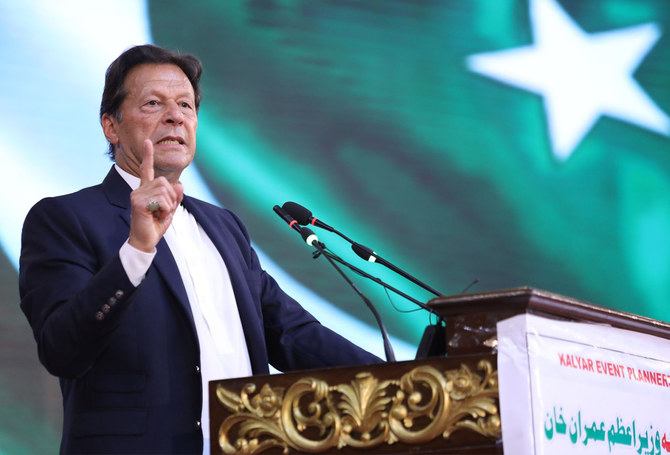
ISLAMABAD: Pakistani Prime Minister Imran Khan on Tuesday said he was not against the West or India, but their policies in the “war on terror” and toward Muslims.
The statement came a week after PM Khan criticized Islamabad-based Western envoys, who in a letter urged Pakistan to condemn Russia for its invasion of Ukraine, asking them if they had writer a similar letter to India.
Representatives of 22 countries, including the European Commission, in Islamabad wrote the letter. Islamabad has repeatedly called for an end to violence and emphasized the use of diplomacy to resolve the crisis, but stopped short of condemning Russia.
In recent weeks, the Pakistani premier has also criticized the United States (US) and allies for blaming Islamabad for their defeat in Afghanistan, despite Pakistan suffering 80,000 casualties after joining the US-led war.
“Let me clarify this to all overseas Pakistanis, I have never been anti-US, anti-UK and for that matter, anti-India. Only an illiterate can be against some country because all types of people live in a country,” PM Khan said at a party convention in Islamabad.
“I was against America’s war on terror since day one and will always be against that.”
He said if the government in India gave equal rights to Muslims and to Kashmiris, Islamabad was willing to talk on bilateral issues.
“The step they [India] have taken on August 05, 2019, if they take that back we will again normalize our ties with them and resolve our issues through dialogue,” the prime minister said.
In August 2019, New Delhi stripped India-controlled Kashmir of its autonomy and divided it into two federally-administered territories, prompting Islamabad to downgrade its diplomatic and trade ties with India.
The Himalayan valley is claimed in full by both India and Pakistan. The two countries have gone to war thrice over it, and both rule parts of it.


![]()

Pakistani PM says not against West or India, but their policies
Short Url
https://arab.news/ps2ak
Pakistani PM says not against West or India, but their policies
- PM Imran Khan says he was against US policy in ‘war on terror,’ India’s Hindutva-driven politics
- Talks can be held with New Delhi if it gives equal rights to Muslims and Kashmiris, he adds
Latest updates




© 2026 SAUDI RESEARCH & PUBLISHING COMPANY, All Rights Reserved And subject to Terms of Use Agreement.