

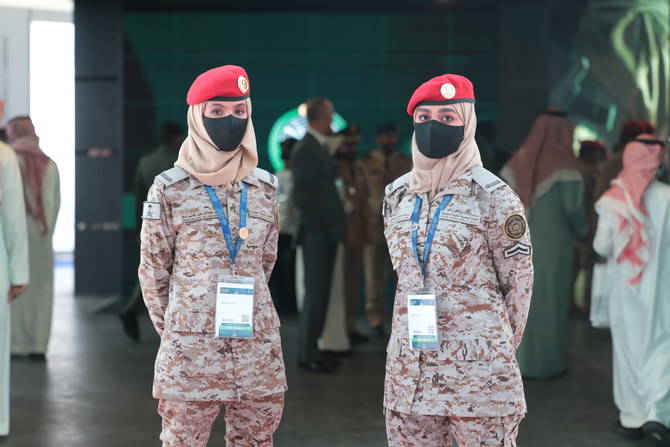

RIYADH/DUBAI: Saudi women are breaking stereotypes and establishing successful businesses in the defense and security sector through the Kingdom’s strategy to localize more than 50 percent of its military spending by 2030.
One of the biggest defense spenders in the world, Saudi Arabia plans to invest over $20 billion in its domestic military industry over the next decade, requiring greater participation from its local men and women as the country wants to become self-reliant in the area of national security.
The country’s ambitious Vision 2030 has been a driving force behind providing wings to the aspirations of many such young Saudi women who otherwise would have not thought of venturing into the male-dominated defense sector.

AN photo: Abdullah Aljaber
“Now, for the first time, we’re making history, and there are more women in the [defense] sector, and finally, we’re talking,” said Reem Abukhaled, partnership relations officer at Leonardo, an Italy-headquartered defense firm with a strong presence in Saudi Arabia, on the sidelines of World Defense Show in Riyadh.
Talking to Arab News, she revealed that Leonardo Saudi Arabia is looking to expand their workforce by hiring more Saudi women. “There will be more Saudi females; that’s part of our plan,” she said.
The growing women workforce at the state-owned Saudi Arabian Military Industries — known also as SAMI — is a testament to the defense sector’s popularity among the young Saudis.
More than 22 percent of its current workforce comprises women as the country’s premier defense firm has the policy to maintain the representation of female employees at a minimum of 20 percent.
Now, for the first time, we’re making history, and there are more women in the [defense] sector, and finally, we’re talking
Reem Abukhaled, partnership relations officer at Leonardo,
Young Rayan Al-Abdulkarim represents these aspirational Saudi women who are ready to take on the mantle of protecting the Kingdom’s sovereignty and territorial integrity.
A software engineer, Al-Abdulkarim had the option of picking up a conventional job after graduation but she chose to pursue her career in the defense sector for its uniqueness and future growth prospects. Currently employed with one of SAMI’s joint ventures, SAMINavantia, she played an active role in the development of Saudi Arabia’s first Combat Management System, HAZEM, becoming the first Saudi military software integrator.
Confident and empowered women like Al-Abdulkarim are today willing to play an increasingly important role in achieving Saudi’s localization goals under Vision 2030.
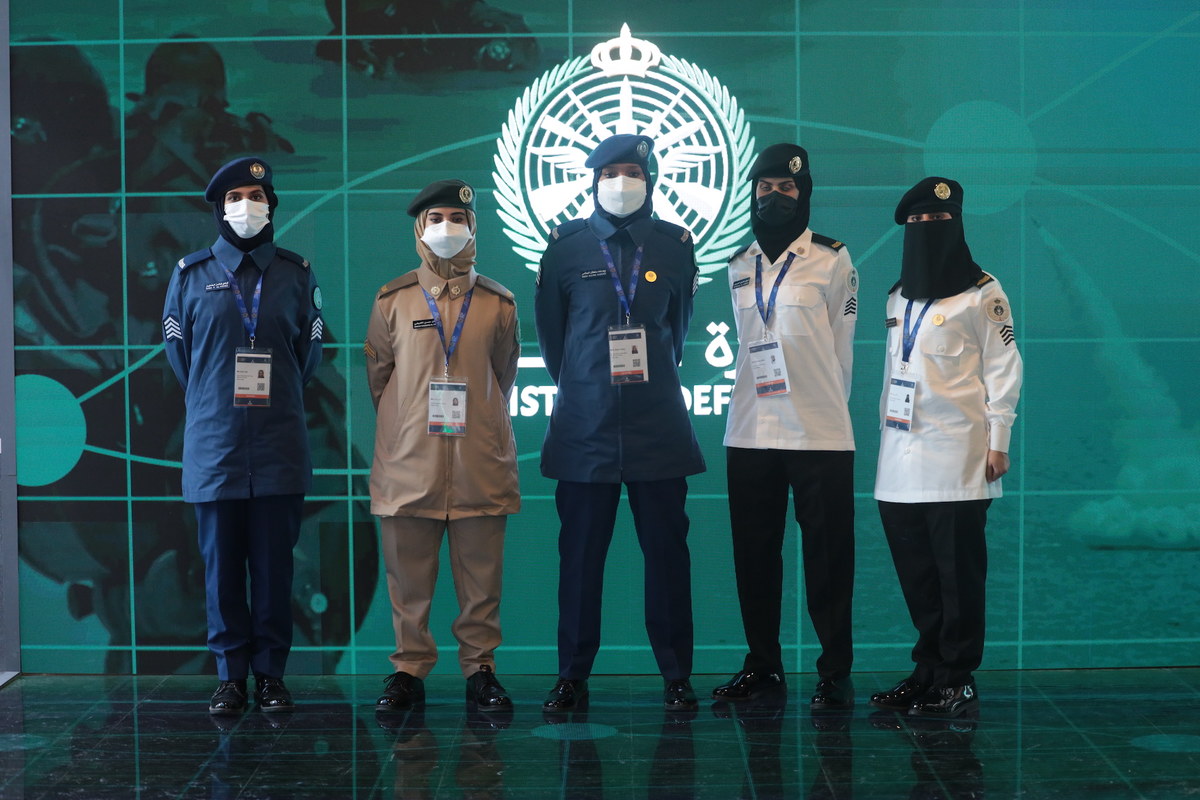
AN photo: Abdullah Aljaber
As foreign firms willing to work in Saudi’s defense sector are mandated to spend in the domestic market in capacity building and local talent development, the country’s young population has a wide array of companies and opportunities to choose from if they pick the defense sector as their career option.
Shatha Khamis is another talented female engineer who chose to work with SAMI Advanced Electronics as she feels one of the best things about her career is working on the latest technologies.
Khamis joined SAMI’s subsidiary as an associate engineer soon after obtaining her bachelor’s degree in industrial engineering. But her passion to excel saw her getting promoted to an industrial engineer’s position within just two years of joining. Khamis currently manages some of the exciting projects in the area of defense and aerospace and cyber and national security.
In 2030, I see them handling all kinds of positions because they can
Ghada M. Alnahdi, marketing and communications lead at Worley
“Woman’s nature is to defend. They defend their kids, family and everyone. So it’s important for us females to defend our country because that’s our nature, we like to defend,” Abukhaled added.
Saudi’s series of recent legislative reforms continue to create equal ground for women as they come forward to take part in the country’s growing workforce.
SAMI, for instance, has implemented equal pay and opportunity, a standard salary scale, promotions based on performance and competency rather than time-in-grade, and international assignments without gender or nationality considerations.
These initiatives are encouraging women to break the stereotypes and take up any position or role as they feel confident to establish a successful career in the Kingdom’s defense and security sector.
“In 2030, I see them handling all kinds of positions because they can,” said Ghada M. Alnahdi, marketing and communications lead at Worley.
In response to a question about the future of Saudi women, Alnahdi advised young women to “always go ahead and achieve their goals no matter what.”
She finds it inspiring “to see women representing the country in the industry, and it’s the first time, so it’s honestly amazing.”
Abukhaled said the Saudi Vision 2030 initiatives are empowering women. “I see women reaching high ranks not only in the future but already today,” she explained.
With the Saudi Arabian military sector continuing to grow, SAMI and other defense firms are expected to offer an array of exciting and long-term career opportunities to the Kingdom’s youth, including women.


