KARACHI: Pakistan’s central bank on Tuesday decided to the keep the key policy rate unchanged at 9.75 percent, citing an improved outlook for inflation after cuts in fuel and electricity prices announced last week.
The central bank had increased the policy rate by 100 basis points to 9.75 percent in December 2021. Since then, the rate has been kept unchanged.
“This decision reflected the MPC’s view that the outlook for inflation has improved following the cuts in fuel prices and electricity tariffs announced last week as part of the government’s relief package,” the central bank said in its policy statement.
“At the same time, high-frequency indicators suggest that growth continues to moderate to a more sustainable pace. This moderation should help keep at bay demand-side pressures on inflation and contain non-oil imports, notwithstanding the significant uncertainty about the future path of global energy and food prices due to the Russia-Ukraine conflict,” the statement added.
The monetary policy committee (MPC) noted while the current real interest rates on a forward-looking basis were appropriate to guide inflation to the medium-term range of 5-7 percent, support growth, and maintain external stability, the Russia-Ukraine conflict had introduced a high degree of uncertainty in the outlook for international commodity prices and global financial conditions.
“Continued adverse conditions on these fronts could pose challenges to the outlook for the current account deficit and inflation expectations, which could necessitate changes in the policy rate,” the statement read. “Since the Russia-Ukraine situation remains fluid, the MPC noted that it was prepared to meet earlier than the next scheduled MPC meeting in late April, if necessary, to take any needed timely and calibrated action to safeguard external and price stability.”
The country’s agricultural prospects have somewhat weakened, with key inputs such as fertilizer off-take and water availability during the Rabi season lower than last year. Cotton and wheat production will likely be less than previous estimates.
“Growth in FY22 is still expected around the middle of the previously forecast range of 4-5 percent,” the central bank stated.
Looking ahead, the central bank said the non-oil current account deficit was expected to decline, as import growth continued to slow with moderating demand, while exports and remittances remained resilient.
“The outlook for the overall current account deficit is dependent on the path of international oil prices, according to the central bank,” the statement added.
The central bank said the MPC continued to expect inflation to average between 9-11 percent this fiscal year before declining toward the medium-term target range of 5-7 percent in FY23 as global commodity prices normalized.
This baseline outlook is subject to risks from the path of global prices, domestic wage developments, and the fiscal policy stance.


![]()
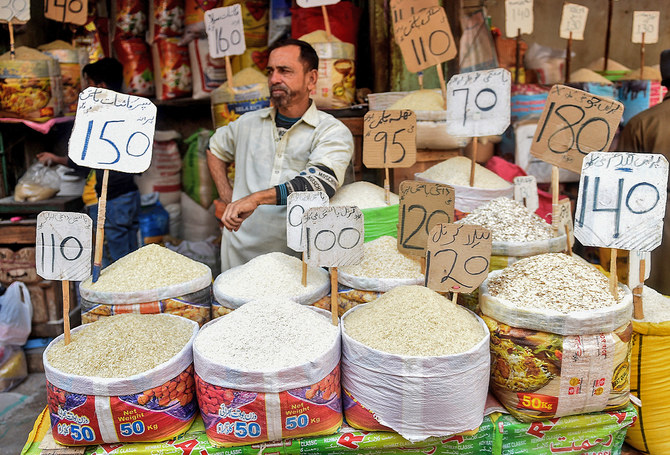
Pakistan central bank keeps key policy rate unchanged at 9.75% amid improved inflation outlook
Short Url
https://arab.news/j7v2p
Pakistan central bank keeps key policy rate unchanged at 9.75% amid improved inflation outlook
- Russia invasion of Ukraine has introduced high degree of uncertainty in outlook for international commodity prices
- Since the situation remains fluid, monetary policy committee prepared to meet earlier than next scheduled meeting
Latest updates


Recommended


© 2026 SAUDI RESEARCH & PUBLISHING COMPANY, All Rights Reserved And subject to Terms of Use Agreement.