

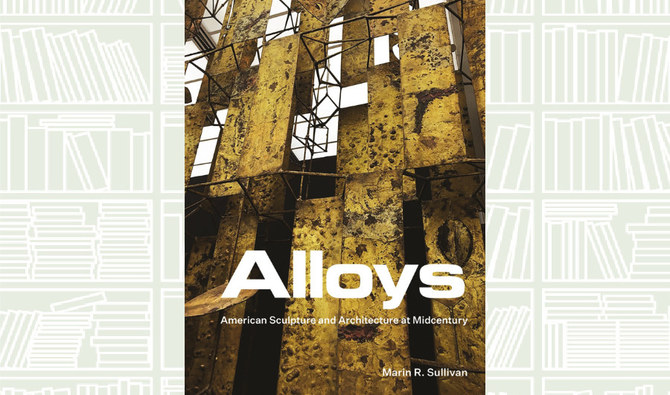
What We Are Reading Today: Alloys: American Sculpture and Architecture at Midcentury

Short Url
Updated 08 March 2022
Follow

What We Are Reading Today: Alloys: American Sculpture and Architecture at Midcentury

Author: Marin R. Sullivan

Alloys looks at a unique period of synergy and exchange in the postwar US, when sculpture profoundly shaped architecture, and vice versa.

Leading architects such as Gordon Bunshaft and Eero Saarinen turned to sculptors including Harry Bertoia, Alexander Calder, Richard Lippold, and Isamu Noguchi to produce site-determined, large-scale sculptures tailored for their buildings’ highly visible and well-traversed threshold spaces.

The parameters of these spaces—atriums, lobbies, plazas, and entryways—led to various designs like sculptural walls, ceilings, and screens that not only embraced new industrial materials and processes, but also demonstrated art’s ability to merge with lived architectural spaces.

Marin Sullivan argues that these sculptural commissions represent an alternate history of midcentury American art.

Rather than singular masterworks by lone geniuses, some of the era’s most notable spaces — Philip Johnson’s Four Seasons Restaurant in Mies van der Rohe’s Seagram Building, Max Abramovitz’s Philharmonic Hall at Lincoln Center, and Pietro Belluschi and Walter Gropius’s Pan Am Building—would be diminished without the collaborative efforts of architects and artists.


What We Are Reading Today: ‘The Bell Jar’

Photo/Supplied
Updated 4 sec ago
Follow

What We Are Reading Today: ‘The Bell Jar’

  • The bell jar — clear, enclosing, and distorting the air she breathes — becomes the perfect image of Greenwood’s entrapment. Just as telling is the fig tree she imagines, with each fig representing a possible future: writer, traveler, mother, lover

Sylvia Plath’s “The Bell Jar” (1963) is a raw and luminous portrait of a young woman standing at the edge of adulthood, grappling with ambition, doubt, and the suffocating weight of expectation. 

Through the eyes of the novel’s troubled protagonist Esther Greenwood, Plath reveals the loneliness that can lie hidden beneath achievement and the unease brought on by future expectations.  

The novel opens in New York, where Greenwood’s magazine internship seems the gateway to success. Yet the city’s glamor soon feels hollow, and the confidence around her thin and brittle. 

Her sense of direction begins to fade, and the life laid out before her starts to feel both too small and impossibly distant.  

The bell jar — clear, enclosing, and distorting the air she breathes — becomes the perfect image of Greenwood’s entrapment. Just as telling is the fig tree she imagines, with each fig representing a possible future: writer, traveler, mother, lover. 

Torn between these possibilities, she hesitates until the figs shrivel and drop. This image, perhaps more than any other, reveals how fear of choice can quietly undo a person.   

Plath’s writing is sharp and deeply humane. She exposes the subtle pressures shaping women’s lives at that time without sentiment or complaint. 

The narrative’s erratic rhythm mirrors the character’s disoriented state of mind, where thought and memory blur at the edges. 

“The Bell Jar” speaks to anyone who has felt caught between possibility and paralysis, between who they are and who they are expected to be. 

Plath writes with precision and compassion, turning confusion into clarity and despair into something almost inspiring.