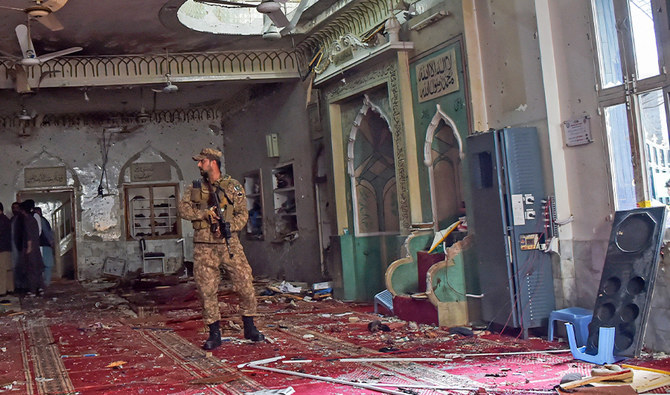
ISLAMABAD: The United Nations Security Council (UNSC) on Sunday condemned the attack on a mosque in the northwestern Pakistani city of Peshawar, urging the world to help apprehend the perpetrators of such “reprehensible acts of terrorism.”
The bombing killed at least 64 people and injured nearly 200 as worshipers offered Friday prayers at Koocha Risaldar Mosque in the congested Qissa Khawani bazaar.
The Daesh militant group claimed responsibility for the attack.
In a statement, UNSC President Ambassador Lana Zaki Nusseibeh said council members condemned the “heinous and cowardly terrorist attack” and expressed their deepest sympathies and condolences to the families of the victims.
“The members of the Security Council reaffirmed that terrorism in all its forms and manifestations constitutes one of the most serious threats to international peace and security,” Ambassador Nusseibeh said.
“The members of the Security Council underlined the need to bring perpetrators, organizers, financiers and sponsors of these reprehensible acts of terrorism to justice and urged all States, in accordance with their obligations under international law and relevant Security Council resolutions, to cooperate actively with the Government of Pakistan and all other relevant authorities in this regard.”
UNSC members reiterated that any “acts of terrorism” were criminal and unjustifiable, regardless of their motivation, wherever, whenever and by whomsoever committed, according to the statement.
They reaffirmed the need for all states to combat threats to international peace and security caused by “terrorist acts” by all means, in accordance with the UN Charter and other obligations under the international law.
Friday’s attack in Peshawar’s congested old city was the worst in years in Pakistan. The country has seen renewed militant attacks after several years of relative quiet that followed military operations against militant hideouts in the border regions with Afghanistan.
The attacks have mostly been carried out by the Pakistani Taliban since last August when the Afghan Taliban swept into power and America ended its 20-year involvement in Afghanistan. The Pakistani Taliban are not connected to the new Afghan rulers. However, they are hiding out in Afghanistan and despite Pakistan’s repeated request to hand them over, none have yet been found and expelled.
Daesh is an enemy of the Afghan Taliban and has carried out successive operations against them since coming into power last year. Pakistani security officials have insisted Daesh has little presence in Pakistan, yet in their statement claiming responsibility for the mosque attack, the group vowed to carry out more attacks in both Pakistan and Afghanistan.


![]()

UN Security Council condemns Pakistan mosque attack, urges world to help arrest culprits
Short Url
https://arab.news/w2h97
UN Security Council condemns Pakistan mosque attack, urges world to help arrest culprits
- The bombing killed at least 64 people and injured nearly 200 in Peshawar
- The Daesh militant group claimed responsibility for the attack
Latest updates




© 2026 SAUDI RESEARCH & PUBLISHING COMPANY, All Rights Reserved And subject to Terms of Use Agreement.