



RIYADH: The Saudi Cup is not merely the world’s richest horse race but also a global platform to celebrate and highlight the Kingdom’s culture.
Behind the competitiveness and anticipation associated with the 2022 Saudi Cup and its cumulative purse of $30 million, was the chance to place the spotlight on the history of Saudi Arabia.
Hatem Al-Akeel, founder and chief executive officer of Authenticite, one of the curators of The Saudi Cup, said: “The Saudi Cup has become the ultimate platform for Saudi heritage.”
Princess Noura bint Faisal and Prince Bandar bin Khalid Al-Faisal have been behind the promotion of Saudi culture on the global stage through the equestrian world.
The Saudi Cup’s innovative step to introduce traditional wear as a dress code has opened the door to exploring the rich fashion heritage of the country, giving us all the opportunity to step back in time.
Tamaraah Al-Gabaani, Social media influencer and designer
“The point of the Saudi Cup is to have the equestrians reiterate the importance of Arabic and Saudi heritage,” Al-Akeel, who is curator of the event’s fashion content, added.
The Saudi Cup ended on Monday in Riyadh with Crown Prince Mohammed bin Salman attending the final race and awarding the winner with the $20 million prize pot and gold cup.
Social media influencer and designer Tamaraah Al-Gabaani attended the second day of the sporting occasion, highlighting the western Hijaz region’s traditions.
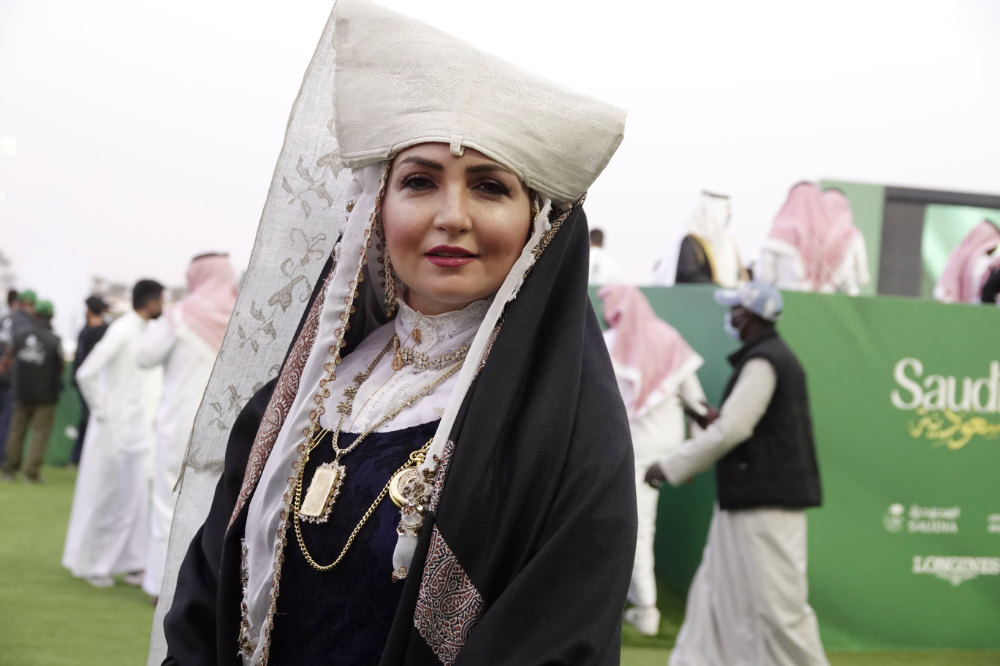
International designers, who attended the Saudi Cup, were inspired by the event’s representation of Saudi culture and heritage. (AN photo by Huda Bashatah)
“The authentic designs are very difficult to find given how valuable and precious they are,” she told Arab News.
She wore an heirloom piece from Sayedat Al-Hejab in Jeddah that was conceptualized by fashion designer Botheina Ali Hafiz in 1978 and finally completed in 1985.
“The Saudi Cup’s innovative step to introduce traditional wear as a dress code has opened the door to exploring the rich fashion heritage of the country, giving us all the opportunity to step back in time and show our love and appreciation,” Al-Gabaani said. She had the dress specially flown in from Jeddah.
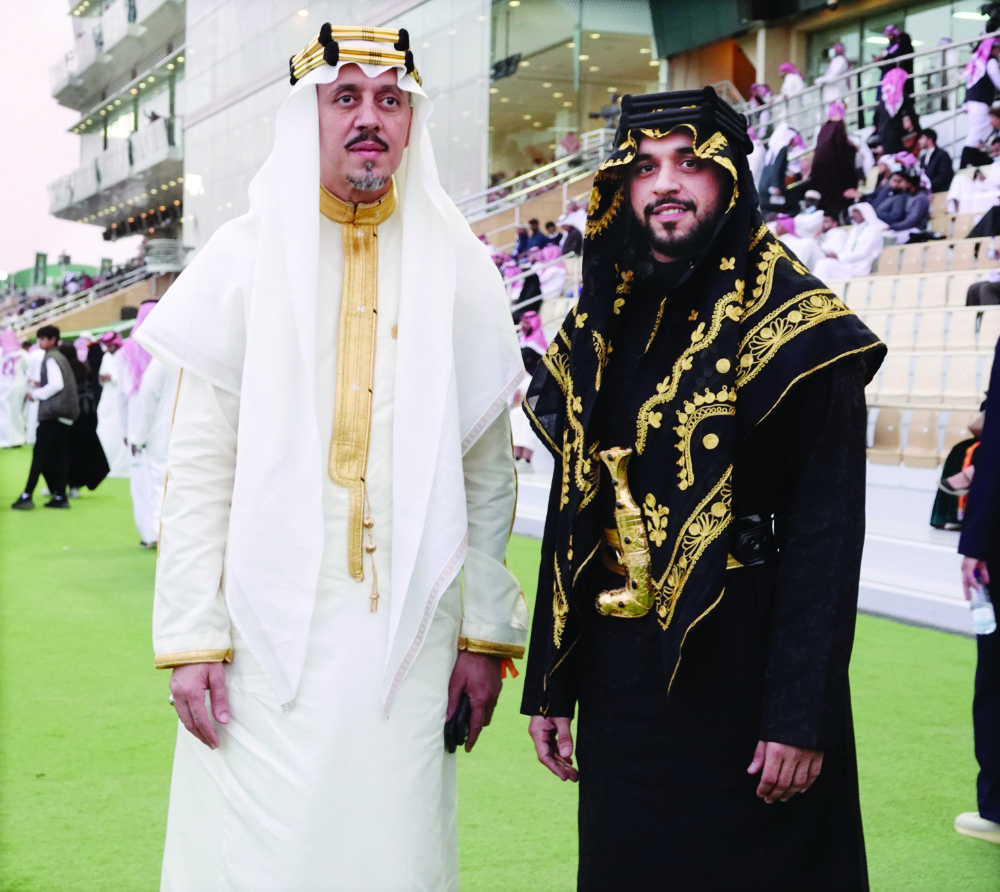
International designers, who attended the Saudi Cup, were inspired by the event’s representation of Saudi culture and heritage. (AN photo by Huda Bashatah)
International designers who attended the event noted how they had been inspired by the event’s representation of Saudi culture and heritage.
American fashion designer Prabal Gurung told Arab News: “Just to see the colors and the nature, clashes of colors within the textiles of what people wear in the Saudi Cup ... I knew it was inspiring. I knew it had an incredible history, the artisans and the embroidery and everything, but to see it at this level it’s insanely amazing.”
He said the fashion industry in the Kingdom oozed “grace and glamor.”
“What inspires me are the women here. They are the most incredibly graceful women that I have ever met, the way they present themselves, the way that they talk. There is so much poetry in the way they present themselves.
“I always try to bring that into my work, the prints, and the colors. The things that you see are inspiring. The minute I arrived here, my phone was loaded with images,” Gurung added.
Other stars at the event, including French Algerian filmmaker and model Farida Khelfa, and Tunisian Italian model Afef Jnifen, dressed in Saudi designs inspired by the region.


