RIYADH: The speaker of the Saudi Shoura Council, Sheikh Abdullah Al-Asheikh, welcomed a recent UN Security Council resolution that designated the Houthi militia in Yemen as a terrorist group, the Saudi Press Agency reported on Thursday.
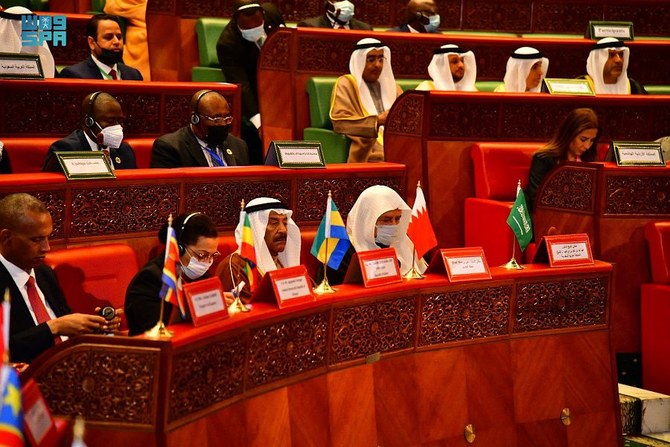
He is heading a Shoura Council delegation at the meetings of the 11th Congress of the Association of Senates, Shoura and Equivalent Councils in Africa and the Arab World, which began in Morocco on Thursday.
Al-Asheikh reiterated that the Kingdom welcomes the Security Council resolution, which also expands an arms embargo that was previously limited to specified individuals and organizations to include all members of the Houthi militia.
He said that Saudi Arabia hopes the decision will contribute to efforts to end the activities of the terrorist group and its supporters, and to neutralize the resulting threats to the Yemeni people and to international security and peace.
The UN Security Council voted on Monday to impose the expanded arms embargo on the Iran-backed Houthi militia, which it said has threatened the peace, security and stability of Yemen, and is responsible for attacks on civilians, on navigation in the Red Sea, and on targets in Saudi Arabia and the UAE.
“The Kingdom is keen to achieve security and stability in Yemen, and to alleviate the suffering of its people,” Al-Asheikh said.
His country “rejected and condemned the attacks launched by the Houthis on civilian objects and vital installations in the Kingdom and the UAE, and international shipping lanes in the Red Sea, with the aim of destabilizing the security of the region,” he added, noting that the Kingdom continues to support all regional and international initiatives and efforts to reach a comprehensive political solution to the crisis.
During the conference, meanwhile, Al-Asheikh that Saudi Arabia is keen to contribute to development and investment in African countries, and support international and regional efforts to lay the foundations for security, stability and conflict resolution in the nations.
He said the great importance the Kingdom attaches to efforts to combat terrorism and extremism, and improve security capabilities, is reflected by the $110 million it has provided to support anti-terrorism initiatives on the African continent.
Al-Asheikh referred to a previous statement by Crown Prince Mohammed bin Salman during a summit on financing for African countries in Paris in May last year, in which he stressed the critical importance of the future of the continent, and the need for the rapid and fair global distribution of COVID-19 vaccines, especially in low-income countries in Africa and the rest of the world.
He said that the Kingdom, through its Public Investment Fund, has implemented number of projects and activities in the energy, mining, communications and food sectors, among others, worth a total of nearly $4 billion.
In the past four decades, he said, the PIF has provided 580 loans and grants to more than 45 African countries worth about $13.5 billion, and has also announced a €200 million ($221 million) initiative for development in Sahel countries in partnership with the French Development Agency, in addition to future projects, grants and loans that the Kingdom will implement to help developing countries on the continent.
He also said the Kingdom is concerned about the challenges of climate change, along with the economic and social implications, and stressed his country’s commitment to international climate agreements based on its global position and the importance of its influential role in the stability of the global economy. He also spoke about the Kingdom’s efforts to address climate-related challenges through the Middle East Green Initiative summit that was held in October in an effort to develop a regional road map.
Afro-Arab cooperation to face challenges in a number of areas was discussed during the conference, including economic and developmental rehabilitation to mitigate the effects of the COVID-19 pandemic, the role of youth and women in development policies and sustainable investments, and strengthening cooperation with senates in Latin America and the Caribbean.
Sudan also welcomed the UN Security Council’s decision to classify the Houthi militia as a terrorist group and said it hopes this will help to end the hostilities in the country and the widespread violations committed by the Houthis, including threats to security and safety of navigation in the Red Sea, as well as facilitating the delivery of humanitarian aid to civilians.
The Sudanese Foreign Ministry condemned the Houthi attacks against civilians and civilian targets in Saudi Arabia and the UAE, and renewed its support for efforts to peacefully resolve the Yemeni crisis.


![]()

Saudi Shoura Council speaker welcomes UN designation of Yemen’s Houthis as terrorist group
Short Url
https://arab.news/5z2h5
Saudi Shoura Council speaker welcomes UN designation of Yemen’s Houthis as terrorist group
- Sheikh Abdullah Al-Asheikh was heading a delegation at the 11th Congress of the Association of Senates, Shoura and Equivalent Councils in Africa and the Arab World
- Sudan also welcomes the UN Security Council’s decision


Latest updates


Recommended


© 2026 SAUDI RESEARCH & PUBLISHING COMPANY, All Rights Reserved And subject to Terms of Use Agreement.