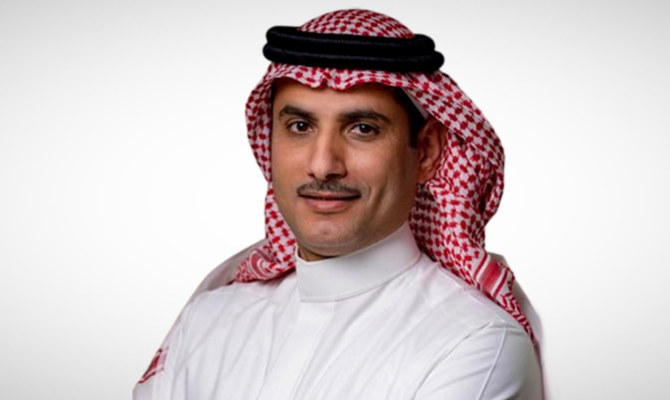
Al-Mazroua leading NIDLP to transform KSA into industrial powerhouse

Suliman Al-Mazroua
Short Url
Updated 02 March 2022
Follow

Al-Mazroua leading NIDLP to transform KSA into industrial powerhouse

  • Al-Mazroua leads the NIDLP’s objective to “transform the Kingdom into a leading industrial powerhouse and a global logistics hub by maximizing the value of its mining and energy sectors

RIYADH: Suliman Al-Mazroua has been CEO of Saudi Arabia’s National Industrial Development and Logistics Program since September 2019.

Al-Mazroua leads the NIDLP’s objective to “transform the Kingdom into a leading industrial powerhouse and a global logistics hub by maximizing the value of its mining and energy sectors while unlocking the full potential of local content and the 4th Industrial Revolution” as a key facet of Saudi Arabia’s Vision 2030 reform program.

NIDLP promotes the economic diversification of the Kingdom towards more sustainable growth by nurturing an attractive commercial environment for both local and international investment.

Al-Mazroua obtained a bachelor’s degree in systems engineering in 2001 from the King Fahd University of Petroleum and Minerals.

He joined Saudi Aramco in 2001 and remained there on and off, in various engineering and supervisory roles, until July 2017. In the meantime, he completed his MBA in 2007 from the University of Hull, UK. 

Al-Mazroua was appointed executive director of Saudi Arabia’s Delivery and Rapid Intervention Center in July 2017. The DRIC is related to Saudi Arabia’s Ministry of Economy and Planning and is responsible for following up implementation of priority initiatives with great economic and developmental value.

He became director general of the DRIC in October 2018 and remained in that post until February 2019.

Al-Mazroua joined the NIDLP as executive vice-president in February 2019 and was named CEO in September of the same year.

“Overall, by 2030, NIDLP targets to add some $453 billion in private sector investment, contribute $320 billion to GDP, add 1.6 million new jobs, and generate $266 billion growth in exports and re-exports,” Al-Mazroua said in an interview with investment analysis portal The Business Year.


European gas prices soar almost 50% as Iran conflict halts Qatar LNG output

Updated 6 sec ago
Follow

European gas prices soar almost 50% as Iran conflict halts Qatar LNG output

  • Analysts warn prolonged disruption could push prices higher
  • Some shipments of oil, LNG through Strait of Hormuz suspended
  • Benchmark Asian LNG price up almost 39 percent

LONDON: ​Benchmark Dutch and British wholesale gas prices soared by almost 50 percent on Monday, after major liquefied natural gas exporter Qatar Energy said it had halted production due to attacks in the Middle East.

Qatar, soon to cement its role as the world’s second largest LNG exporter after the US, plays a major role in balancing both Asian and European markets’ demand of LNG.

Most tanker owners, oil majors and ‌trading houses ‌have suspended crude oil, fuel and liquefied natural ​gas shipments ‌via ⁠the ​Strait of ⁠Hormuz, trade sources said, after Tehran warned ships against moving through the waterway.

Europe has increased imports of LNG over the past few years as it seeks to phase out Russian gas following Russia’s invasion of Ukraine.

Around 20 percent of the world’s LNG transits through the Strait of Hormuz and a prolonged suspension or full closure would increase global competition for other ⁠sources of the gas, driving up prices internationally.

“Disruptions to ‌LNG flows would reignite competition between ‌Asia and Europe for available cargoes,” said ​Massimo Di Odoardo, vice president, gas ‌and LNG research at Wood Mackenzie.

The Dutch front-month contract at the ‌TTF hub, seen as a benchmark price for Europe, was up €14.56 at €46.52 per megawatt hour, or around $15.92/mmBtu, by 12:55 p.m. GMT, ICE data showed.

Prices were already some 25 percent higher earlier in the day but extended gains ‌after QatarEnergy’s production halt.

Benchmark Asian LNG prices jumped almost 39 percent on Monday morning with the S&P Global ⁠Energy Japan-Korea-Marker, widely used ⁠as an Asian LNG benchmark, at $15.068 per million British thermal units, Platts data showed.

“If LNG/gas markets start to price in an extended period of losses to Qatari LNG supply, TTF could potentially spike to 80-100 euros/MWh ($28-35/mmBtu),” Warren Patterson, head of commodities strategy at ING, said. The British April contract was up 40.83 pence at 119.40 pence per therm, ICE data showed.

Europe is also relying on LNG imports to help fill its gas storage sites which have been depleted over the winter and are currently around 30 percent full, the latest data from Gas Infrastructure ​Europe showed. In the European carbon ​market, the benchmark contract was down €1.10 at €69.17 a tonne