

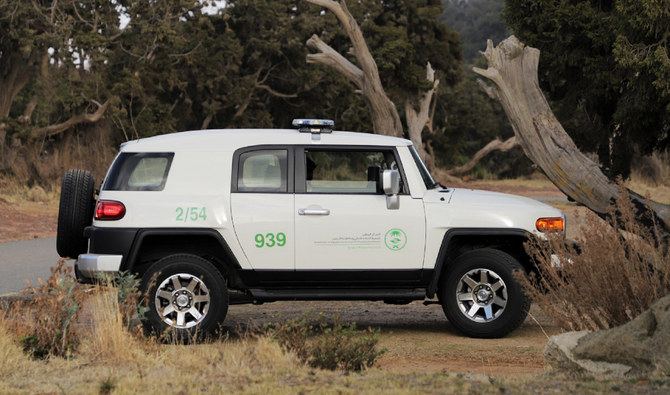
Patrols, drones to protect forests and parks in Asir

Around 100 patrols in service will monitor parks and forests in the Asir region. (Supplied)
Short Url
Updated 02 March 2022
Follow

Patrols, drones to protect forests and parks in Asir

ASIR: Saudi Arabia is stepping up efforts to protect forests and parks in the Asir region, with patrols and drones being used to monitor infringements and apprehend perpetrators.

The Kingdom’s National Center for Vegetation Development and Combating Desertification said that 100 patrols and five drones have been launched as part of the initiative.

According to Ali Al-Asmari, general supervisor of licenses and regulations at the center, the new initiative will monitor and detect infringements and violations of vegetation cover, apprehend perpetrators, and take appropriate measures to protect the environment.

Al-Asmari said: “The launch of the patrols and drones in Asir will be conducted by qualified and trained national cadres in the field of monitoring and communications.”

The National Center for Vegetation Cover and Combating Desertification is tasked with combating desertification, development and rehabilitating forest vegetation cover, local endangered plant species protection, and developing and managing national parks.

It also aims to conduct studies and support vegetation-related research.


Saudi astronauts help achieve breakthrough in cartilage-repair research

Saudi Arabia recorded major scientific milestone with its astronauts helping to produce cartilage-repair nanomaterial in space.
Updated 5 sec ago
Follow

Saudi astronauts help achieve breakthrough in cartilage-repair research

  • Nanomaterial produced in space for the first time
  • Saudi astronaut Rayana Barnawi part of the team

RIYADH: Saudi Arabia has recorded a major scientific milestone with its astronauts helping to produce a cartilage-repair nanomaterial in space for the first time, building on the work done during the Kingdom’s landmark SSA-HSF1 mission in 2023.

The Saudi Space Agency announced that its astronauts’ involvement in 19 experiments aboard the International Space Station would enhance quality of life on Earth.

The SSA explained that the research, led by scientists Yupeng Chen and Mari Anne Snow, in an international collaboration, focused on developing advanced biomaterials for tissue engineering, the Saudi Press Agency reported on Monday.

Saudi astronaut Rayana Barnawi helped to conduct the experiments and collect data in the microgravity environment. The material produced could assist in tissue treatment and organ transplantation.

The research findings were published in Nature in July 2025, one of the world’s leading scientific journals.

Barnawi said: “Conducting the experiment in space enabled the fabrication of an advanced nanomaterial and the production of reliable data that supports the development of scientific research contributing to improving human life and serving humanity.”

The SSA said the Kingdom wants to maximize the scientific return from human exploration missions for the benefit of the planet.