PARIS: Russia continued to pay a heavy sporting price for its invasion of Ukraine on Tuesday, frozen out by a snowballing list of sports with perhaps the most painful blows coming from ice skating and athletics.
However, Russian and Belarusian tennis players will be allowed to continue competing on the WTA and ATP Tours and in Grand Slam tournaments, despite its teams being suspended from the Davis Cup and Billie Jean King Cup.
Russia, traditionally a powerhouse in figure skating — they won six medals at the Beijing Olympics including two gold — had their skaters barred from all competitions.
This rules them out of March’s world championships to be hosted in Montpellier, France.
Their track and field athletes, as well as those from Belarus, joined them from being barred from this year’s world championships — indoors and outdoors — later on Tuesday.
It was a decision not taken lightly, with World Athletics president Sebastian Coe describing it as “going against the grain” to punish athletes “but sport has to step up.”
Belarusian athletes are being punished as the country is being condemned internationally for being used as a launchpad by Russian forces to attack neighboring Ukraine.
Both are significant blows for Russia, which under President Vladimir Putin had used sport as a powerful force for its image both globally and internally.
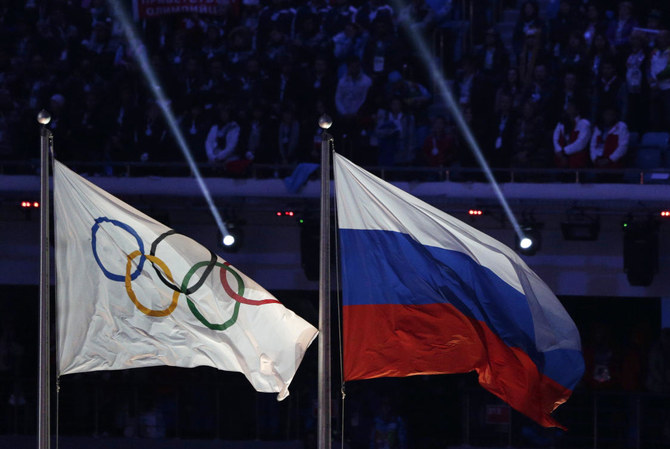
Under his presidency it has hosted the Winter Olympics in 2014 in Sochi — although that was overshadowed by the state-sponsored doping scandal — and the 2018 men’s football World Cup.
On Monday, the governing bodies who oversee those sporting showpieces hit Russia hard.
The International Olympic Committee (IOC) urged sports federations and organizers to exclude Russian and Belarusian athletes and officials from international events.
Hours later, FIFA kicked Russia out of the 2022 World Cup as football’s global governing body and UEFA joined forces to expel Russian national teams and clubs from all international competitions.
Russian football suffered another body blow on Tuesday when German sports equipment giants Adidas suspended their partnership with the Russian Football Federation.
Adidas generated 2.9 percent of its turnover in 2020 in the “Russia, Ukraine and CIS” regions.
Russian tennis players, including newly-crowned men’s world number one Daniil Medvedev and Belarus’ women’s world number three Aryna Sabalenka, will be allowed to keep competing in major individual events.
But they will not be able to play under their countries’ respective flags.
“A deep sense of distress, shock and sadness has been felt across the entire tennis community following Russia’s invasion of Ukraine in the past week,” said a joint statement from the ATP, WTA, ITF and the organizers of tennis’ four Grand Slam tournaments.
Several high-profile tennis players from Russia have spoken out against the conflict in Ukraine.
Russia’s top-ranked women’s player Anastasia Pavlyuchenkova joined men’s tennis number six Andrey Rublev in criticizing the war.
“Stop the war, stop the violence,” she tweeted on Tuesday.
“Personal ambitions or political motives cannot justify violence. This takes away the future not only from us, but also from our children.”
Russia are the Davis Cup holders but will not be able to defend their title later this year after being banned by the ITF from its team competitions.
Professional cycling teams and national teams from Russia and Belarus have also been barred by the UCI.
But individual riders racing for teams based in other countries will be able to keep competing.
Russia also lost the right to host the men’s Volleyball World Championships in August and September.
This follows UEFA stripping Saint Petersburg of hosting the Champions League final — European football’s premier club competition — and Formula One canceling the Russian Grand Prix last Friday.
Badminton World Federation (BWF) followed their fellow federations with a blanket ban on the athletes, declaring it had “strengthened its measures.” Only hours before it initially just canceled BWF-sanctioned tournaments in Russia and Belarus.
Swimming was another rare bird to offer some sanctuary for Russian and Belarusian swimmers, as governing body FINA stopped short of banning them.
“Russian or Belarusian nationals, be it as individuals or teams, should be accepted only as neutral athletes or neutral teams,” FINA said in a statement.
The Ukrainians will, in spite of the challenges they faced in traveling, be present for the opening ceremony of the Winter Paralympics in Beijing.
“The Ukrainian national team will fly in full for the Paralympic Games,” the Ukrainian federation said in a tweet.
Amid all the gloom for Ukrainian sporting stars, there was a bit of bright news for Ukraine international midfielder Yevhen Shakhov — who plays in Greece — whose wife gave birth to a baby girl in Kyiv.
“The real heroes of our time. Heroes are not those who fight, but those who give birth to life. I love you very much,” the 31-year-old AEK Athens star posted on Instagram.
Elsewhere, Manchester City’s Ukrainian left-back Oleksandr Zinchenko was given the captain’s armband for his team’s FA Cup tie at Peterborough.


![]()

Russia’s sporting freeze grows over Ukraine invasion
Short Url
https://arab.news/gqbf2
Russia’s sporting freeze grows over Ukraine invasion
- Russian and Belarusian tennis players will be allowed to continue competing on the WTA and ATP Tours and in Grand Slam tournaments
- Their track and field athletes, as well as those from Belarus, joined them from being barred from this year's world championships


Latest updates


© 2026 SAUDI RESEARCH & PUBLISHING COMPANY, All Rights Reserved And subject to Terms of Use Agreement.