ThePlace: Sharaan Nature Reserve, a rich biodiversity hotspot of AlUla

1 / 3
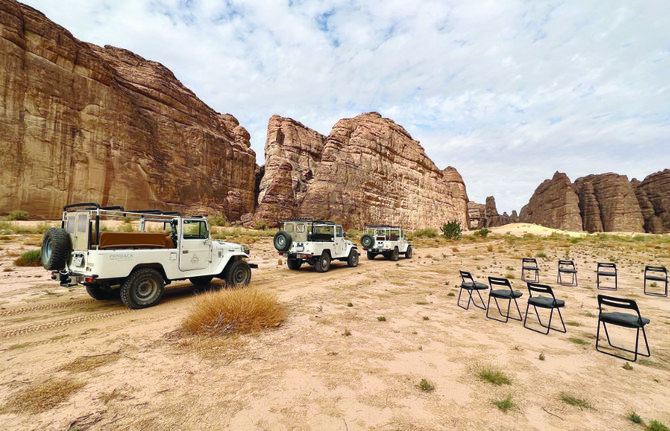
Sitting on 3,000 years of history, the Sharaan Nature Reserve covers an area of 1,500 sq km and falls under the “Vision of AlUla,” launched by the city’s royal commission (AN Photo/Zaid Khashogji)
2 / 3
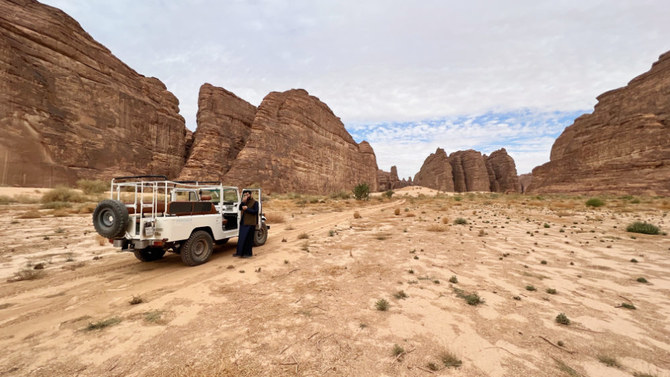
(AN Photo/Zaid Khashogji)
3 / 3
(AN Photo/Zaid Khashogji)
Short Url
Updated 28 February 2022
Follow

ThePlace: Sharaan Nature Reserve, a rich biodiversity hotspot of AlUla

  • Among its mountains, visitors can see historical engravings from ancient civilizations
  • Protecting and conserving the sensitive biodiversity native to AlUla is at the top of the commission’s priorities to restore the area

RIYADH: Sharaan Nature Reserve For nature lovers, explorers and adventurers, AlUla offers a unique safari inside its nature reserve surrounded by a red, rocky landscape, filled with indigenous flora and fauna, that promises an extraordinary experience.

Sitting on 3,000 years of history, the Sharaan Nature Reserve covers an area of 1,500 sq km and falls under the “Vision of AlUla,” launched by the city’s royal commission, which seeks to transform the region responsibly in order to preserve and protect its natural and cultural heritage.

Among these is expanding an animal breeding program; roaming within the reserve are a myriad of species, including Nubian ibexes, red-necked ostriches, Idmi gazelles, endangered Arabian wolves and large-eared red foxes, and most notably, the Arabian leopard.

However, the introduction of domestic livestock to the region has decimated the native vegetation. Overgrazing has led to desertification and habitat degradation in some areas.

Protecting and conserving the sensitive biodiversity native to AlUla is at the top of the commission’s priorities to restore the area. Acacia trees, indigenous to the land, are being planted as part of the project to develop vegetation and rehabilitate AlUla’s natural ecosystem — the trees in time will also provide shade for animals within the habitat.

Among its mountains, visitors can see historical engravings from ancient civilizations of hunters holding spears on horses and camels — which bore religious significance — as well as petroglyphs of old Arabic writings, such as Nabataean.

As part of ongoing efforts to preserve its wildlife, “The Global Fund for the Arabian Leopard” was established by the Royal Commission for AlUla to ensure that Sharaan can safely and adequately host the endangered leopard and protect it from extinction. Its aim is to sustain the leopard population and its prey and protect its natural habitat.

The reserve will also have a resort, expected to be completed by 2023.


What makes the Taif Rose such a precious fragrance product?

Perfume artisan involvement aligns with Jazan Festival’s initiative repositioning traditional crafts as dynamic. (SPA)
Updated 09 January 2026
Follow

What makes the Taif Rose such a precious fragrance product?

  • These farms produce nearly 550 million roses annually, all harvested during a brief season of no more than 45 days, from early March to the end of April

TAIF: Taif roses, renowned for their exceptional aroma and the meticulous care required in cultivation, harvesting, and processing, are among the Kingdom’s most valuable natural perfume products and stand out as prominent agricultural and cultural symbols deeply connected to the region’s heritage and tourism.

Taif rose farms, numbering over 910 and spread across Al-Hada, Al-Shafa, Wadi Muharram, Al-Wahat, Al-Wahit, and Wadi Liya, are home to approximately 1,144,000 rose bushes covering about 270 hectares of agricultural land. 

FASTFACT

Taif rose farms, numbering over 910 and spread across Al-Hada, Al-Shafa, Wadi Muharram, Al-Wahat, Al-Wahit, and Wadi Liya, are home to approximately 1,144,000 rose bushes covering about 270 hectares of agricultural land.

These farms produce nearly 550 million roses annually, all harvested during a brief season of no more than 45 days, from early March to the end of April.

This harvest yields around 20,000 tolas of Taif rose oil. Producing a single tola requires approximately 12,000 roses, which are picked manually at dawn and distilled within 24 hours to preserve the purity and quality of the scent before reaching the market.