


Diriyah, Jewel of the Kingdom: Saudi pavilion at Expo 2020 Dubai celebrates founding of first Saudi state in Diriyah

1 / 4
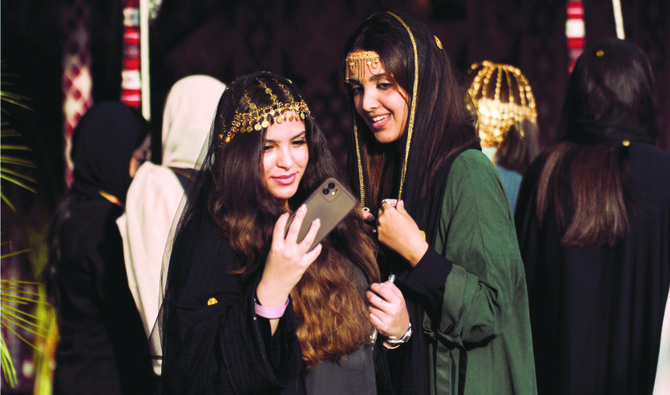
The Diriyah Gate Development Authority contributed to the troupe of tour guides at the Saudi pavilion.
2 / 4
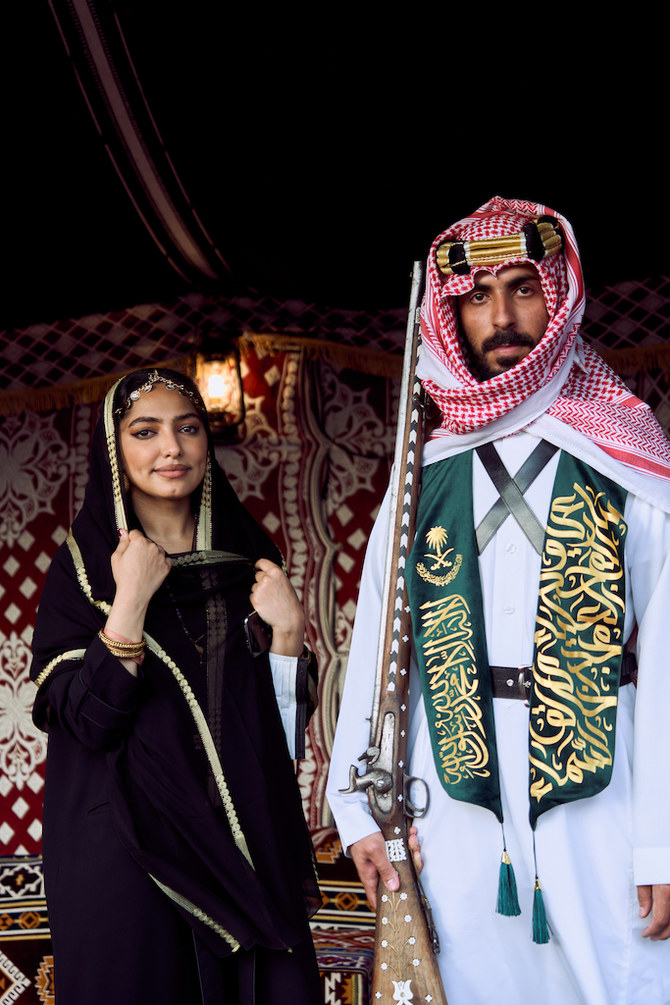
The Diriyah Gate Development Authority contributed to the troupe of tour guides at the Saudi pavilion.
3 / 4
The Diriyah Gate Development Authority contributed to the troupe of tour guides at the Saudi pavilion.
4 / 4
The Diriyah Gate Development Authority contributed to the troupe of tour guides at the Saudi pavilion.
Short Url
Updated 26 February 2022
Follow

Diriyah, Jewel of the Kingdom: Saudi pavilion at Expo 2020 Dubai celebrates founding of first Saudi state in Diriyah

Celebrations were held at the Saudi pavilion at Expo 2020 Dubai on Feb. 22 to mark the Kingdom’s first Founding Day, which commemorated the establishment of the first Saudi state in 1727 at its capital of Diriyah.
Saudi performers, musicians and dancers showcased a range of cultural presentations to demonstrate the Kingdom’s rich and diverse heritage. The program included the Ardeh, and the projection of a video onto the facade of the pavilion Nuzul’s video highlighted aspects of culture that were perpetuated in Diriyah during the 18th century. Mudbrick building, date preservation, traditional medicine, historical schooling and the crafting of the first Saudi flag featured in the footage.

Tour guides sent from Diriyah, also known as the Jewel of the Kingdom, engaged in cultural activities, educating people around the world about the founding of the country.
The Diriyah Gate Development Authority, responsible for Diriyah’s historic legacy, contributed to the troupe of tour guides at the Saudi pavilion.
Three guides, Manal Hathrah, Rahaf Al-Harbi and Maha Al-Fagir, each imparted their knowledge and understanding of the first Saudi state’s founding to the diverse international audience.
The trio highlighted that Diriyah has stood as a definitive starting point for the Saudi state, being a political, cultural and social capital, and a cradle of the civilization led by the early imams of the Al-Saud family.
DGDA is working to preserve Diriyah and its historical heritage. These efforts also aim to transform Diriyah into a leading global destination, alongside DGDA’s other development projects that work to preserve and modernize many historic sites, elevate its people’s quality of life and fulfill the Kingdom’s Vision 2030 goals.
Founding Day complements the Saudi National Day, which celebrates the unification of Saudi Arabia in 1932 every Sept. 23, by recognizing the beginning of the Saudi state with a new event that commemorates the Kingdom’s historical roots.
The Saudi pavilion has so far welcomed more than 3 million visitors from all corners of the globe and will be at the expo until the event closes at the end of March.


Carved by time: Saudi Arabia’s hidden geotourism gem of Razan

Updated 06 February 2026
Follow

Carved by time: Saudi Arabia’s hidden geotourism gem of Razan

  • Long before modern engineering, the geology of Razan functioned as effective natural infrastructure, sustaining life in an arid environment
  • This utility made Razan a strategic landmark, playing a vital role in the ancient Yemeni Hajj Road

AL-LITH: Sixty kilometers north of Al-Lith governorate in the Kingdom's west, rising above the shifting sands and valleys of the Makkah region, lies a place where the earth itself tells a story. This is Razan, a geological wonder where history is not written in ink, but etched into the stone by the patient hands of wind, water, and time.

Perched atop a high rocky mass and flanked by valleys to the northwest and southeast, Razan stands in natural isolation. This geographic solitude has acted as a guardian, preserving a landscape that feels almost otherworldly — a pristine stage set by nature over millennia.

The place is defined by its striking rock formations: dense clusters of stone, stepped ridges that resemble ancient staircases, and natural ceilings sculpted by the relentless flow of seasonal torrents.

The visual impact is one of dramatic contrast — the heaviness of solid rock balanced against open, airy spaces carved by erosion. Fine channels and intricate flow patterns mark the stone, serving as fossilized evidence of the water that once rushed through these corridors, shaping the land into a rugged work of art.
 

In the quiet majesty of Razan, the past is preserved. (SPA)

Nature’s infrastructure 

But Razan is more than just a scenic marvel; for centuries, it served as a lifeline. The same forces that sculpted the cliffs also hollowed out natural rock basins. These geological depressions acted as seasonal reservoirs, catching rainwater and supplementing nearby wells. Long before modern engineering, the geology of Razan functioned as effective natural infrastructure, sustaining life in an arid environment.

This utility made Razan a strategic landmark, playing a vital role in the ancient Yemeni Hajj Road. The sturdy, elevated terrain provided a natural pathway for pilgrims, offering stability and protection on their spiritual journey toward Makkah.

Today, Razan stands at the intersection of heritage and opportunity. No longer just a passage for pilgrims, it is emerging as a valuable asset for geotourism. Its unique topography offers a visual feast for travelers and a treasure trove for scientists studying geological history.

As Saudi Arabia moves toward the goals of Vision 2030, sites like Razan are finding new purpose. By transforming this geological narrative into a tourism destination, the region aims to preserve its natural heritage while breathing new life into the local economy.
