



ISLAMABAD: An acclaimed British-Pakistani filmmaker, Abrar Hussain, who has produced documentaries on the Haram, the Great Mosque of Makkah, and the Al-Aqsa Mosque, the third holiest site in Islam, says his films offer rare glimpses into the cultural heritage of Islam and aim to combat propaganda against the religion.
Born in Islamabad, Hussain moved with his family to London in the late seventies when he was less than a year old. Before becoming a documentary filmmaker, Hussain worked as a series producer at the Islam Channel, and directed and produced the popular returning TV shows Model Mosque (2007) and Faith Off (2008).
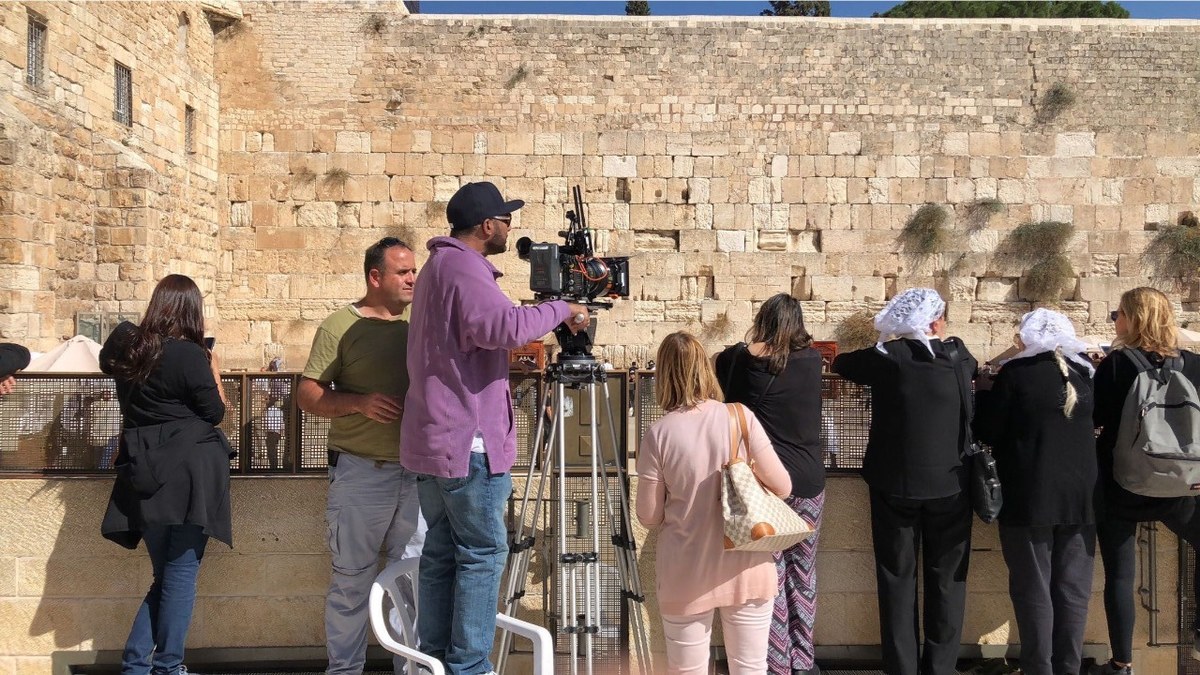
British-Pakistani filmmaker Abrar Hussain films scenes for ‘One Night In Al-Aqsa’ at the Western Wall in Jerusalem on May 28, 2019. (Courtesy: Red Face Films)
In 2017, Hussain released what is perhaps his best known work, ‘One Day in the Haram.’ As only Muslims are permitted to enter Makkah, the film offered a glimpse inside the mosque and what goes on there, how it is run and what the daily routines are like. It also provided a useful teaching tool for younger Muslim viewers and recent converts to the faith.
“Post 9/11, there was lot of media backlash against Muslims, especially in the UK and in western countries, and I knew this is not the true portrayal of Islam,” Hussain told Arab News in an interview. “I really felt that I needed to use my creative skills to do something to combat this. So, I started doing Islamic productions and I had very big success.”
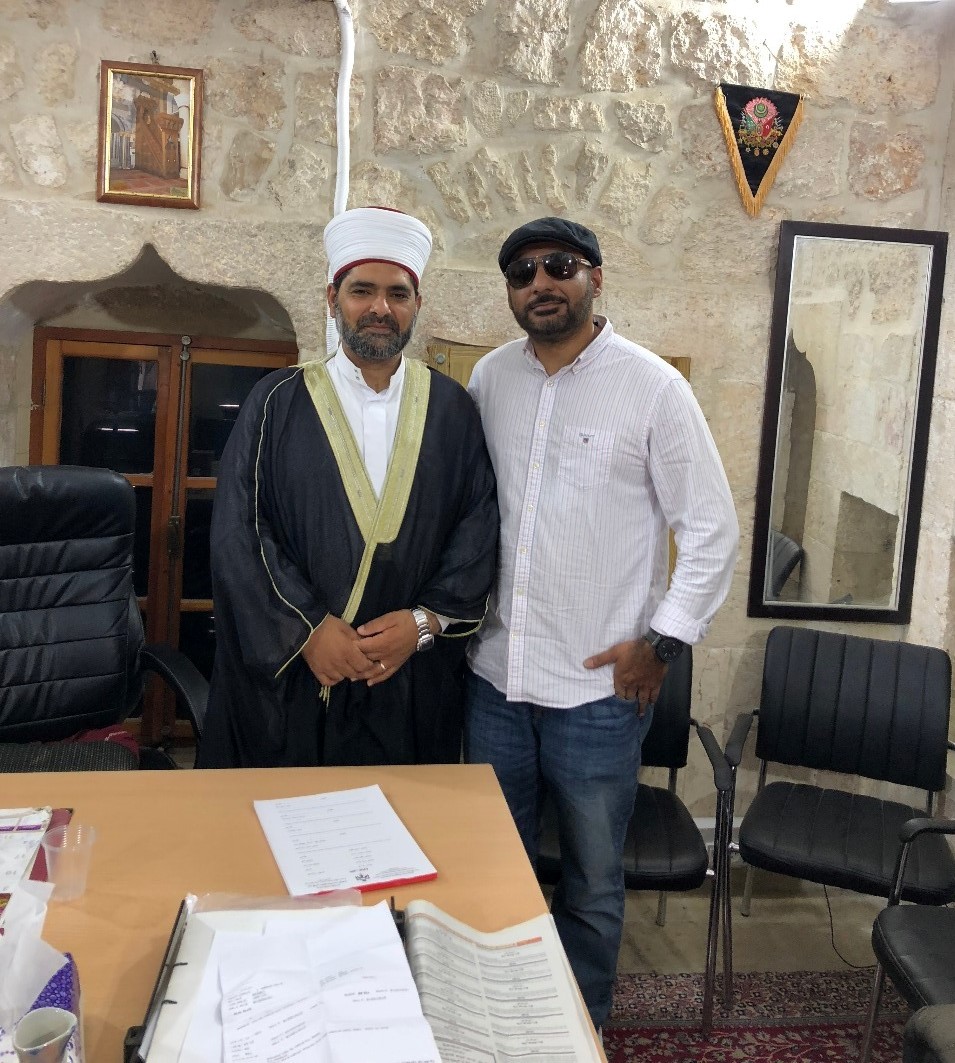
British-Pakistani filmmaker Abrar Hussain (L) with head Imam of Al-Aqsa, Sheikh Omar Kiswani (R) at Al-Aqsa, Jerusalem, on May, 26, 2019. (Courtesy: Red Face Films)
This February, Hussain’s new film, ‘One Night in Al-Aqsa’, premiered in London, telling the story of the mosque’s compound during the Islamic calendar’s holiest night, Laylat Al-Qadr (Night of Power), when it is believed the first verses of the Holy Qur’an were revealed to the Prophet Muhammad (peace be upon him).
“Our film is all about promoting better and more tolerant understanding of Islam,’ Hussain said.
“Shot on this special occasion [of the Night of Power], Abrar Hussain’s documentary interweaves awe-inspiring aerial footage of Al-Aqsa with intimate shots of the faithful,” the Guardian newspaper wrote in a review of the film. “Many of them are Palestinians from the West Bank who endure numerous Israeli security checkpoints, adding excruciatingly long hours to their journey. Indeed, the omnipresence of the Israeli occupation looms large over the convivial and moving scenes of worshippers praying or breaking bread at the end of their fast.”
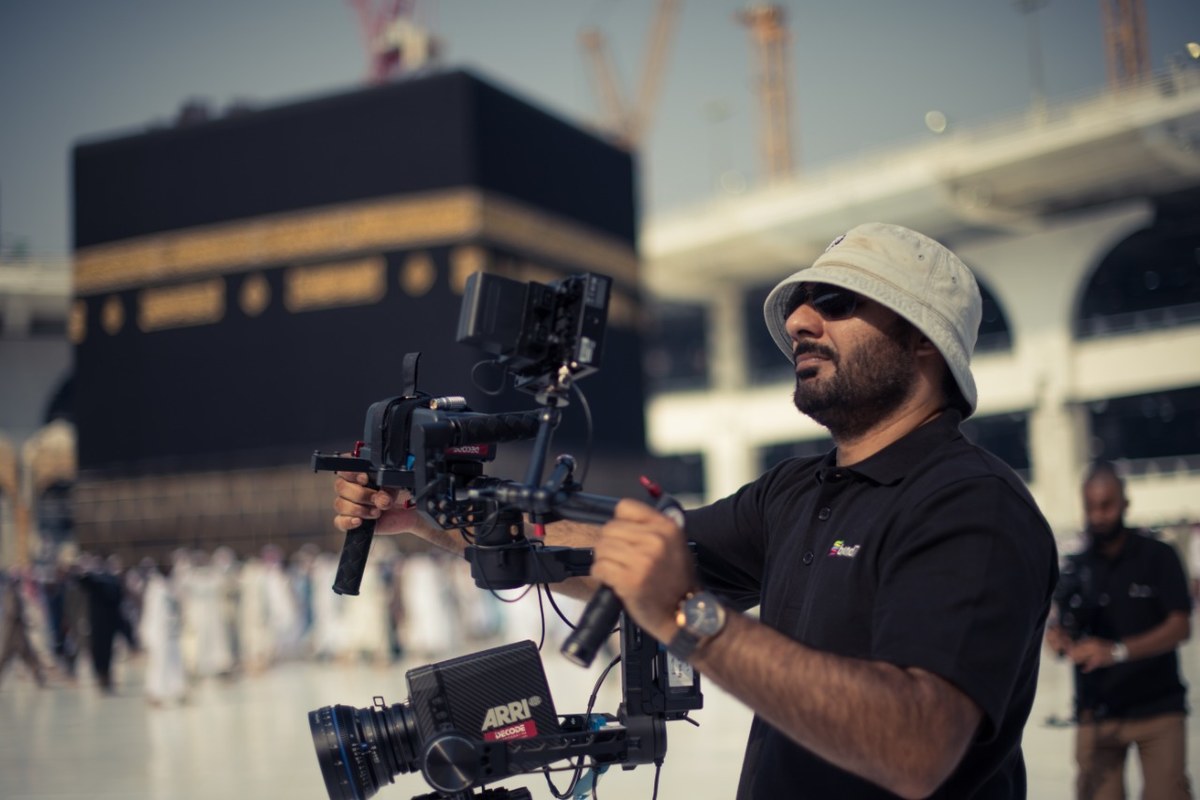
Filmmaker Abrar Hussain films shots outside the Kaaba for ‘One Day in the Haram’ on Makkah in October 2017. (Courtesy: Red Face Films)
“This documentary is a valuable window,’ the Guardian said, “into the lengths that Palestinians have to go to simply to celebrate their faith.”
Hussain described the documentary, shot on a £200,000 budget in about 18 months, as an “incredible and phenomenal experience to preserve cultural heritage and Islamic history.”
“It is one of the most important places [in Islam] and a sense of pride for Muslims,” he said, adding that the aim of the film was to encourage people to come to Al-Aqsa for worship and to stand in solidarity with the Palestinian people.
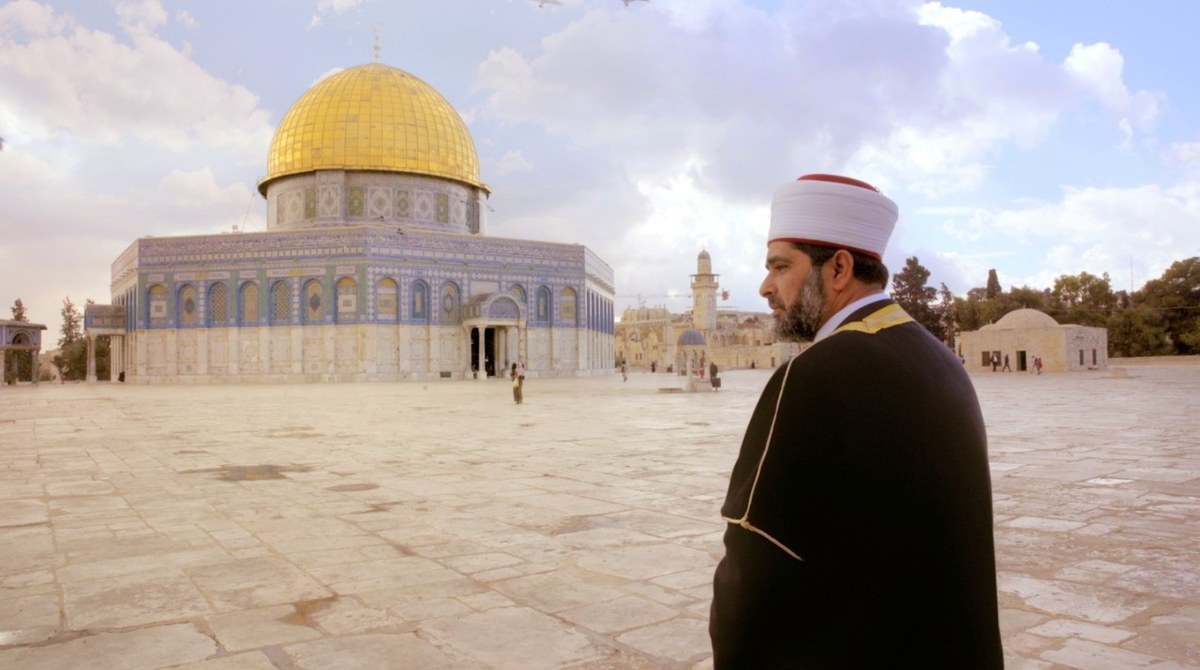
Filming scenes with Sheikh Omar Kiswani , Head Imam of Masjid Al-Aqsa, for One Night In Al-Aqsa, in the courtyards of Al-Aqsa in Jerusalem, May 26, 2019. (Courtesy: Red Face Films)
Hussain said both the documentaries had been watched by millions of people in cinemas and on airline entertainment systems and video on demand (VOD) platforms.
“’One day in the Haram’ remained on Amazon Prime for two years and now it has been transferred to another platform in the United States called USHUB which is streaming the film in over 200 countries worldwide,” the director said.
He said ‘One night in Al-Aqsa’ had already been screened in 12 countries and seen “big success” in the UK, US, Canada, South Africa and Australia.
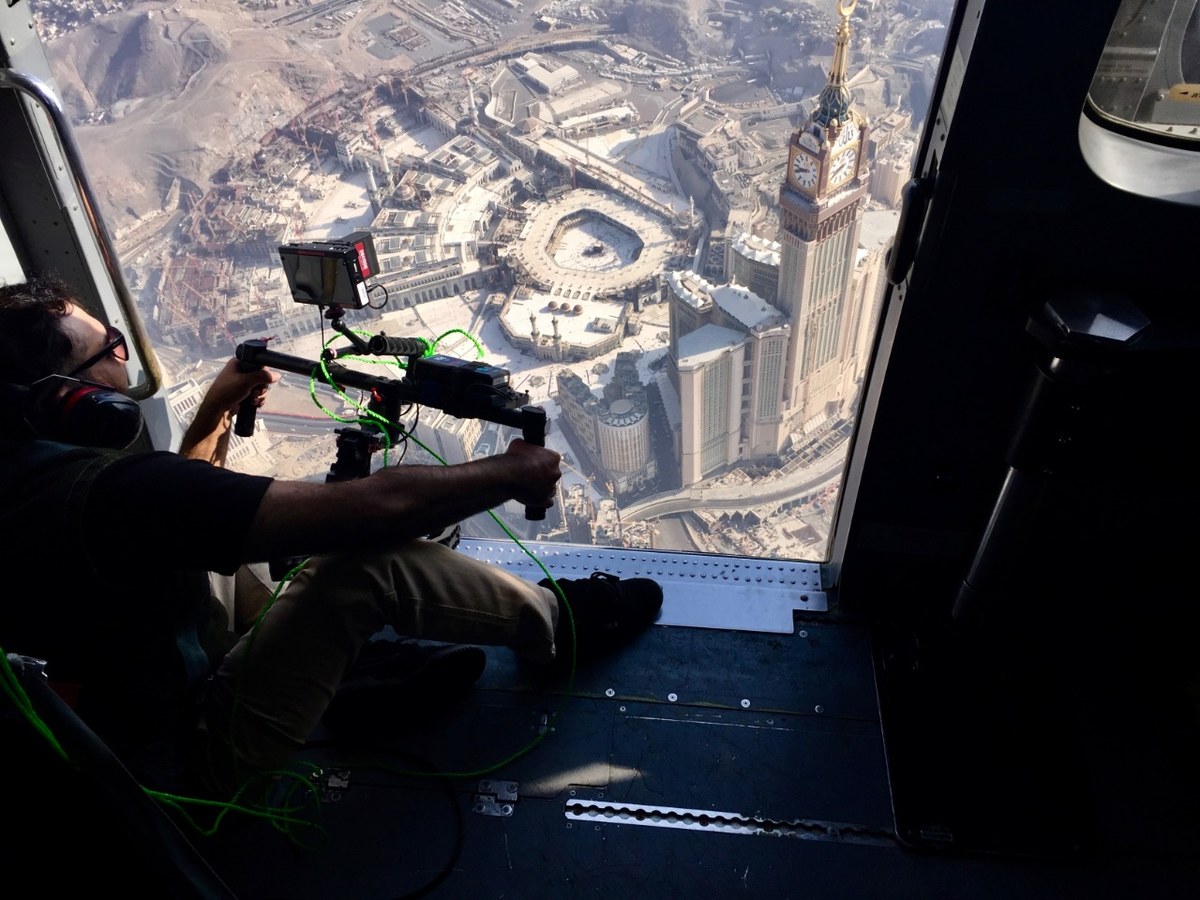
Filmmaker Abrar Hussain films aerial shots of the Haram for ‘One Day in the Haram’ from a helicopter in Makkah in October 2017. (Courtesy: Red Face Films)
“Muslim audience has appreciated that someone went through all the troubles to make this film,” Hussain said, saying the movie had also been screened in Saudi Arabia, Indonesia, Malaysia and Turkey.
Hussain said if figures from video on demand platforms were to be believed, at least 50 million people had already watched his new documentary. He also said he wanted to bring the film to Pakistan where ‘One Day in the Haram’ had met with “huge success” when it was screened during the month of Ramadan in 2019.

British-Pakistani Filmmaker Abrar Hussain wins the Media Award at the Hajj Awards for One Day in the Haram in London, UK, on November 4, 2019. (Courtesy: Red Face Films)
Funds generated through the Al-Aqsa film are being donated to the international humanitarian charity Penny Appeal’s Palestine campaign, which had also contributed funds to make the shooting of the documentary possible.
“Now through these funds they [Penny’s Appeal] will support other projects like this one,” Hussain said, “and provide health care, food, and other vital aid to the Palestinian people, mostly in Gaza.”
Hussain’s next project, he said, was a film on the holy city of Madinah.


