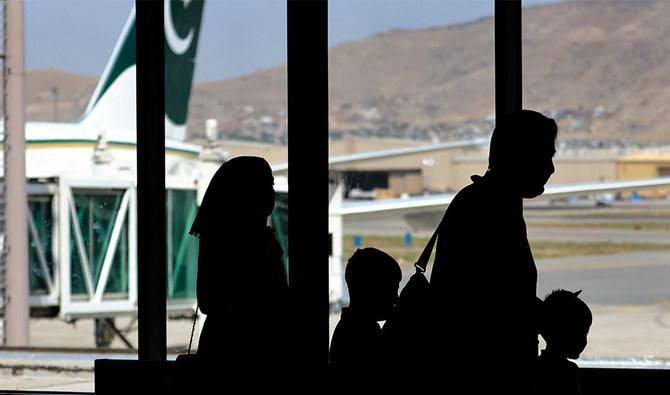
The Hague: The Netherlands has evacuated 294 Afghan citizens who arrived in neighboring Pakistan over the last few days and will be flown soon to a Dutch destination, the foreign ministry said Wednesday.
The group, consisting of translators, non-governmental workers and other people assisting Dutch missions to the war-torn country as well as their families, have been allowed across the Afghan-Pakistani border following “intense diplomatic negotiations,” the Hague-based ministry said in a statement.
The group consists of “persons and families of whom not everyone has valid travel documents,” it added.
“The Pakistani authorities have made an exception for this specific group and have given permission to travel to the Netherlands via that country,” the foreign ministry said.
The group is currently being housed by the Dutch government in hotels in Islamabad, the NOS public broadcaster reported.
A first group of 35 evacuees were given permission to travel to Pakistan in January and arrived on Friday in the Netherlands on a charter flight via Hanover in Germany, the foreign ministry added.
The Netherlands evacuated more than 1,500 people, both Dutch nationals and eligible Afghans, in the final chaotic days before the US pulled out of Afghanistan on August 31.
But many Afghans were left behind, including 22 interpreters, according to the government, despite calls from MPs and diplomats in Kabul to evacuate them months ago.
The chaotic Dutch withdrawal prompted two ministers to resign in its wake.
“The Dutch government continues to look for solutions to this and in the meantime advises people to apply for a passport where possible,” the foreign ministry said.


Dutch evacuate 294 Afghans through Pakistan — ministry
https://arab.news/4krjz
Dutch evacuate 294 Afghans through Pakistan — ministry

- The group, consisting of translators, non-governmental workers and other people assisting Dutch missions
- The Pakistani authorities have made an exception for this specific group says Dutch foreign ministry

Pakistan mulls 'Super App' for public services, document verification in major technology push
- Pakistan has been urging technology adoption in public, private sectors as it seeks to become a key tech player globally
- The country this month launched the Indus AI Week to harness technology for productivity, skills development and innovation
KARACHI: Pakistan is planning to launch a “Super App” to deliver public services and enable digital document verification, the country's information technology (IT) minister said on Sunday, amid a major push for technology adoption in public and private sectors.
Pakistan, a country of 240 million people, seeks to become a key participant in the global tech economy, amid growing interest from governments in the Global South to harness advanced technologies for productivity, skills development and innovation.
The country's information and communications technology (ICT) exports hit a record $437 million in Dec. last year, according to IT Minister Shaza Fatima Khawaja. This constituted a 23% increase month on month and a 26% increase year on year.
Pakistan's technology sector is also advancing in artificial intelligence (AI) and cloud computing, marked by the launch of Pakistan’s first sovereign AI cloud in November, designed to keep sensitive data domestic and support growth in the broader digital ecosystem.
“In developed countries, citizens can access all government services from a mobile phone,” Fatima said, announcing plans for the Super App at an event in Karachi where more than 7,000 students had gathered for an AI training entrance test as part of the ‘Indus AI Week.’
“We will strive to provide similar facilities in the coming years.”
Khawaja said the app will reduce the need for in-person visits to government offices such as the National Database and Registration Authority (NADRA) and the Higher Education Commission (HEC).
The Indus AI Week initiative, which ran from Feb. 9 till Feb. 15. was aimed at positioning Pakistan as a key future participant in the global AI revolution, according to the IT minister.
At the opening of the weeklong initiative, Prime Minister Shehbaz Sharif announced that Pakistan would invest $1 billion in AI by 2030 to modernize the South Asian nation’s digital economy.
“These initiatives aim to strengthen national AI infrastructure and make the best use of our human resource,” Khawaja said, urging young Pakistanis to become creators, inventors and innovators rather than just being the consumers of technology.