

DIRIYAH: On the Kingdom’s first Founding Day, Saudis looked back at the legacy of a country whose chapters are filled with the determination and struggles of their ancestors that made Diriyah a land of kings and heroes - and the place where it all began for a state formed over centuries.
In celebration of Feb. 22, the Diriyah Gate Development Authority on Tuesday launched a number of spirited events.
(AN photo by Basheer Saleh)
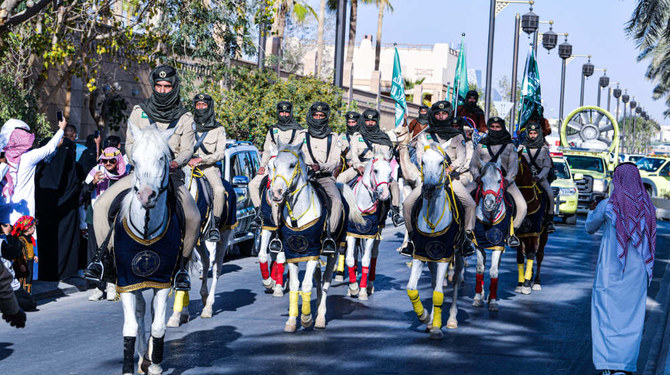
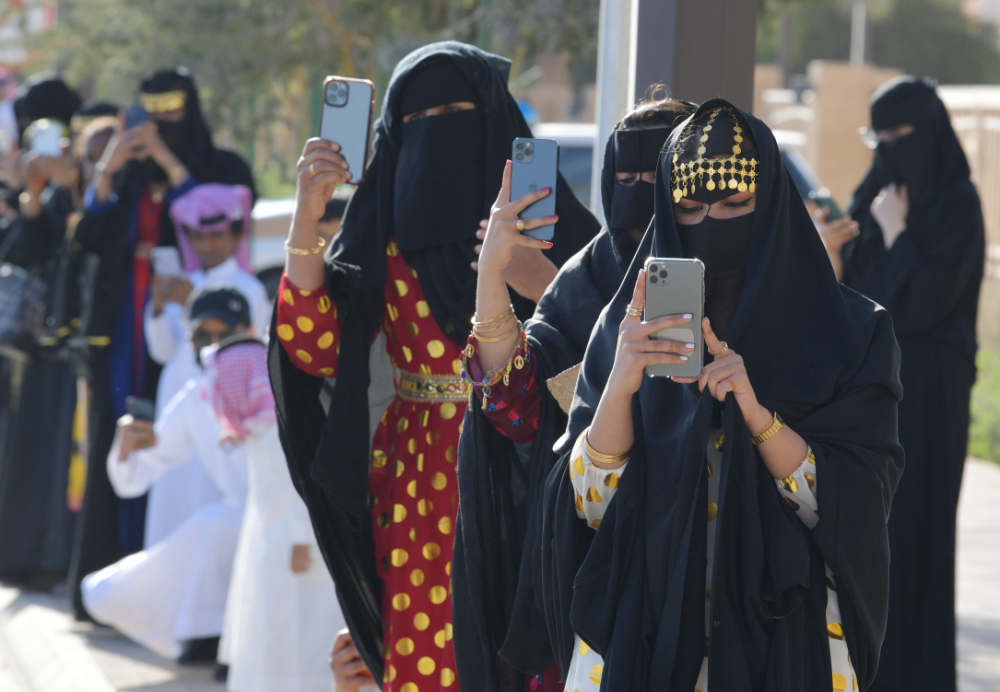
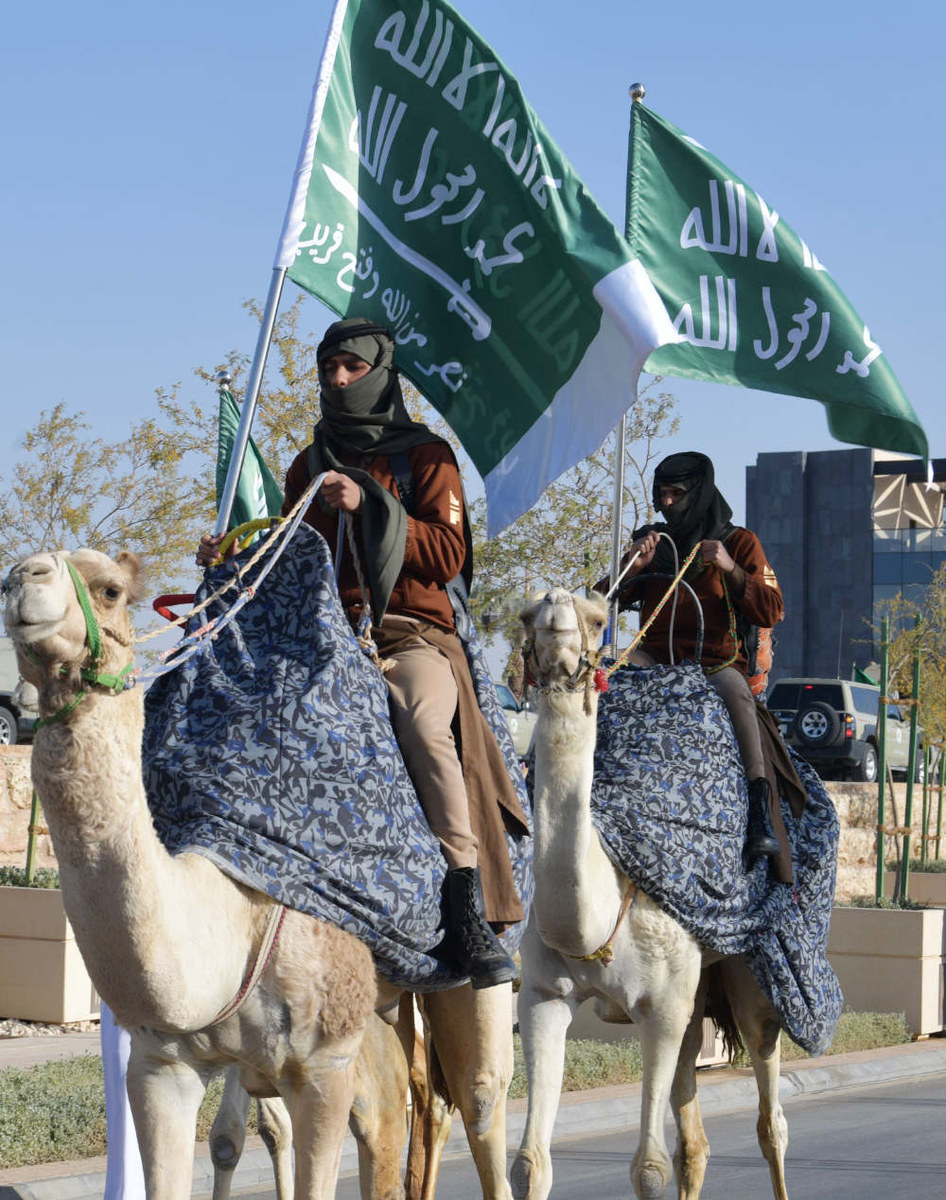
They began with a military parade that included members of the Saudi cavalry who rode on horses and camels, paying homage to the men who rode across the Arabian Peninsula during the formation of the Saudi state.
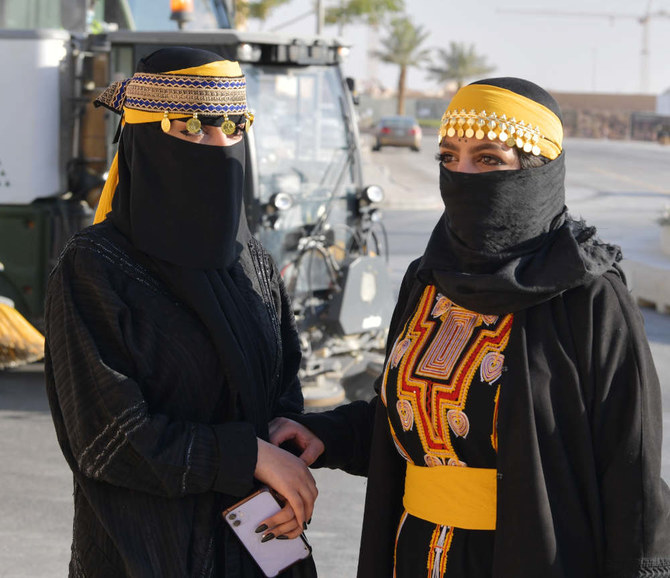
A Haggana band led the parade. Musicians were dressed in traditional attire, blowing their trumpets and smacking a daf, a percussion instrument dating back to the times of Prophet Muhammad, to showcase the depths of the Kingdom’s history.
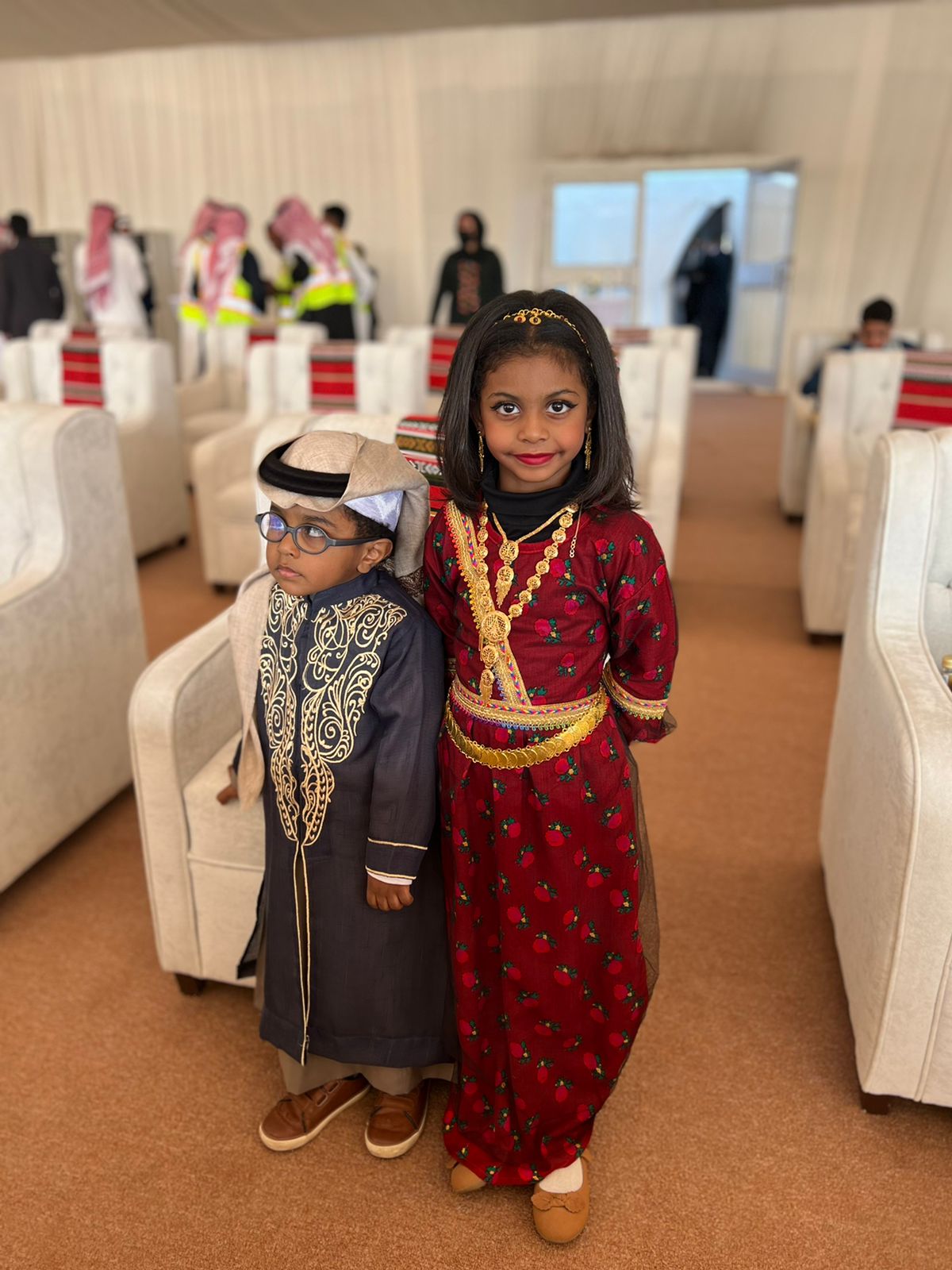
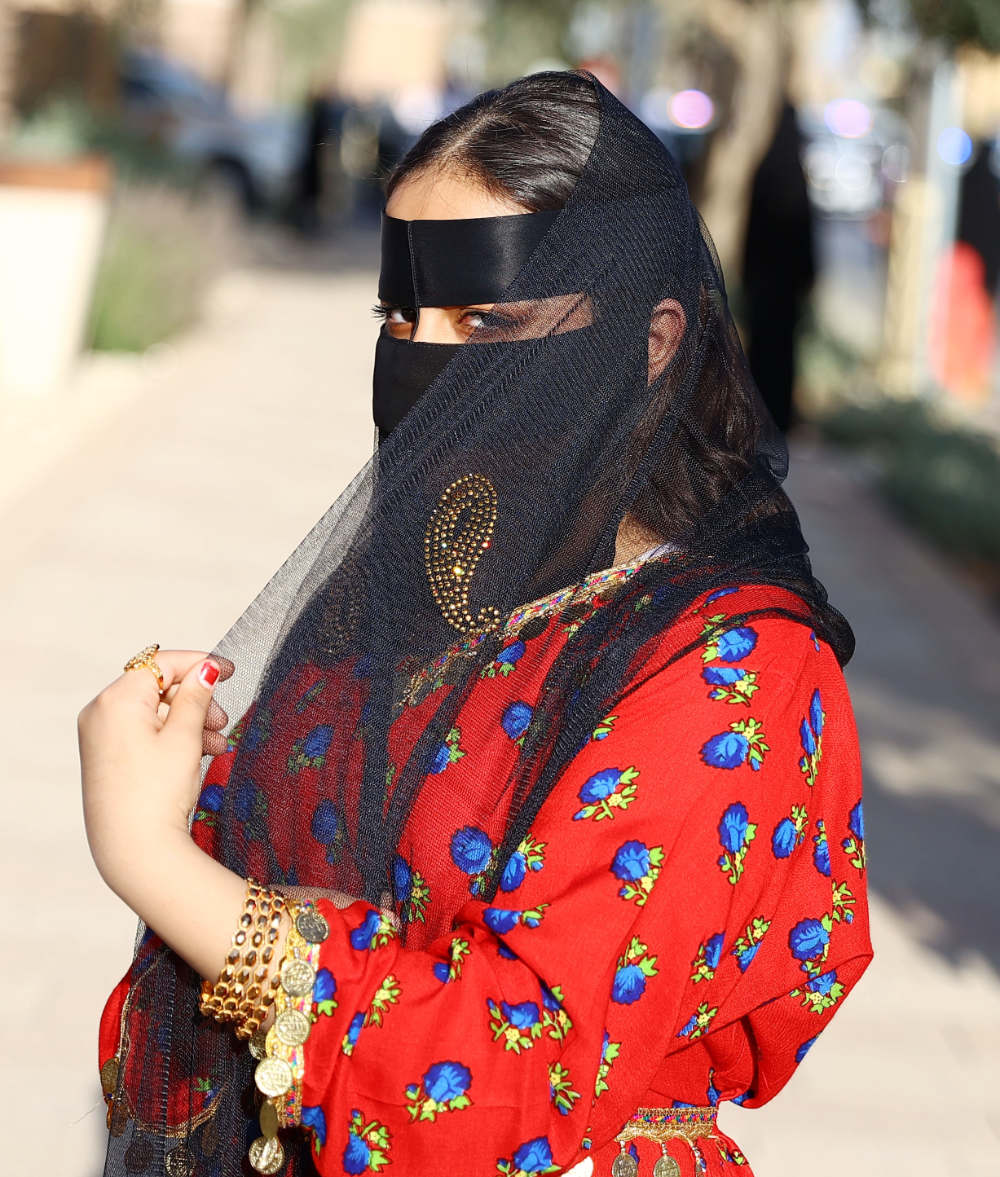
Young Dalia Al-Rawdhan, wearing a red floral dress and a golden headpiece, poses with her little brother dressed in the Saudi dagla in Diriyah. (AN photo by Basheer Saleh)
Young Dalia Al-Rawdhan, who was wearing a red floral dress and a golden headpiece, held her little brother, who was dressed in the Saudi dagla, while watching the Diriyah parade with excitement.
Their mother, Rana, said the inspiration for the outfits came from their culture in Hail.
“The inspiration I had for my kids’ national costumes was taken from our cultural clothes back home, we are from the west, specifically from Hail,” Al-Rawdhan told Arab News. “We made sure our kids know the history of Founding Day and participate in it and have an idea about it. It is their identity and it is important to know it.”
The commemoration of Founding Day was an opportunity for locals to retrieve memories of their forefathers, dating back three centuries since the establishment of the first Saudi state and bearing the milestones of the Kingdom’s history.
Diriyah — the capital of the first Saudi state — dates back to the middle of the ninth century when Mani' Al-Muraydi moved his family from Eastern Arabia to Wadi Hanifah after receiving an invitation from his cousin Ibn Diraa, the ruler of Hajr — modern-day Riyadh — who bestowed upon them the lands of Al-Mulaibid and Ghasibah.
These two settlements would soon become heavily populated thanks to their fertile farmlands, becoming the jewel of the Kingdom and a strong emirate that the Saudi state's imams would lead from.

(AN photo by Basheer Saleh)
Currently, Diriyah is home to a population of about 74,000 and falls under the administrative jurisdiction of the Riyadh province.
Saudi Arabia was able to maintain its indigenous Arab identity and heritage, which can be found in Diriyah.
Imam Muhammad bin Saud, one of the country’s greatest historical figures, took Diriyah from a city that held a number of surrounding territories to a state under which the vast majority of the Arabian Peninsula was unified.
His reign was marked by several achievements, including Diriyah's growth into an esteemed urban center filled with new neighborhoods and the construction of the city's wall to protect it from aggressors.
(AN photo by Basheer Saleh)
Diriyah continued to be the state's seat of governance until Imam Turki bin Abdullah chose Riyadh as its new capital in 1824.
While historians originally claimed the first Saudi state was founded in 1744, a new reappraisal of the origins of the Kingdom revealed 1727 as the true moment of Saudi Arabia’s birth.
In Diriyah, the UNESCO World Heritage Site of At-Turaif district can be found.
(AN photo by Basheer Saleh)
The historic neighborhood is the heart of the Kingdom’s founding and its landmarks and urban heritage represent the emergence of the first Saudi state.
Today, the DGDA carries out a number of restoration efforts encompassing At-Turaif, several historic palaces and mosques, Bujairi Terrace, and other sites such as Salwa Palace and the Diriyah Museum.
This month, it signed a deal with the Saudi Arabian National Committee of the International Council on Monuments and Sites to preserve cultural and natural heritage sites in the Kingdom.