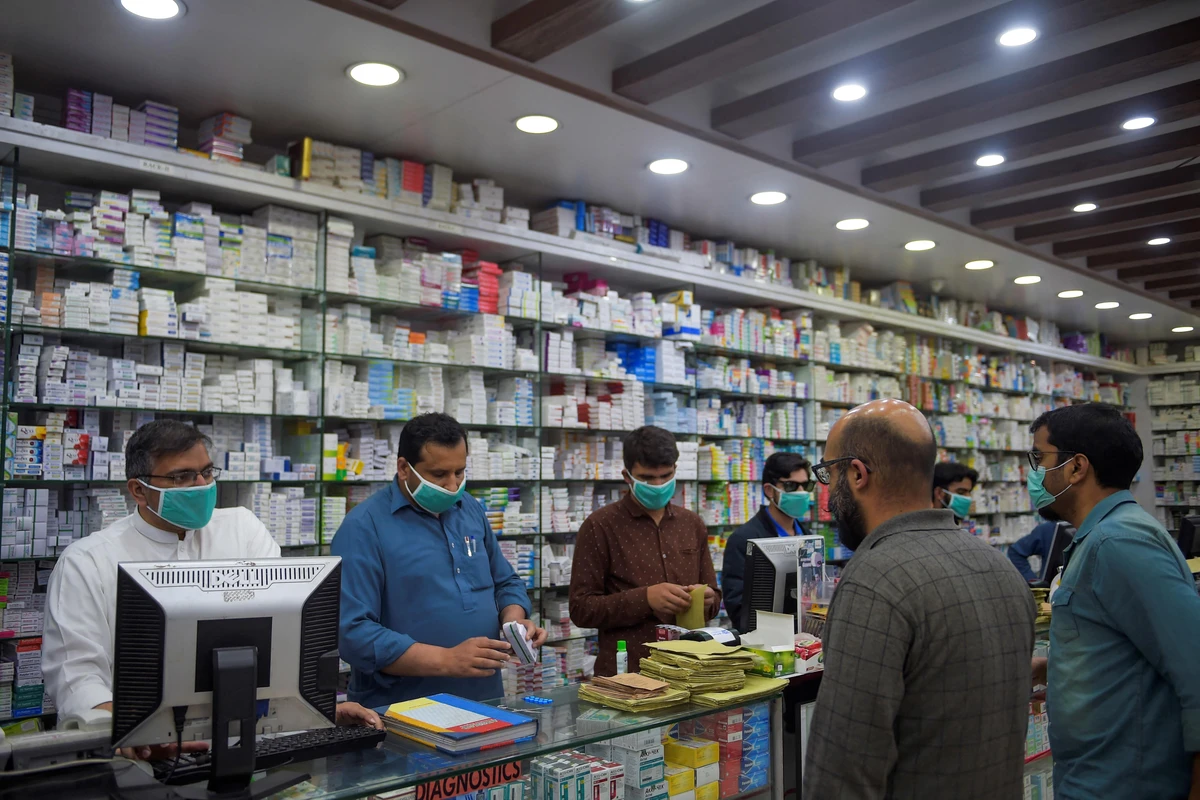
- Officials say online pharmacies registered boost during COVID-19 pandemic, authorities says working on regulation
- Pharmacists demand crackdown, say people ordering banned steroids and sedatives without doctors' prescriptions
ISLAMABAD: E-pharmacies in Pakistan, where the law does not regulate such businesses, have emerged as a "challenge" for provincial health authorities, officials said on Friday, advising the public not to be lured by free delivery and discounted rates into buying medicines online.
The sale of pharmaceutical products over the internet has grown rapidly in the last two years after the COVID-19 pandemic hit the country in February 2020, disrupting people's outdoor movement due to restrictions on transportation and public gatherings. A large number of people thus turned to using online pharmacies to order essential drugs, health officials said, though the quality of the products remains questionable. Drug retailers say e-pharmacies challenge their businesses and allow medicines that could be abused to be sold without verification.
There is no official data available on the exact number of the e-pharmacies in Pakistan but officials said a majority operate in Pakistan’s two largest cities, Karachi and Lahore, with a promise to deliver medicines and other pharmaceutical products at people’s doorsteps within four hours of order placement in these cities, or within 48 hours in other cities through courier services. Many of the online medicine portals also offer up to 20 percent discount with free home delivery.
Drug sales, even at traditional shops in Pakistan, are weakly regulated. Pharmacists often sell medicines without verifying prescriptions.
The Drug Regulatory Authority of Pakistan declined comment for this story, saying health was a provincial subject. The federal health ministry did not reply to calls seeking comment.
“This issue of unregulated online pharmacies is already in our notice, and we have directed the Sindh Healthcare Commission to look into it,” Dr. Irshad Ahmed Memon, Director-General Health Services in Sindh province, of which Karachi is the capital, told Arab News.
He said the trend of online drug stores had registered a boost during the COVID-19 pandemic, but their regulation was a challenge for the health authorities.
“People should not use any random online store to order their medicines,” he advised. “Consumers must scan the barcode on covers of each medicine to make sure the medicine they have received through an online store is genuine.”
Memon said the Sindh healthcare commission was given the task to look into all “illegal and unregulated platforms and come up with a way to register and regulate them as the matter directly pertains to public health safety.”
Under existing laws and rules of provincial health departments, online pharmacies are considered legal only if they operate with a physical mortar-and-brick drug store or warehouse.
“These pharmacies first take a license for operation of their physical stores and then start online services as well, and this practice is considered legal,” Hammad Raza Bukhari, a spokesperson for the Punjab health department, told Arab News.
Sardar Shabbir Ahmad, a senior drug inspector in Islamabad, called the business of online pharmacies “totally illegal” and a “challenge” for authorities.
He said his department had initiated action against such platforms, but it was difficult to track each purchase and online transaction.
“I would strongly advise people not to use such websites offering medicines at discounted rates, because you never know they'll be selling poor quality or counterfeit drugs,” Ahmad said.
Pakistani pharmacists have also warned the public to avoid online pharmacies that operate with “zero government regulation.”
“People need to understand that medicines for a patient aren't like other commodities that you can buy online and trust the quality of products,” Ghulam Farid Khan, president of the Pakistan Pharmacists Association, told Arab News.
He said e-pharmacies were able to offer discounted rates that even manufacturing companies could not afford.
“It means there is something fishy in their business,” he said. “Where are they buying medicines at such low prices?”
Khan urged the government to initiate a crackdown against online pharmacies “for playing with the health and safety of the people.”
Noor Muhammad Mahar, a pharmacist and president of the Pakistan Drug Lawyer Forum, said a majority of people were purchasing steroids, narcotics and steroids from online pharmacies without a doctor's prescription.
“The government must regulate online drug stores because this is a matter of public health which can't be left at the mercy of scoundrels,” Mahar said.
But many users of e-pharmacies Arab News spoke to said the platforms were a “blessing.”
“Online pharmacies proved a blessing to me when my parents contracted COVID last year and I got all the required medicines at my doorstep without any delivery charges,” Rahul Basharat, a resident of Hassan Abdal, told Arab News.
He said it was difficult for him to visit Islamabad to purchase medicines while leaving his ailing parents behind, so he ordered the required drugs online.
“Yes, it involves the risk of getting spurious or low quality products from online pharmacies,” Basharat said, “but in an emergency you have to rely on them.”