Afghan refugees deprived of papers fear for future in UK: Lawyers

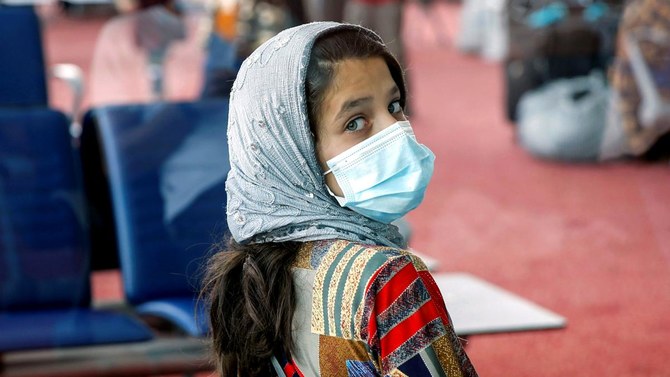
Afghans refugee in Britain fear they could be treated like illegal immigrants. (Reuters)
Short Url
Updated 18 February 2022
Follow

Afghan refugees deprived of papers fear for future in UK: Lawyers

  • Temporary visas due to expire within days but Home Office dismisses ‘needless scaremongering’
  • British, other NATO armed forces evacuated around 15,000 Afghans from Kabul last year

LONDON: Afghan refugees evacuated from Kabul fear they will soon be treated like illegal immigrants because they have not received updated papers, their lawyers have said, adding that it is unclear how many are missing documents required to work legally and rent homes.

Temporary visas are due to expire within days, leaving the refugees potentially vulnerable, but the Home Office has said the lawyers’ warnings are “needless scaremongering,” the BBC reported on Friday.

British and other NATO armed forces evacuated around 15,000 Afghans from Kabul last year as the country fell to the Taliban.

Those evacuees were granted temporary visas lasting six months, with a view to being given the right to settle later — a commitment that still stands.

But the Law Society, which represents solicitors, said firms across Britain are now receiving calls for help from people whose temporary legal status expires in the coming week — meaning they have no means of proving they are lawfully in the country.

The Afghans, who either worked alongside NATO forces or are the families of people who did, say they have not received any updated papers and have not been able to get answers from officials.

It is not known how many are affected, and ministers have declined to reveal in Parliament how many Afghans have so far been issued permanent status.

Without such papers they will be unable to work, rent homes, open a bank account or use the National Health Service.

“The Home Office must urgently provide every one of these people with evidence of their continued right to work, study and rent accommodation,” said I. Stephanie Boyce, president of the Law Society.

“The UK’s ‘warm welcome’ is meaningless if the government does not provide concrete assurances which could allay the fears of thousands of people and give them the legal certainty they need.”

The Home Office said Afghans had received verbal reassurances that their paperwork would eventually come.

“The Afghan nationals resettled here already have the right to work, access to education, healthcare and can apply for public funds,” said a Home Office spokesperson.

“While we are in the process of granting all indefinite leave to remain, all have valid leave while this is ongoing, so to suggest they are at risk of losing their rights is completely wrong.”


Trump’s Iran war violates international law, experts say

Updated 3 sec ago
Follow

Trump’s Iran war violates international law, experts say

  • Mary Ellen O’Connell, a professor at the University of Notre Dame, said the attack on Iran “had no justification under international law“
  • “The US probably could have prevented any Israeli attack on Iran by virtue of the leverage afforded by critical US military support,” said Finucane

WASHINGTON: The United States insists it attacked Iran to curb “direct threats” from the Islamic republic, but legal experts say the dangers cited by Washington do not justify war under international law.
US and Israeli forces launched a massive air campaign against Iran on February 28, with Washington saying it aimed to curb nuclear and missile threats from Tehran. Yet the war has also decapitated the country’s government, and President Donald Trump is now demanding “unconditional surrender.”
The White House laid out Washington’s justification for the war during a news conference this week.
“This decision to launch this operation was based on a cumulative effect of various direct threats that Iran posed to the United States of America, and the president’s feeling, based on fact, that Iran does pose (an) imminent and direct threat,” Press Secretary Karoline Leavitt said Wednesday.
She went on to cite Iranian sponsorship of “terrorism,” its ballistic missile program and its alleged efforts to “create nuclear weapons and nuclear bombs.”
But Mary Ellen O’Connell, a professor at the University of Notre Dame, said the attack on Iran “had no justification under international law.”
“The law is clear that international disputes are to be resolved using peaceful means — negotiation, mediation, the intervention of international organizations,” said O’Connell, an expert in international law on the use of force and international legal theory.
The Trump administration has offered “vague mentions of imminent attacks by Iran and to prevent Iran from acquiring a nuclear weapon,” while the UN Charter “requires, at the least, that evidence of a significant attack by Iran be underway,” she said.

- ‘Even less plausible’ -

“No shred of such evidence has been provided. Nor is there any right whatsoever to start a war over a weapons program.”
While Leavitt cited threats from missiles and militants, US Secretary of State Marco Rubio offered a different justification for the war earlier in the week: fears that an Israeli attack would trigger reprisals against US forces.
Brian Finucane, senior adviser for the International Crisis Group’s US Program, said there were several issues with Rubio’s explanation, including that the Trump administration has since offered other rationales for the war.
“The US probably could have prevented any Israeli attack on Iran by virtue of the leverage afforded by critical US military support,” said Finucane, who previously worked in the Office of the Legal Adviser at the US Department of State.
The Iran war is not the only legally dubious military intervention by the Trump administration.
In early September, the United States began carrying out strikes on alleged drug-smuggling boats in the Caribbean and later the eastern Pacific — a campaign that has killed more than 150 people.
The US government has yet to provide definitive evidence that the vessels it targets are involved in drug trafficking, and legal experts and rights groups say the strikes likely amount to extrajudicial killings.
Trump also ordered strikes on Iranian nuclear sites last year, and sent US forces into Caracas in early January to seize leftist Venezuelan leader Nicolas Maduro, who is now on trial in the United States.
Finucane said Trump’s Friday demand for “unconditional surrender” by Iran “further undercuts prior justifications for US military action.”
“The administration has not even bothered to argue that Operation Epic Fury complies with international law, but certainly statements like this make any such argument even less plausible,” he said, referring to the Iran operation.