


LONDON: An inquiry into the 2017 Manchester Arena bombing has heard that police viewed messages sent by the bomber, Salman Abedi, discussing martyrdom three years before the attack, but that no action was taken.
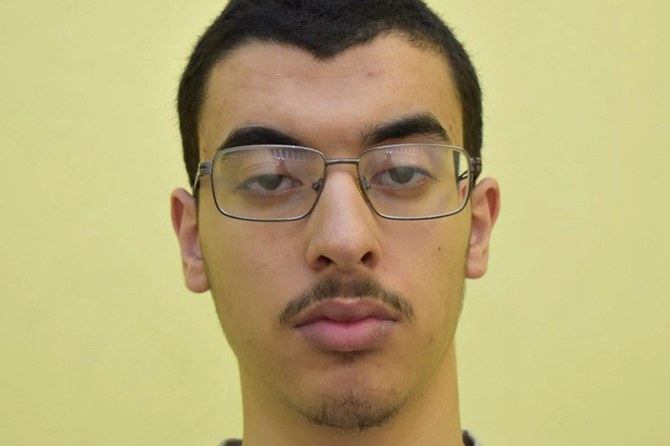
The messages, sent to another individual suspected of terrorism offenses, Abdalraouf Abdallah, were not traced to Abedi despite them containing two selfie images and his full name, and the phone used to send them being registered to him.
Abedi’s messages were viewed by police as part of Operation Oliban, a 2014 investigation into people suspected of traveling to the Middle East to join Daesh.
Abdallah was arrested in Manchester as part of the operation, accused of being a key Daesh “facilitator” in the UK, and personal items including his phone were seized.
Messages on the phone showed the pair discussing topics including martyrdom and what awaited them afterward.
They exchanged over 1,000 messages between Nov. 5 and Nov. 28, 2014, including one in which Abedi wrote: “Pray in supplication to Allah and ask him for martyrdom every day, on every kneeling I ask my Lord for martyrdom.”
The only time the question of Abedi’s identity was raised in relation to the messages was during Abdallah’s trial, by Prosecutor Max Hill QC, who is now England’s director of public prosecutions.
It was not until after the bombing three years later that police working on Operation Oliban identified Abedi as having sent the messages to Abdallah, as having visited him while he was in prison, and that Abedi had been watched by MI5 just four months before the exchanges took place. The messages were then turned over to counterterrorism police.
At the inquiry, former Detective Inspector Frank Morris, the senior investigating officer for Operation Oliban, was asked if the correspondence between Abedi and Abdallah should have been handed over to specialist officers when first assessed. “At the time I didn’t think it should have been, but with hindsight, yes obviously,” he said.
Paul Greaney QC told the inquiry: “As far as that inquiry is concerned, (Operation Oliban) did not identify that the (phone) number related to Abedi. That was only discovered after the attack.”


