

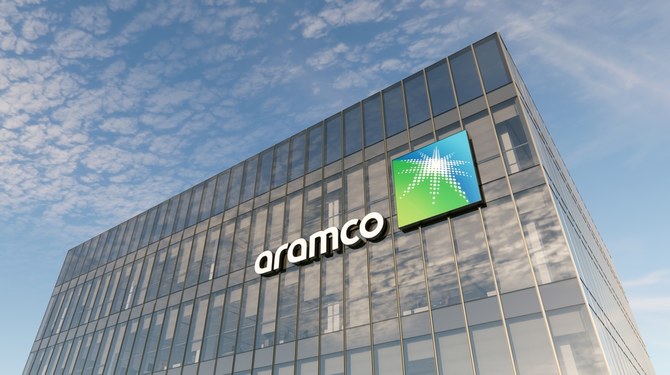
Al Rajhi Capital sees Saudi oil revenues jumping following Aramco's share transfer to PIF

Image: Shutterstock
Short Url
Updated 13 February 2022
Follow

Al Rajhi Capital sees Saudi oil revenues jumping following Aramco's share transfer to PIF

RIYADH: Saudi Arabia is to see an increase in its oil revenues following the transfer of 4 percent of Aramco's shares to the Kingdom's sovereign wealth fund, according to Al Rajhi Capital's estimates. 

The Kingdom is now expected to report a surplus of SR125 billion this year on higher oil income, up from SR90 billion ($40 billion) estimated earlier by the government.

The investment arm of Al Rajhi bank says oil revenues are on their way to hit SR680 billion following the transaction that is valued at SR300 billion. 

Al Rajhi Capita's estimates for Saudi oil income is based on an average production of 10.5 million barrels per day, and an average Brent price of $80.

The Saudi Crown Prince Mohammed bin Salman announced the transfer to the Public Investment Fund, SPA reported earlier on Sunday.

He said the state remains the largest shareholder in Saudi Aramco after the transfer process, as it owns more than 94 percent of the company's shares.


Saudi Arabia raises $605m in January sukuk issuance: NDMC

Updated 9 sec ago
Follow

Saudi Arabia raises $605m in January sukuk issuance: NDMC

RIYADH: Saudi Arabia’s National Debt Management Center has raised SR2.26 billion ($605 million) through its latest sukuk issuance.

Sukuk are Shariah-compliant financial instruments akin to bonds, granting investors a share in the issuer’s assets. Unlike conventional bonds, they comply with Islamic finance principles, which forbid interest-based transactions.

According to the NDMC, the January issuance was divided into five tranches. The first tranche was valued at SR410 million and is set to mature in 2031. The second amounted to SR338 million, maturing in 2033, while the third tranche, worth SR101 million, will expire in 2036. 

The fourth portion, valued at SR523,000, is due in 2039, while the last tranche, due in 2041, was valued at SR1.42 billion.

The January figure represents a decrease of 67.64 percent compared to December, when the Kingdom raised SR7.01 billion from sukuk issuances.

In recent years, the Kingdom’s debt market has experienced swift growth, with investors increasingly turning to fixed-income instruments as rising global interest rates reshape the financial landscape.

This comes as the Gulf Cooperation Council sukuk outstanding climbed 12.7 percent to $1.1 trillion by the end of the third quarter of 2025, according to a recent Fitch Ratings report.

The US-based credit rating agency said debt capital market activity in the GCC is expected to remain strong into 2026, supported by a healthy pipeline of anticipated issuances.

The report noted that sukuk issuances increased 22 percent year on year in the first nine months of this year, accounting for 40 percent of total GCC DCM outstanding.

Sukuk also outpaced bond growth, which expanded 7.2 percent year on year. 

Also known as Islamic bonds, these debt products allow investors to gain partial ownership of an issuer’s assets until maturity.