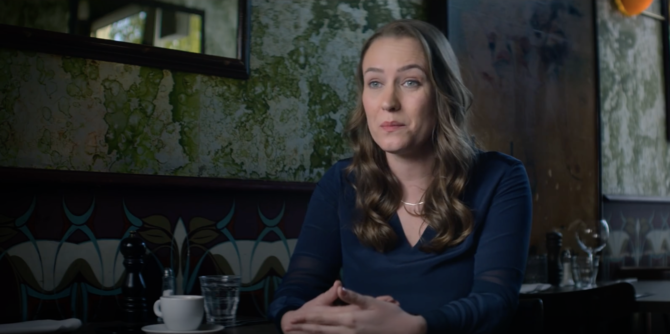

CHENNAI: Social media is a boon that among other things helps to connect people across continents. But it can also be a terrible bane, especially dating sites. Netflix’s latest scandal documentary, “The Tinder Swindler,” is a perfect example of how the gullible fall prey to predators. Wonderfully directed by Felicity Morris, it is seamlessly structured. I could not take my eyes off the screen for a moment as I heard the painful stories of three young women who had walked into a perfectly laid-out trap by an Israeli national, Simon Leviev, who “transformed” himself into a billionaire diamond merchant’s son.
Leviev, whose actual name is Shimon Hayut, lived in the lap of luxury, wore clothes from some of the biggest names in fashion (Gucci, Louis Vuitton and so on), had fancy yachts and fancier cars – but all paid for by his girlfriends. In fact, he stole money from one to give another a dream life – which he also enjoyed. Private jets, first-class travel and five-star hotels were all his.
But why did these women fall for him? I would answer this question with another. Why did they fall for a notorious criminal like Charles Sobhraj? He was venomous, and was nicknamed “bikini killer” because he usually preyed on women basking in the beaches of Thailand and other southeast Asian countries. Now Sobhraj is in a Nepal jail, but his lawyer, a woman from Kolkata, has married him! The lure of money and the great life it brings are too, too hard to resist. The same for the three young women who are featured in “The Tinder Swindler.”
It begins with Cecilie Fjellhoy, a serial dater who calls herself as “a bit of a Tinder expert”. Simon jets to Oslo, where she lives and arrives with a bouquet of the most exquisite roses. He wines and dines her in amazingly plush restaurants with caviar and the choicest of drinks. Then, one night, terror strikes, when he sends her photographs and videos of himself and his bodyguard, bruised and bloodied. Simon tells Cecilie that his enemies are after him, and he had to close his bank accounts and cancel his credit cards. May I use your card, he asks her, and his voice sounds so darned apologetic that she at once says yes. The swindling begins.
The next is Pernilla Sjoholm, a Swedish woman who is a little smarter than Cecilie. Pernilla does not hop into bed with him, but is still talked into being such a great friend that she too begins to part with her money. It is the same sob story he gives of being stalked and attacked. Pernilla, despite not falling for Simon’s romantic charms, develops a weak spot for him. Such is his carefully cultivated magnetism.
The third victim is Ayleen Charlotte, whose story ran along the same track. But it is Cecilie’s that touches the heart. It is so disturbing to see her breakdown in the end, especially after Simon’s story is broken by a Norwegian newspaper, and as shocking as it may sound, many began to accuse the swindled women of being gold-diggers. In fact, they did not make a penny out of this whole sordid business. Perhaps this is what happens when one lives a life online!
But let us not forget that “The Tinder Swindler” has many layers. The plot turns into a thriller with revenge and resilience taking over the three women, whose self-esteem had taken a bad beating. Unlike some Netflix documentaries, The Tinder Swindler is not sensationalist. It is snappy, executed with finesse and narrated with feeling, leaving us wanting more!