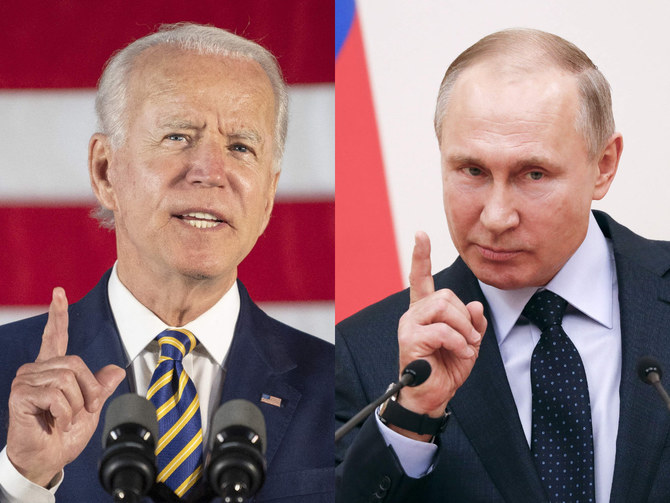

President Joe Biden warned his Kremlin counterpart Vladimir Putin in a phone call Saturday that the US “will respond decisively and impose swift and severe costs on Russia” should it invade Ukraine.
According to a readout from the White House, Biden stressed that “while the United States remains prepared to engage in diplomacy, in full coordination with our Allies and partners, we are equally prepared for other scenarios.”
Putin told Biden that the US response to Russia’s main security demands had not taken into account key concerns and that Moscow would respond soon, the Kremlin said.
Kremlin official Yuri Ushakov said the phone call took place against a backdrop of “hysteria” in the West about an impending Russian invasion that he said was absurd.
Spoke with @TrussLiz today and appreciate her strong coordination with the U.S., Allies, and partners to deter Russia’s escalation against Ukraine. The U.S. and UK are in lock-step to ensure Russia will face severe costs if it further invades Ukraine.
— Secretary Antony Blinken (@SecBlinken) February 12, 2022
He said that Biden in the phone call warned Putin of major potential sanctions, but did not place special emphasis on it.
Meanwhile, US Secretary of State Antony Blinken, during a 35-minute call with his Russian counterpart Sergei Lavrov, stressed that the path for diplomatic engagement remained open, a State Department official said.
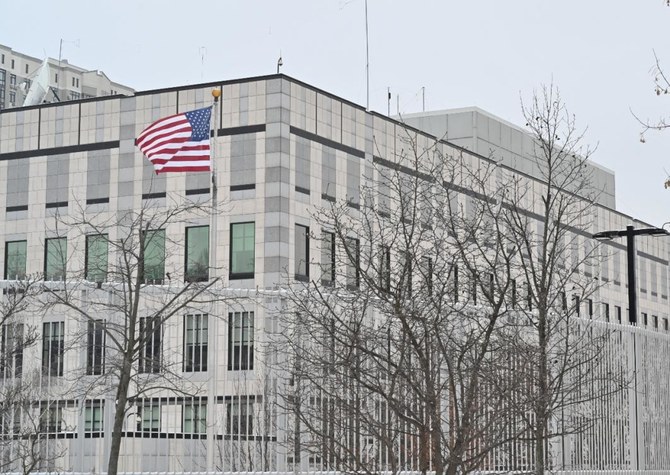
As tensions in Ukraine heighten over the possible Russian invasion, Moscow and the US announced earlier on Saturday that they ordered some of their embassy staff out of Kyiv.
“Fearing possible provocations from the Kyiv regime or other countries we have indeed decided to optimise staffing at Russian missions in Ukraine,” Russian foreign ministry spokeswoman Maria Zakharova said in a press release, responding to a media question on the subject.
Aside from some embassy staff, sources said Washington was also withdrawing its staff at the Organisation for Security and Cooperation in Europe from Ukraine (OSCE).
Today, the @StateDept ordered non-emergency U.S. employees at the Embassy to depart due to continued reports of a Russian military build-up on the border with Ukraine, indicating potential for significant military action. https://t.co/6IgLvE4PJS
— U.S. Embassy Kyiv (@USEmbassyKyiv) February 12, 2022
The announcement came as the US officials say the State Department plans to announce early Saturday that all American staff at the Kyiv embassy will be required to leave the country ahead of a feared Russian invasion.
The department had earlier ordered families of US embassy staffers in Kyiv to leave. But it had left it to the discretion of nonessential personnel if they wanted to depart. The new move comes as Washington has ratcheted up its warnings about a possible Russian invasion of Ukraine.
The officials, who spoke on condition of anonymity because they were not authorized to discuss the matter publicly, said a limited number of US diplomats may be relocated to Ukraine’s far west, near the border with Poland, a NATO ally, so the US could retain a diplomatic presence in the country.
‘Propaganda campaign'
Russian Foreign Minister Sergei Lavrov during a phone call with US Secretary of State Antony Blinken accused Washington of waging a "propaganda campaign" about possible Russian aggression, the Russian foreign ministry said on Saturday.
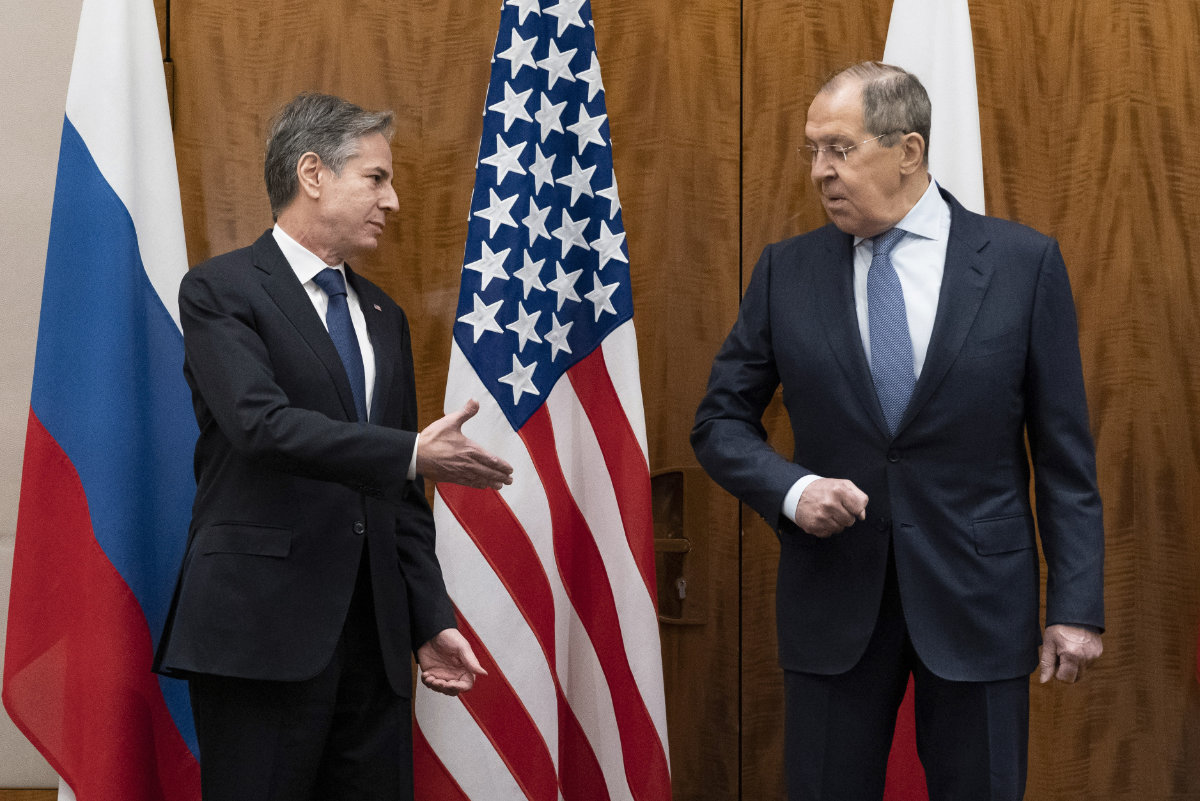
US Secretary of State Antony Blinken, left, meets with Russian Foreign Minister Sergey Lavrov in Geneva, Switzerland, on Jan. 21, 2022. (AP File Photo)
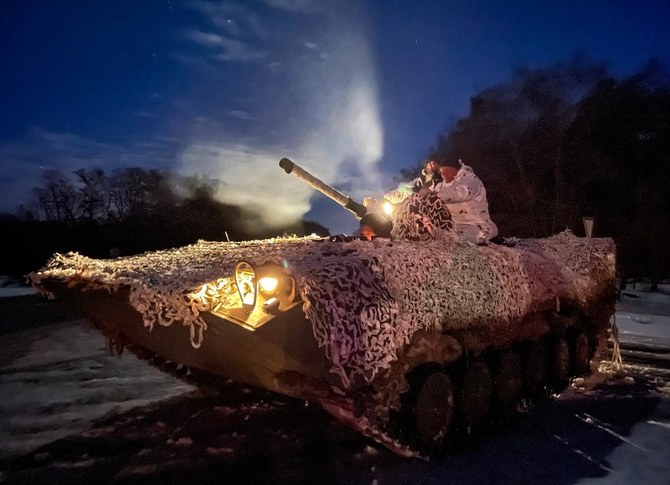
Russia has built up military forces near Ukraine, fuelling fears it may invade. Moscow denies such plans.
In a readout of Saturday's phone call with Blinken, Lavrov also said that Washington and Brussels had ignored key Russian security demands.
Stoking panic
Ukrainian President Volodymyr Zelensky said on Saturday that warnings of an imminent Russian attack on his country were stoking "panic" and demanded to see firm proof of a planned invasion.
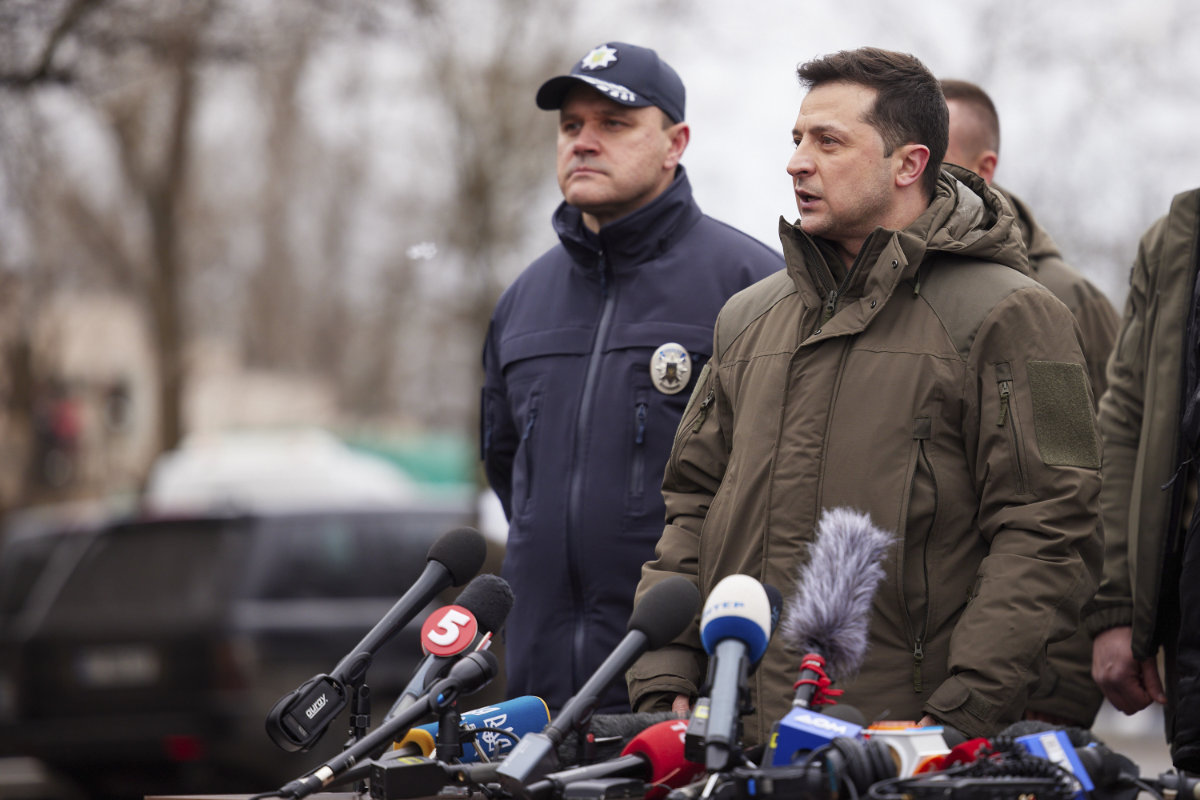
Ukrainian President Volodymyr Zelenskyy, right, speaks at a press conference in Kherson, Ukraine on Feb. 12, 2022. (Handout via AP)
"All this information is only provoking panic and not helping us," the Ukrainian leader told reporters, adding that "if anyone has any additional information about a 100-percent chance of an invasion, give it to us"
OSCE
Separately, two diplomatic sources told Reuters that the United States was pulling out its staff at the OSCE in Ukraine with immediate effect.
The OSCE did not respond to a request for comment.
The OSCE conducts operations in Ukraine including a civilian monitoring mission in the Russian-backed self-proclaimed separatist republics in the country's east where a war that erupted in 2014 has killed more than 14,000 people.
One of the sources, who spoke on condition of anonymity, said they expected other nations to make similar evacuation decisions soon.
The two sources told Reuters that Britain had decided to move its members of the OSCE from the rebel-held regions of Ukraine to the government-controlled area.
Escalating crisis
The crisis between Russia and Ukraine is escalating, but Germany is making all efforts to find a diplomatic solution, German Foreign Minister Annalena Baerbock said on Saturday.
“We must be prepared for all scenarios,” Baerbock said during a news conference in Cairo.
Combat troops to Poland
The Pentagon announced Friday it is sending another 3,000 combat troops to Poland to join 1,700 who already are assembling there in a demonstration of American commitment to NATO allies worried at the prospect of Russia invading Ukraine.
The additional soldiers will depart their post at Fort Bragg, North Carolina, over the next couple days and should be in Poland by early next week, according to a defense official, who provided the information under ground rules set by the Pentagon. They are the remaining elements of an infantry brigade of the 82nd Airborne Division.
Their mission will be to train and provide deterrence but not to engage in combat in Ukraine.
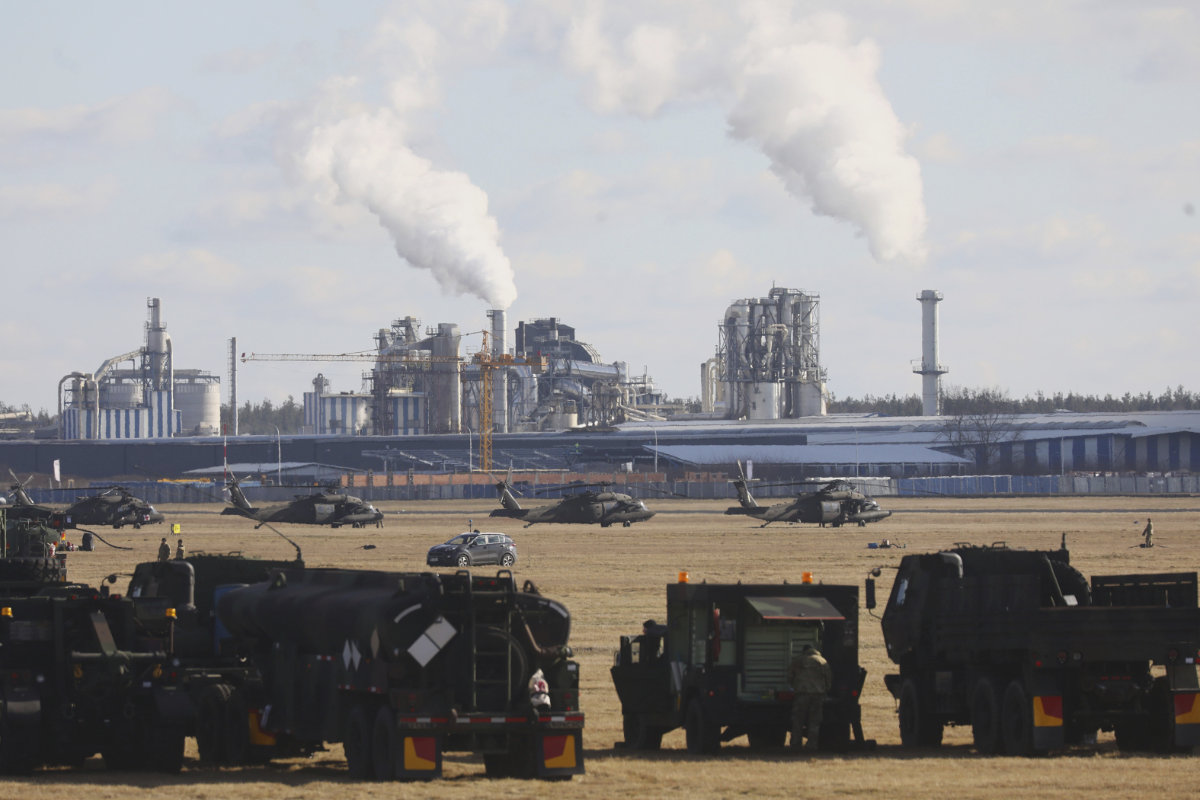
US troops recently deployed to Poland because of the Russia-Ukraine tensions set up camp at a military airport in Mielec, Poland, on Feb. 12, 2022. (AP Photo/Beata Zawrzel)
That announcement came shortly after Jake Sullivan, President Joe Biden’s national security adviser, issued a public warning for all American citizens in Ukraine to leave the country as soon as possible. Sullivan said Russian President Vladimir Putin could give the order to launch an invasion of Ukraine any day now.
In addition to the US troops deploying to Poland, about 1,000 US soldiers based in Germany are shifting to Romania in a similar mission of reassurance to a NATO ally. Also, 300 soldiers of an 18th Airborne Corps headquarters unit have arrived in Germany, commanded by Lt. Gen. Michael E. Kurilla.
The American troops are to train with host-nation forces but not enter Ukraine for any purpose.
The US already has about 80,000 troops throughout Europe at permanent stations and on rotational deployments.