LONDON: Britain’s government is failing to put enough effort into finding fraud in some of its COVID-19 support programs as taxpayers face losing at least 4 billion pounds ($5.43 billion) to criminals and mistakes, a parliamentary report said.
The Public Accounts Committee, which scrutinizes state spending, said the lenient approach will encourage future criminal activity because the government risks “rewarding the unscrupulous” and officials seen to be “soft on fraud.”
After coronavirus shut much of the British economy in early 2020, the government provided hundreds of billions of pounds to businesses, hoping to keep them and their staff afloat. At the time, the government described the support as one of the most significant economic interventions in British history.
The Coronavirus Job Retention Scheme, widely known as furlough, cost 70 billion pounds — the most expensive single piece of UK economic support during the pandemic. At its peak, the program paid a third of British workers’ wages.
The government also spent 28.1 billion pounds on a parallel scheme for the self-employed and 840 million pounds offering discounted meals at restaurants, cafes, and pubs.
But the government has since found that some employers claimed money for workers who did not exist, and others took cash while their staff continued to work.
The committee criticized the government’s “unambitious” plans to only recover about 2 billion pounds of the estimated 6 billion pounds lost to criminals or given out incorrectly.
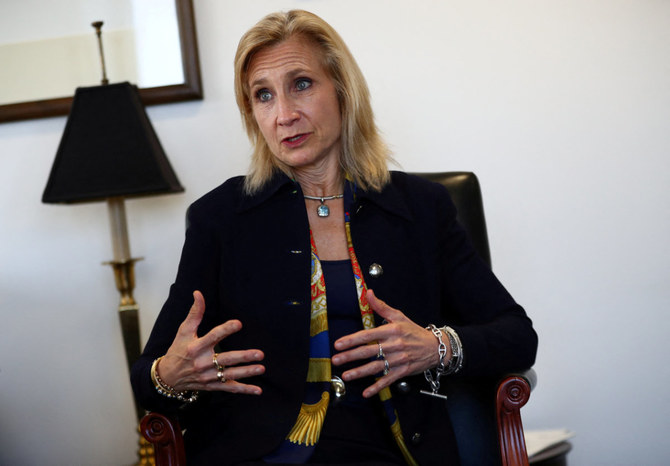
“Every taxpayers’ pound lost to a fraudster will lead to honest ordinary people feeling the post-pandemic pinch harder and harder,” said Meg Hillier, chair of the committee. “With the current parlous state of the public finances we can ill-afford to be so cavalier over so much taxpayers’ money.”
A government spokesperson rejected many of committee’s statements and said the support was created quickly to support people in desperate need. He said no fraudulent payments have been written off and the government was taking action to recover over-payments.
“The vast majority of payments in the schemes were made correctly to employers, and most error and fraud was legitimate claimants making mistakes or inflating their claims, often small per case,” the spokesperson said.
“The cost of inaction would have been far greater than the cost of fraud and error in the support schemes.”
But Theodore Agnew, a junior minister who was responsible for government efforts to counter fraud, resigned in protest last month. He said the oversight of a separate business loan program was “nothing less than woeful” and accused the government of making “schoolboy errors.”
Britain’s public spending chief last month urged z those who swindled billions of dollars of COVID support money from the state to give the cash back.
“We will now pursue anybody who has taken this money fraudulently,” Chief Secretary to the Treasury Simon Clarke said. “And I would urge anyone who’s taken that money and didn’t really need it to make contact.”

UK must do more to recoup billions of pounds of COVID fraud, lawmakers say
Short Url
https://arab.news/gyvwc
UK must do more to recoup billions of pounds of COVID fraud, lawmakers say
- The government has found that some employers have taken advantage of the Coronavirus Job Retention Scheme to claim money for workers who did not exist
Indian writer Arundhati Roy pulls out of Berlin Film Festival over Gaza row
- Writer pulls out after jury president Wim Wenders said cinema should 'stay out of politics' when asked about Gaza
- Booker Prize winner describes Israel’s actions in Gaza as 'a genocide of the Palestinian people'
BERLIN: Award-winning Indian writer Arundhati Roy said Friday she was withdrawing from the Berlin Film Festival over jury president Wim Wenders’s comments that cinema should “stay out of politics” when he was asked about Gaza.
Roy said in a statement sent to AFP that she was “shocked and disgusted” by Wenders’s response to a question about the Palestinian territory at a press conference on Thursday.
Roy, whose novel “The God of Small Things” won the 1997 Booker Prize, had been announced as a festival guest to present a restored version of the 1989 film “In Which Annie Gives It Those Ones,” in which she starred and wrote the screenplay.
However, she said that the “unconscionable” statements by Wenders and other jury members had led her to reconsider, “with deep regret.”
When asked about Germany’s support for Israel at a press conference on Thursday, Wenders said: “We cannot really enter the field of politics,” describing filmmakers as “the counterweight to politics.”
Fellow jury member Ewa Puszczynska said it was a “little bit unfair” to expect the jury to take a direct stance on the issue.
Roy said in her statement that “to hear them say that art should not be political is jaw-dropping.”
She described Israel’s actions in Gaza as “a genocide of the Palestinian people by the State of Israel.”
“If the greatest film makers and artists of our time cannot stand up and say so, they should know that history will judge them,” she said.
Roy is one of India’s most famous living authors and is a trenchant critic of Prime Minister Narendra Modi’s government, as well as a firm supporter of the Palestinian cause.
Shying away from politics
The Berlinale traditionally has a reputation for topical, progressive programming, but so far this year’s edition has seen several stars shy away from taking a stance on the big political issues of the day.
US actor Neil Patrick Harris, who stars in the film “Sunny Dancer” being shown in the festival’s Generation section, was asked on Friday if he considered his art to be political and if it could help “fight the rise of fascism.”
He replied that he was “interested in doing things that are apolitical” and which could help people find connection in our “strangely algorithmic and divided world.”
This year’s Honorary Golden Bear recipient, Malaysian actor Michelle Yeoh, also demurred when asked to comment on US politics in a press conference on Friday, saying she “cannot presume to say I understand” the situation there.
This isn’t the first edition of the festival to run into controversy over the Gaza war.
In 2024 the festival’s documentary award went to “No Other Land,” a portrayal of the dispossession of Palestinian communities in the Israeli-occupied West Bank.
German government officials criticized “one-sided” remarks about Gaza by the directors of that film and others at that year’s awards ceremony.
The war in Gaza was sparked by Hamas’s October 7, 2023 attack on Israel, which resulted in the deaths of 1,221 people, according to an AFP tally based on official Israeli figures.
Israel’s retaliation has left at least 71,000 people dead in Gaza, according to the health ministry in the Hamas-run territory, whose figures the UN considers reliable.
Roy said in a statement sent to AFP that she was “shocked and disgusted” by Wenders’s response to a question about the Palestinian territory at a press conference on Thursday.
Roy, whose novel “The God of Small Things” won the 1997 Booker Prize, had been announced as a festival guest to present a restored version of the 1989 film “In Which Annie Gives It Those Ones,” in which she starred and wrote the screenplay.
However, she said that the “unconscionable” statements by Wenders and other jury members had led her to reconsider, “with deep regret.”
When asked about Germany’s support for Israel at a press conference on Thursday, Wenders said: “We cannot really enter the field of politics,” describing filmmakers as “the counterweight to politics.”
Fellow jury member Ewa Puszczynska said it was a “little bit unfair” to expect the jury to take a direct stance on the issue.
Roy said in her statement that “to hear them say that art should not be political is jaw-dropping.”
She described Israel’s actions in Gaza as “a genocide of the Palestinian people by the State of Israel.”
“If the greatest film makers and artists of our time cannot stand up and say so, they should know that history will judge them,” she said.
Roy is one of India’s most famous living authors and is a trenchant critic of Prime Minister Narendra Modi’s government, as well as a firm supporter of the Palestinian cause.
Shying away from politics
The Berlinale traditionally has a reputation for topical, progressive programming, but so far this year’s edition has seen several stars shy away from taking a stance on the big political issues of the day.
US actor Neil Patrick Harris, who stars in the film “Sunny Dancer” being shown in the festival’s Generation section, was asked on Friday if he considered his art to be political and if it could help “fight the rise of fascism.”
He replied that he was “interested in doing things that are apolitical” and which could help people find connection in our “strangely algorithmic and divided world.”
This year’s Honorary Golden Bear recipient, Malaysian actor Michelle Yeoh, also demurred when asked to comment on US politics in a press conference on Friday, saying she “cannot presume to say I understand” the situation there.
This isn’t the first edition of the festival to run into controversy over the Gaza war.
In 2024 the festival’s documentary award went to “No Other Land,” a portrayal of the dispossession of Palestinian communities in the Israeli-occupied West Bank.
German government officials criticized “one-sided” remarks about Gaza by the directors of that film and others at that year’s awards ceremony.
The war in Gaza was sparked by Hamas’s October 7, 2023 attack on Israel, which resulted in the deaths of 1,221 people, according to an AFP tally based on official Israeli figures.
Israel’s retaliation has left at least 71,000 people dead in Gaza, according to the health ministry in the Hamas-run territory, whose figures the UN considers reliable.
© 2026 SAUDI RESEARCH & PUBLISHING COMPANY, All Rights Reserved And subject to Terms of Use Agreement.



