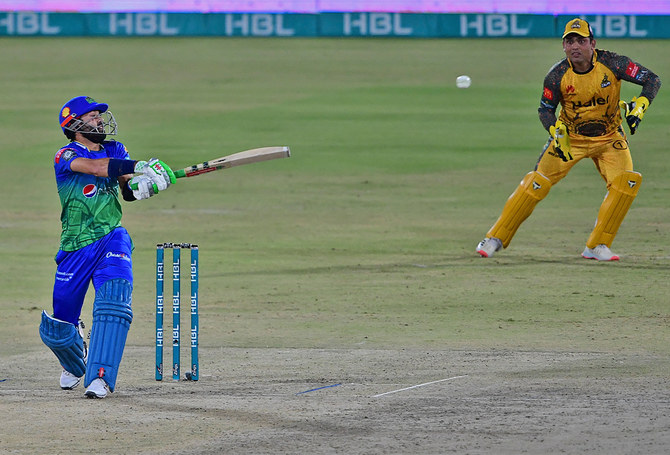
KARACHI: An unbeaten Multan Sultans defeated Peshawar Zalmi by 57 runs in their Pakistan Super League (PSL) 2022 match at Karachi’s National Stadium on Saturday.
Zalmi won the toss and sent in Sultans to bat, but failed to stop rival batters from setting a gigantic target of 222 runs at a loss of three wickets.
Skipper Muhammad Rizwan and his opening partner, Shan Masood, made 85 runs to provide a solid foundation to their side. Masood lost his wicket to Shoaib Malik after scoring 35 runs. Sohaib Maqsood scored 25 off 17 balls before Salman Irshad took his wicket. Sultans’ captain was the third to go but only after taking the score to 196 with his 82 off 53 deliveries.
Tim David’s blitzing 51 off 17 balls, which is the second fastest fifty of the PSL seventh edition, and 21 off just seven balls by Khushdil Shah with his 3 huge sixes helped Sultans put 222 on the score board.
Wahab Riaz proved the most expensive bowler for Zalmi by conceding 55 runs in four overs without taking any wicket. Salman Irshad, Shoaib Malik and Usman Qadir grabbed one wicket each. Muhammad Umar, who had played an important role in Zalmi’s victory against Karachi Kings on Friday, couldn’t take a wicket. He gave away 36 runs in his four overs. Saqib Mahmood, who played the first match of the season, conceded 37 in just 3 overs.
In response, Zalmi lost quick wickets with Hazratullah Zazai and Haider Ali being the only batters providing some respite to the side. Zazai scored 43 off 32 balls. Kamran Akmal was the first to go after adding ten runs to his team’s total. Haider Ali lost his wicket to Shahnawaz Dahani after scoring 24 runs.
Zalmi’s Ben Cutting scored 52 off 30 balls — his second half-century in the tournament. His last-over blitz was not enough to save his side from a defeat.
Zalmi scored 165 at a loss of eight wickets in 20 overs.
Imran Tahir dismissed three Zalmi players by conceding just 25 runs. Dahani, who made a comeback after being dropped from the last match, secured three wickets for 41 runs. Abbas Afridi took one wicket in his three overs and gave away 20 runs.
Both sides will play their second match against each other in Lahore on Thursday.
Peshawar defeated Quetta Gladiators in their first match by four wickets and successfully chased a target of 190 runs on January 28. The Wahab Riaz-led side lost their next match to Islamabad United, which chased a target of 168 runs in just 15.5 overs.
In the next contest, Zalmi could only score 170 runs at a loss of nine wickets in their chase of 199-run target set by Lahore Qalandars. In the fourth contest against Karachi, Peshawar made a comeback with some brilliant individual performances and set a target of 174 runs. Opener Hazratullah Zazai and Shoaib Malik shined with their 41 off 27 and 52 off 28, respectively. Zalmi bowlers restricted Karachi to 164 at a loss of six wickets. Debutant Muhamad Umar, Salman Irshad and Malik put up a tremendous show with the ball.
Umar grabbed three wickets after conceding just 22 runs in his four overs. Malik secured one wicket in his one over, while Salman Irshad couldn’t grab a wicket but bowled his four overs by giving away just 24 runs.
Sultans also started their PSL journey with a victory and defeated Kings in the opening match of PSL last month. The Muhammad Rizwan-led side successfully chased a huge target of 206 runs set by Lahore Qalandars in the third match of the tournament.
Sultans defended their score of 174 against Quetta Gladiators, breaking the jinx of the chasing side winning the first six contests. Multan in their next match set a target of 217 runs against Islamabad United, which fell 20 runs short of their chase.


![]()

Multan Sultans crush Peshawar Zalmi in PSL clash
Short Url
https://arab.news/vjz45
Multan Sultans crush Peshawar Zalmi in PSL clash
- Sultans set a target of 222 runs after Zalmi asked Rizwan-led side to bat first
- In response, Zalmi could only score 165 at a loss of eight wickets in 20 overs
Latest updates


© 2026 SAUDI RESEARCH & PUBLISHING COMPANY, All Rights Reserved And subject to Terms of Use Agreement.