


KUWAIT CITY: Kuwait said on Sunday that a Lebanese response to a list of suggested measures to ease a diplomatic rift with Gulf countries is currently under review.
Kuwaiti Foreign Minister Sheikh Ahmed Nasser Al-Mohammed Al-Sabah said that receiving the response was a “positive step by the Lebanese authorities.”
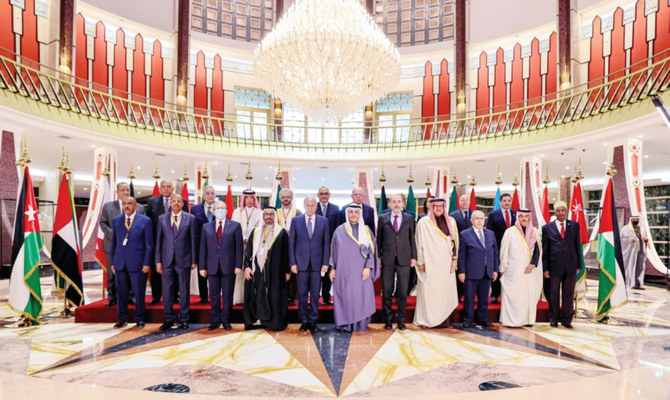
He was speaking during a news conference following a meeting of Arab foreign ministers, which was attended by Lebanon’s top diplomat Abdallah Bou Habib.
Sheikh Ahmed visited Beirut last week and handed Lebanese leaders a list of suggested measures to ease a diplomatic rift with Gulf countries.
In October, Saudi Arabia and its allies suspended diplomatic ties with Lebanon after the airing of comments by then Information Minister Georges Kordahi criticizing the military conflict in Yemen.
Kuwait recalled its ambassador from Beirut and also asked Beirut’s charge d’affaires to leave the emirate.
Kordahi resigned in November, in a bid to ease the standoff and French President Emmanuel Macron said Paris and Riyadh had agreed to fully engage to restore diplomatic ties.
“It is now up to the relevant parties in Kuwait and in the Gulf states to study this response in order to find out what will be Lebanon’s next step,” said Sheikh Ahmed.
He thanked Beirut “for interacting” with the demands, which he said was a positive step.
The measures presented by Kuwait are part of wider efforts to restore trust between Lebanon and its Gulf neighbors as Beirut grapples with an unprecedented financial crisis.
The terms delivered to Beirut on Jan. 22 include setting a time frame for implementing UN Security Council resolutions, among them Resolution 1559 which was adopted in 2004 and calls for the disarmament of nonstate militias in Lebanon.
The Lebanese draft letter had expressed respect for UN resolutions “to ensure civil peace and national stability” and said that Lebanon “will not be a launchpad for activities that violates Arab countries.”
Despite Kordahi’s resignation, tension between Lebanon and Gulf states has persisted, mainly over Iran-backed Hezbollah.
Earlier this month, Saudi Arabia’s ambassador to Beirut called on Lebanese political parties to “end Hezbollah’s terrorist hegemony over every aspect of the state.”
Also on Sunday, the Maronite Christian patriarch said former Prime Minister Saad Hariri’s decision to step back from politics and boycott a parliamentary election in May must not be used as an excuse to call for a delay.
Cardinal Bechara Boutros Al-Rahi said he was surprised by the decision and said he hoped Sunnis would still take part so the election “expresses the position of all Lebanese.”
Hariri’s decision has turned the electoral landscape on its head, adding to the uncertainties facing the country.
“Given the importance of this parliamentary (election), we must all confront attempts to circumvent it,” Al-Rahi said, noting the new parliament would elect President Michel Aoun’s replacement.
Referring to Hariri’s decision, he said “it is not allowed for some to invoke the new reality and promote the postponement of the parliamentary elections.”
He did not say to whom he was referring.
Lebanon’s 2018 election produced a majority for Hezbollah and its allies, who include Aoun. Its adversaries hope to overturn this in May.
Al-Rahi is a critic of Hezbollah, saying it has harmed Lebanon by dragging it into regional conflicts.
While none of Lebanon’s main parties have called for an election delay, many observers believe this may well suit a number of influential players.
Western states want the vote to go ahead on time.
Saad Hariri will leave a fractured Sunni community in his wake.
On Friday, his older brother, Bahaa signaled he was entering politics, saying he would “continue the journey” of his father Rafik Al-Hariri.
Bahaa plans to support candidates but will not be running himself.


