Pakistani ophthalmologists to serve in OIC mission in Niger

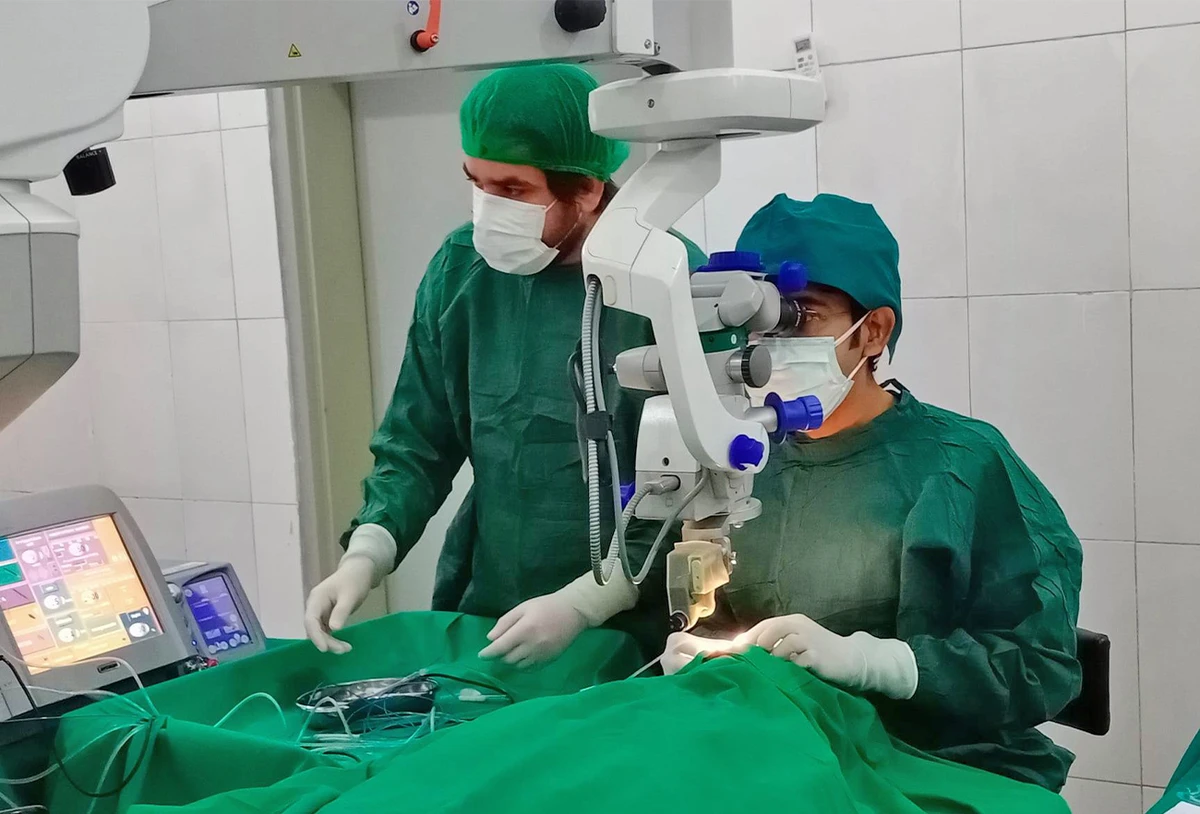
The picture posted on February 16, 2021 shows Pakistani doctors from LRBT operating on a patient. (Photo courtesy: LRBT/Facebook)
Short Url
Updated 29 January 2022
Follow

Pakistani ophthalmologists to serve in OIC mission in Niger

  • Pakistani ophthalmologists will conduct 400 cataract surgeries and train local health professionals in Niger
  • The OIC committee on technological cooperation was launched in 1981 and is headquartered in Islamabad

ISLAMABAD: The Organization of Islamic Cooperation’s Standing Committee on Scientific and Technological Cooperation (COMSTECH) has launched a health and higher education program for African countries by sending a team of Pakistani doctors to Niger, a senior official said on Thursday.
The committee was launched in 1981 during the Islamic Summit in Makkah. Headquartered in Pakistan’s federal capital Islamabad, one of its primary goals is to enhance the technological and scientific capacity of OIC member states.
“COMSTECH has scheduled to arrange eye camps for cataract surgeries and training workshops in Niamey, Niger, in collaboration with the Islamic Development Bank and Pakistan’s mission in the African state,” the committee’s coordinator general Professor Dr. Muhammad Iqbal Choudhary told reporters in Islamabad, adding the activity would be carried out between January 31 and February 7.
Seven highly qualified and experienced ophthalmologists working with LRBT, one of the largest non-governmental organizations fighting blindness in Pakistan, have been selected for the task.
“The team will conduct more than 400 cataract surgeries during its visit, examine post-operation patients and conduct training workshops for local doctors using the operation theater and other facilities available at a tertiary hospital in Niamey,” Choudhary said.
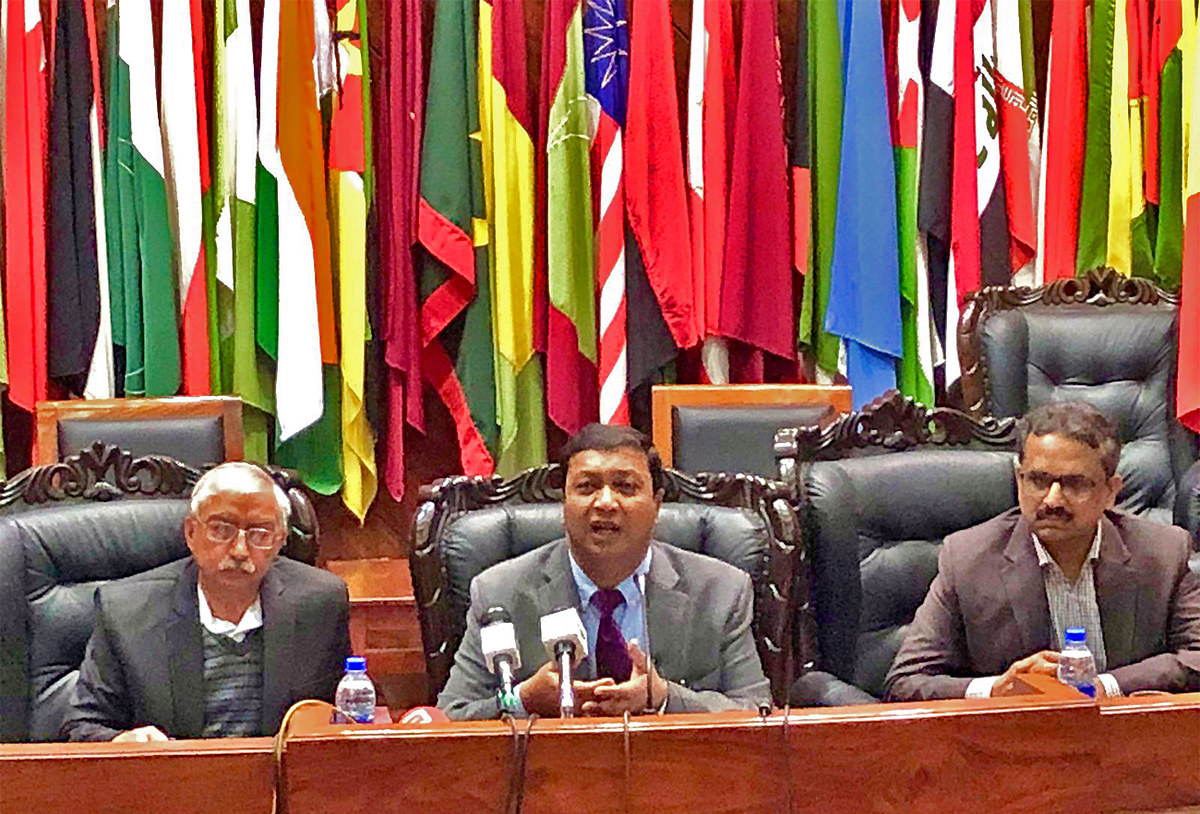


COMSTECH coordinator general Professor Dr. Muhammad Iqbal Choudhary (center) is addressing a news conference in Islamabad, Pakistan, to introduce the health and higher education program for Africa on January 27, 2022. (AN Photo)

He informed that Pakistani doctors would also launch a public awareness campaign about eye health and visit local schools as well, adding all the medicines for these eye camps would be transported from Pakistan.
“The COMSTECH program of health and higher education for Africa includes a number of capacity building initiatives in the areas of ophthalmology, dermatology, neurology and telemedicine for the benefit of the people,” Choudhary told Arab News.
Along with the provision of free medical treatment, he noted, the other objective of the upcoming visit of doctors to Niger was to end the reliance of African health professionals on foreign assistance by building their capacity.
Choudhary commended the Saudi role in supporting COMSTECH, saying: “The kingdom has traditionally provided great support to the committee and is a regular contributor. It has been providing us about $100,000 annually along with other countries.”
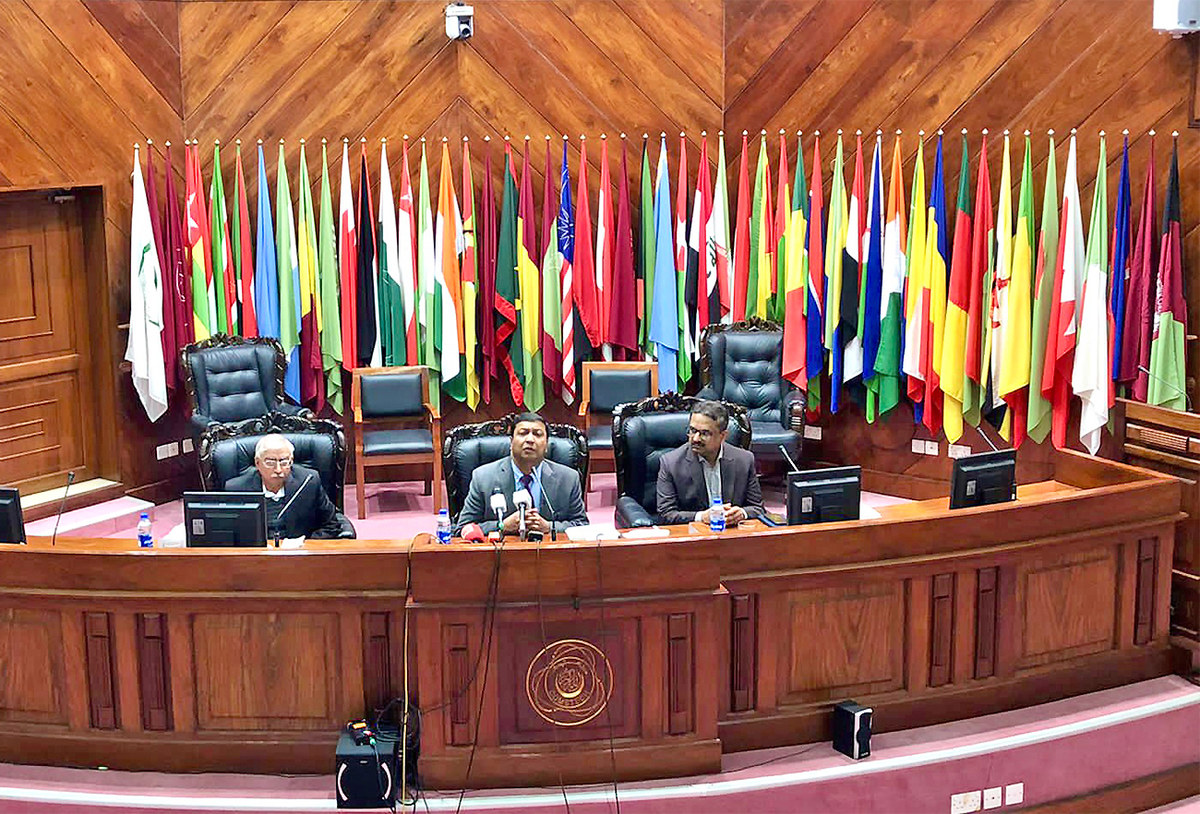


COMSTECH coordinator general Professor Dr. Muhammad Iqbal Choudhary (center) is addressing a news conference in Islamabad, Pakistan, to introduce the health and higher education program for Africa on January 27, 2022. (AN Photo)

He added that other Gulf nations, such as the United Arab Emirates, were also spending a lot of money on their indigenous science and technology initiatives.
“Our mission is to use their capacity to benefit other Muslim countries, especially in Africa,” Choudhary said. “Among the 26 least developed countries of the world, 17 are in Africa and they all happen to be Muslim states.”
A senior consultant at LRBT, Dr. Khalid Masood said all doctors, including himself, had volunteered to participate in the noble cause.
“It will be my second visit to Niger,” he told Arab News. “I also went there last November to conduct situation analysis for COMSTECH.”
“We conducted 25 surgeries during the previous visit and studied the requirements of people and health professionals in the African state,” he continued. “This time, we will go there to fulfil them.” he added.

Pakistan urges developed nations, global institutions to expand role in climate financing

Updated 4 sec ago
Follow

Pakistan urges developed nations, global institutions to expand role in climate financing

  • Pakistan is recognized among countries worldwide most affected by climate-induced disasters
  • Planning minister stresses redesigning global financial system on principles of responsibility, equity

ISLAMABAD: Pakistan’s Planning Minister Ahsan Iqbal this week called on developed nations and international financial institutions to play a greater role in helping developing countries adopt green technologies at lower costs, state-run media reported. 

Pakistan has suffered frequent climate change-induced disasters over the past couple of years, ranging from floods, droughts, heatwaves, cyclones and other irregular weather patterns. 

This year the South Asian country reported over 1,000 deaths from floods and landslides triggered by heavy rains and the melting of glaciers. 

“He [Iqbal] said Pakistan has urged developed countries and international financial institutions to expand their role in climate financing to enable developing nations to adopt green technologies at lower costs,” state-run Associated Press of Pakistan (APP) reported on Saturday. 

The minister was speaking at the Second Asia Energy Transition Summit held at Pakistani university LUMS on Saturday. 

Iqbal warned that climate change is intensifying emergencies and increasing economic burdens on vulnerable countries, adding that financial incentives and concessional financing have become indispensable for sustainable climate action.

“He further emphasized the need to redesign the global financial system based on the principles of collective responsibility and equity,” APP said. 

The minister noted that Pakistan has been introducing comprehensive reforms in its development agenda to promote renewable energy, solar power and green technological solutions. 

The country, he said, possesses “strong solar potential,” a robust renewable energy market, a wide talent pool in engineering and science and an enabling environment for green innovation.

Pakistan has regularly urged developed countries to fulfill past pledges and provide easy access to climate funding without attaching conditions, especially at Conference of Parties (COP30) climate summits. 

Islamabad was instrumental in getting the Fund for Responding to Loss and Damage (FRLD) established at the COP27 climate summit in Egypt in 2022. The Loss and Damage Fund aims to help developing and least developed countries cope with both economic and non-economic impacts of climate change, such as extreme weather events and slow-onset crises like sea-level rise and droughts.