

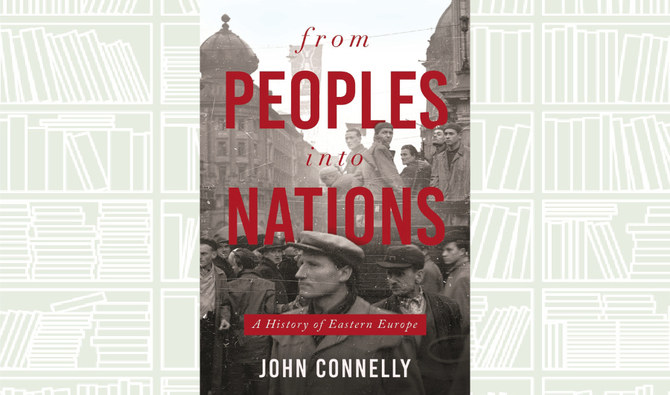
What We Are Reading Today: From Peoples into Nations: A History of Eastern Europe

Short Url
Updated 27 January 2022
Follow

What We Are Reading Today: From Peoples into Nations: A History of Eastern Europe

 Author: John Connelly

In the 1780s, the Habsburg monarch Joseph II decreed that henceforth German would be the language of his realm.

His intention was to forge a unified state from his vast and disparate possessions, but his action had the opposite effect, catalyzing the emergence of competing nationalisms among his Hungarian, Czech, and other subjects, who feared that their languages and cultures would be lost.

In this sweeping narrative history of Eastern Europe since the late 18th century, John Connelly connects the stories of the region’s diverse peoples, telling how, at a profound level, they have a shared understanding of the past.

An ancient history of invasion and migration made the region into a cultural landscape of extraordinary variety, a patchwork in which Slovaks, Bosnians, and countless others live shoulder to shoulder and where calls for national autonomy often have had bloody effects among the interwoven ethnicities.


What We Are Reading Today: ‘Fixed’

Updated 22 December 2025
Follow

What We Are Reading Today: ‘Fixed’

Authors: John Y. Campbell and Tarun Tamadorai

We interact with the financial system every day, whether taking out or paying off loans, making insurance claims, or simply depositing money into our bank accounts. 

“Fixed” exposes how this system has been corrupted to serve the interests of financial services providers and their cleverest customers—at the expense of ordinary people.

John Campbell and Tarun Ramadorai diagnose the ills of today’s personal finance markets in the US and across the globe, looking at everything from short-term saving and borrowing to loans for education and housing, financial products for retirement, and insurance. 

They show how the system is “fixed” to benefit those who are wealthy and more educated while encouraging financial mistakes by those who are aren’t, making it difficult for regular consumers to make sound financial decisions and disadvantaging them in some of the most consequential economic transactions of their lives.