

Saudi-funded campus in Azad Kashmir helps close gender gap in science

An exterior view of King Abdullah Campus of the University of Azad Jammu and Kashmir in Chhatar Kalas, Pakistan, on January 14, 2022. (AN photo by Zulfiqar Kunbhar)
Short Url
Updated 25 January 2022
Follow

Saudi-funded campus in Azad Kashmir helps close gender gap in science

  • The campus hosting mainly science departments started classes in September 2020
  • It was completed with funding from the Saudi Development Fund worth $51 million

MUZAFFARABAD: A Saudi-funded campus of the University of Azad Jammu and Kashmir is fostering science education in the region and female enrollment into the male-dominated field, as nearly half of its students are women — higher than the global average.

The multimillion-dollar King Abdullah Campus in Chhatar Kalas, 22 kilometers from Muzaffarabad, the regional capital was financed by Saudi Arabia, which has funded several development projects in Azad Kashmir, helping it return to normalcy after a devastating earthquake in 2005 destroyed most of its infrastructure, including the university. 

Built on nearly 100 hectares, the campus was completed in late 2019, and started classes in September 2020.

"King Abdullah Campus was completed with the financial help of Saudi Development Fund worth 9 billion rupees ($51 million)," Raja Abdul Qayyum Khan, director of the campus, told Arab News.

The campus now hosts most of the university's 9,000 students and is home to its science departments, including physics, computer science, mathematics, chemistry, and geology, which see female enrollment higher than in other parts of Pakistan, or even the world.
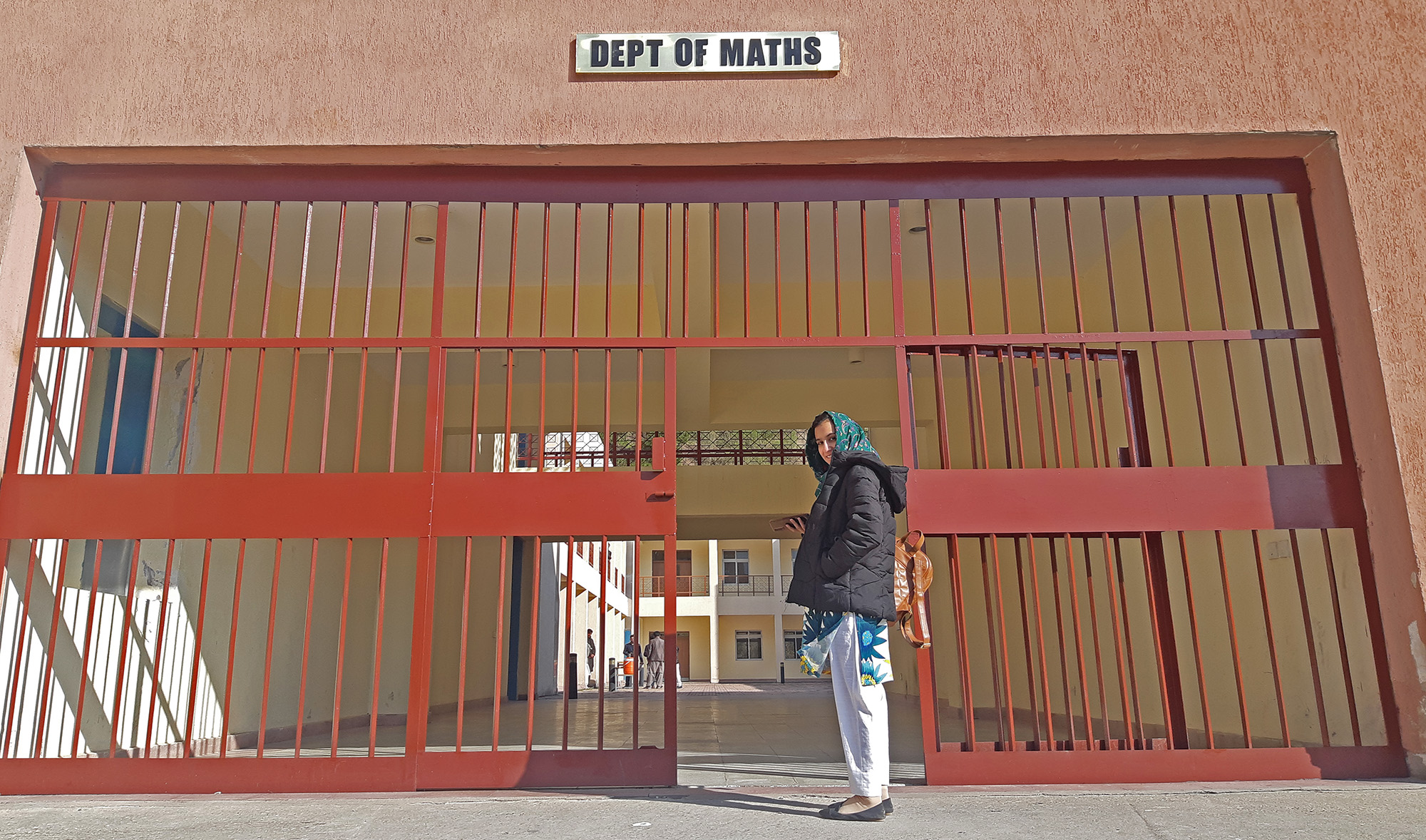


A student stands in front of the Department of Mathematics at King Abdullah Campus of the University of Azad Jammu and Kashmir in Chhatar Kalas, Pakistan, on January 14, 2022. (AN photo by Zulfiqar Kunbhar)

Globally, only 35 percent of STEM students in higher education are women, according to UNESCO data. At King Abdullah Campus, women constitute 47 percent of all students.

"Out of a total 5,440 students enrolled in King Abdullah Campus, there are 2,877 males and 2,563 females. That speaks volumes about girls' participation," Khan said. "We would like to see that ratio further increase."

After the earthquake destruction, many students of the University of Azad Jammu and Kashmir had to travel far to other campuses — some even to Islamabad — to attend courses. 

With social norms and safety concerns limiting women's mobility across Pakistan, traveling alone tens of kilometers from home was nearly impossible for girls. 
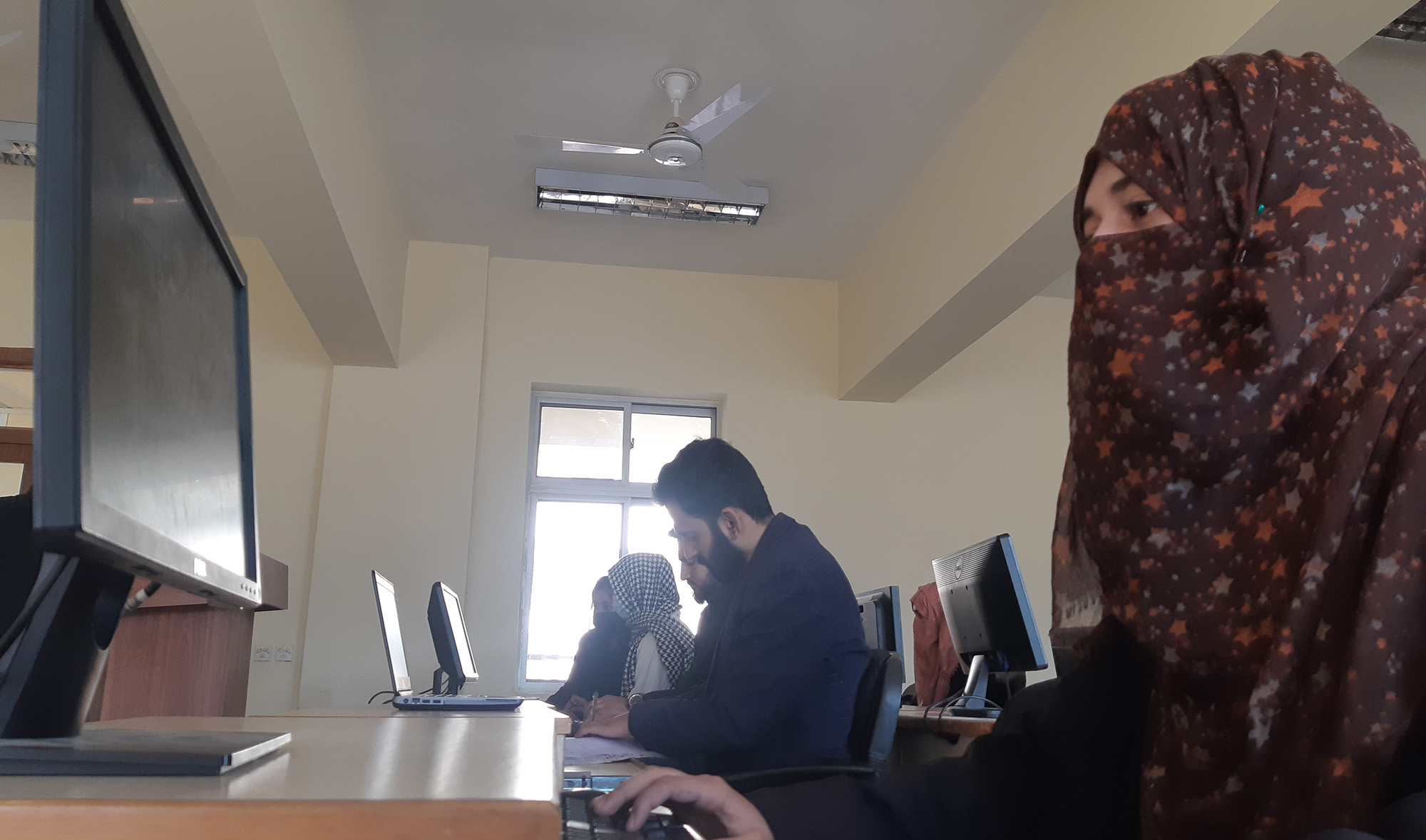


Students attend a class at a computer lab of King Abdullah Campus of the University of Azad Jammu and Kashmir in Chhatar Kalas, Pakistan, on January 14, 2022. (AN photo by Zulfiqar Kunbhar)

"The establishment of King Abdullah Campus at Chhattar Kalas has given advantage to me and many other girl students," 19-year-old mathematics student Samar Qayum told Arab News, explaining that traveling long distance was for them a major burden.

"It was possible that the number of female students would have gone down in this region," she said. "This facility has made life easier for girls."

Boys, too, are happy.

Physics student Waqar Younis said the establishment of the campus allowed him to save on transportation and accommodation, as those were major costs for the students.

"Establishment of King Abdullah Campus has given me multiple advantages," he added.

In the near future, the campus is likely to become even more attractive as $8.5 million computer science labs should be ready this year

The nine labs will be equipped with 600 computers, allowing the study of artificial intelligence and machine learning.

"We are hopeful that by this year in August we may get the equipment," Dr. Rabia Riaz, head of the Department of Computer Science and Information Technology, told Arab News.

"I may say that this sort of equipment and building structure is not only unavailable in whole Azad Kashmir, but also in all over Pakistan."


Four people, including two policemen, killed in twin blasts in northwest Pakistan

Updated 07 March 2026
Follow

Four people, including two policemen, killed in twin blasts in northwest Pakistan

  • Attack on police van in South Waziristan and motorbike-mounted IED in Lakki Marwat hits KP province
  • Violence comes amid a surge in militancy and cross-border clashes between Pakistan and Afghanistan

ISLAMABAD: At least four people, including two policemen, were killed and about 20 others wounded in two separate blasts in Pakistan’s northwestern Khyber Pakhtunkhwa province on Saturday, officials said, the latest violence in a region grappling with militant violence.

One explosion targeted a police patrol van in Wana, the main town of South Waziristan district near the Afghan border, while another blast caused by explosives mounted on a motorbike struck a market area in Lakki Marwat district, according to police officials and preliminary reports.

The incidents come amid rising militant violence in Pakistan’s northwest, where authorities say armed groups operate from across the border in Afghanistan, straining relations between Islamabad and the Taliban administration in Kabul, with both sides engaged in a military conflict since last month.

“The control room received information in the evening about a bomb blast targeting a police van in Wana Bazaar,” a police official in the area, who did not want to be named, confirmed while speaking to Arab News over the phone.

He confirmed two deaths in the incident while saying more than 25 people had been injured.

The official said rescue teams responded promptly and shifted three seriously injured people to a nearby hospital in Wana.

In another incident during the day in Lakki Marwat, an improvised explosive device attached to a motorbike exploded near shops.

“Two people have been killed and about 10 have been injured in an IED blast in Lakki Marwat,” Raza Khan, Deputy Superintendent of Police in Bannu, told Arab News.

“The deceased are identified as Shoaib Ur Rehman and Furqan Ullah,” he added. “Shoaib, the owner of the shop, was the brother of the Lakki peace committee head.”

Peace committees in the region are informal, community-based groups that work with security forces to report militant activity and maintain order, making their members frequent targets of attacks.

Pakistan’s Interior Minister Mohsin Naqvi condemned the attacks and expressed grief over the incidents.

“I strongly condemn the blast near a police patrolling vehicle in Wana Bazaar,” Naqvi said in a statement, confirming the killing of four people, including two police personnel.

“Khyber Pakhtunkhwa police are on the front line in the war against terrorism,” he said, noting the force had made “unforgettable sacrifices” in the fight against militant groups.

Militant violence has surged in Pakistan’s border regions in recent months, particularly in Khyber Pakhtunkhwa and Balochistan provinces.
Islamabad has repeatedly accused the Afghan Taliban government of allowing militant groups, including the Tehreek-e-Taliban Pakistan (TTP), to operate from Afghan territory — a charge Kabul denies — as cross-border tensions between the two neighbors have escalated.