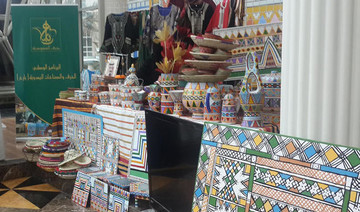

JEDDAH: The Royal Institute of Traditional Arts has launched an apprenticeship program for traditional crafts.
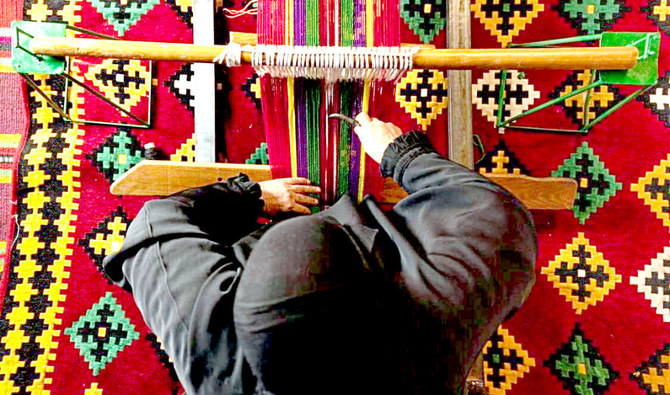
The first phase of the initiative will focus on the Bedouin style of weaving known as Al-Sadu, and traditional mud-brick construction techniques.
The aim of the program is to revive and preserve traditional arts and crafts by transferring knowledge from master artisans to a new generation.
Prince Bader bin Farhan, the minister of culture and governor of the Royal Commission for AlUla, announced the initiative in a message posted on Twitter: “To keep it a #Living_Identity, the #Royal_Institute_of_Traditional_Arts launched the Apprenticeship Program in traditional Al-Sadu and mud construction tracks. #saudivision2030.”
Suzan Al-Yahya, the director-general of RITA, also highlighted the initiative on Twitter, writing: “We are honored to revive our traditional arts through the establishment and implementation of #Apprenticeship Programs over the course of 30 weeks, which depend on transferring skills and knowledge from senior artisans to apprentices through a unique relationship … while learning the craft, ensuring experience is exchanged in its authentic form.”
The availability of new markets for craft products is one of the country’s tourism opportunities.
Laila Al-Bassam
Prince Bader said traditional crafts are part of the history of the Saudi community and must be preserved, developed and passed on to future generations, the Saudi Press Agency reported. The launch of the apprenticeship program marks an important step in the efforts to achieve this, he added, and will create job opportunities and support the plans of the Ministry of Culture in line with goals of Vision 2030.
Laila Al-Bassam, a professor at Princess Nourah bint Abdulrahman University in Riyadh who specializes in the history of Saudi clothing, told Arab News that preserving the country’s heritage is best achieved by “paying attention to reviving and developing traditional and industrial crafts, raising awareness among citizens about the national and economic importance of the country’s heritage, as these crafts can also be one of the tributaries of human development that could accomplish self-sufficiency in some fields.”
She added: “Spreading awareness about the importance of traditional crafts is one of the requirements to revive them. It is also important to transfer them to the new generation as the availability of new markets for craft products is one of the country’s tourism opportunities.”
Other crafts will be added to the apprenticeship program over time, including binding and gilding, metalworking, Al-Qatt Al-Asiri (a type of interior wall decoration traditionally practiced by women in the Kingdom’s Asir region) and embroidery.
Meanwhile, the Ministry of Culture announced on Twitter the launch of a related initiative that seeks the help of educators to safeguard Saudi intangible cultural heritage.
The ministry wrote: “The intangible cultural heritage initiative is an invitation to all teachers and lecturers in the Kingdom to participate in documenting and preserving the Saudi intangible cultural heritage.”
RITA is dedicated to the preservation and promotion, locally and internationally, of traditional arts as part of the Saudi national identity. It was established in Riyadh last year as part of the Quality of Life Program, in line with the aims and initiatives of Saudi Vision 2030.
The traditional Saudi craft of Al-Sadu weaving was added to the UNESCO intangible heritage list in 2020.It is described as a traditional form of weaving practiced by Bedouin women. Al-Sadu translates as weaving in a horizontal style.