BAMAKO: Mali’s former president Ibrahim Boubacar Keita, who led the West African country from 2013 until he was ousted in a coup in 2020, died aged 76 in the capital Bamako on Sunday, his family said.
Mali’s interim government issued a statement hailing “the memory of the illustrious” Keita, adding that the former president died “after a long illness.”
Looming over most of Keita’s presidency was the extremist insurgency that has rocked the poor Sahel country since 2012. His toppling marked the rise of the military junta now under regional sanctions for failing to restore civilian rule.
Keita was forced out of office on August 18, 2020, by young military officers who staged an uprising at a base near Bamako before heading into the city, where they seized Keita and other leaders.
In an interview broadcast on state television Saturday evening, the Prime Minister of the interim administration Choguel Kokalla Maiga denounced the corruption and impunity he said marked the end of Keita’s rule.
But on Sunday Foreign Minister Abdoulaye Diop said he was “saddened to learn of the death of former president Ibrahim Boubacar Keita,” adding that “it is with great emotion that I bow before his memory.”
Macky Sall, president of neighboring Senegal, said in a Tweet he was “saddened” by the news, while Niger’s ex-president Mahamadou Issoufou, a former comrade of Keita’s in the Socialist International, hailed him as “a cultured man, a great patriot and a pan-Africanist.”
Politicians and other public figures went to Keita’s home southwest of Bamako to pay their respects, with police guarding the entrances, according to AFP journalists at the scene.
“He was a father to me,” said Amadou Koita, who was government spokesman under Keita, sitting in the courtyard dotted with mango trees.
Moussa Timbine, a former parliament speaker close to the late president, described him as a man “of peace and dialogue.”
The government statement said funeral plans would be announced at a later date.
In the weeks before the 2020 coup, Keita had been struggling with protests fueled by his handling of the extremist insurgency and failure to turn around Mali’s floundering economy.
Snail-paced political reforms, decrepit public services and schools, and a widely shared perception of government corruption also fed anti-Keita sentiment, driving tens of thousands of protesters into the streets.
Seized by the putschists, the junta that emerged from the rebellion — under pressure from the West African bloc ECOWAS — released Keita weeks later and returned him to his residence in Bamako, under surveillance.
He suffered a mini-stroke the following month, and was sent to United Arab Emirates for treatment. He had been based at his Bamako home since, staying out of public life.
The ruling junta would stage another coup in May 2021, toppling a civilian transitional government.
The junta had vowed to hold elections next month to transition the country back to civilian rule. But at the end of the last year, the junta revised its timetable, saying it could stay in power for up to five years.
In response, ECOWAS agreed to sanction Mali earlier this month, imposing a trade embargo and shutting borders, in a decision backed by the United States, the European Union and former colonial power France.
Landlocked Mali, one of the world’s poorest countries, is already feeling the effects of the sanctions, prompting thousands to protest in Bamako on Friday.
The son of a civil servant, Keita was born in the southern industrial city of Koutiala, the declining heartland of cotton production.
After studying literature in Mali, Senegal and France, Keita became an adviser for the EU’s overseas development fund before heading a development project in northern Mali.
He then rose through the ranks under Alpha Oumar Konare, the country’s first democratically elected president.
As a socialist prime minister between 1994 and 2000, he quelled a series of crippling strikes, earning a reputation as a firm leader and helping to set up his landslide election in 2013.
Keita was re-elected in 2018.


![]()

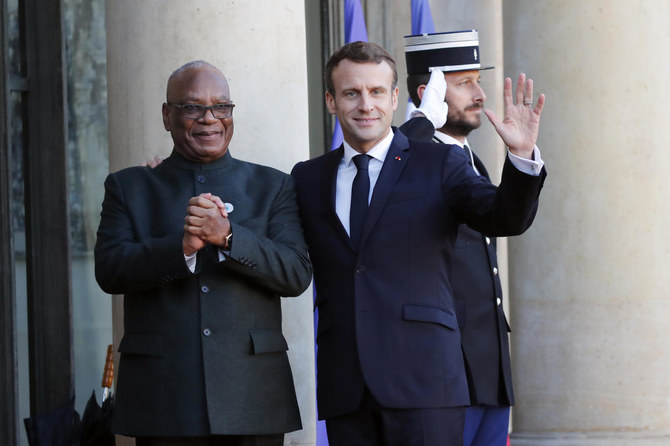
Mali ex-president Keita dies two years after coup ouster
Short Url
https://arab.news/gjdbp
Mali ex-president Keita dies two years after coup ouster
- Looming over most of Keita’s presidency was the extremist insurgency that has rocked the poor Sahel country since 2012
- His toppling marked the rise of the military junta now under regional sanctions for failing to restore civilian rule


Latest updates


© 2026 SAUDI RESEARCH & PUBLISHING COMPANY, All Rights Reserved And subject to Terms of Use Agreement.