
BEIRUT: A Lebanese Shiite scholar has denounced Hezbollah, as well as its leader Hassan Nasrallah and his deputy Sheikh Naim Qassem, in a sermon published on his Facebook page and shared across social media.
Sheikh Abdul Salam Dandach, from the Baalbek–Hermel region, said in the video: “Our resistance is different from theirs (Hezbollah’s). We are not the rulers of this land and we are not new parties that came to Lebanon. Our parents and ancestors are deeply rooted in this land.”
The party is referred to as the “resistance” in Lebanon.
He addressed Nasrallah, saying: “You resist using deception and encroachment. You live off your resistance, based on the bliss of the US dollar, whereas our resistance comes from hunger and poverty. You resist through surfeit and ingratitude. We resist your lies. We resist the illness and ignorance that you caused in the region. We resist the destruction and havoc that you created.”
FASTFACT
The Shiites in Baalbek–Hermel constitute 60 percent of the population.
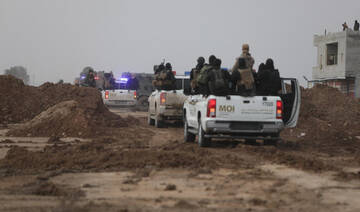
Since the beginning of the economic and social crisis that has hit Lebanon, many in the Shiite community of Baalbek–Hermel have complained about the rampant insecurity that the region is witnessing due to the emergence of a de facto power that controls people's lives with its weapons and allows the formation of gangs involved in smuggling, kidnapping and extortion.
An activist from the region, who did not reveal his identity, told Arab News: “Baalbek–Hermel doesn’t have any patron. The government has been neglecting it for years and Hezbollah tries to avoid it, turning its back on the complicated social and economic crises.”
The Shiites in Baalbek–Hermel constitute 60 percent of the population, whereas the Sunnis and Christians represent 20 percent apiece.
Fewer than 30 percent of the Shiites belong to political parties, mostly the Amal Movement and Hezbollah, whereas the rest belong to a clan.
On Oct. 17, 2019, massive protests swept across Lebanon in an unprecedented movement against government failures, poor living standards, rampant corruption, the lack of basic services, overwhelming sectarian rule, and the imploding economy.
One of the Oct. 17 activists said: “Sheikh Dandach is not the first opposition voice to rise in the region against Hezbollah. People were previously silent because the economic situation was acceptable. But when everything collapsed, there were no more reservations, the pain became bigger and the voice louder.
“The dominant mindset in the region is a clan mindset ruled by the logic of dignity that refuses to be dictated as to what to do and what not to do.”
The activist said the people of Baalbek–Hermel drew comparisons between the situation in their neglected areas and in the prosperous areas of southern Lebanon.
“They feel that the south is receiving greater attention from Hezbollah and enjoys many benefits and economic projects that aren’t provided to the Baalbek–Hermel region. They refer to Hezbollah’s chief Hassan Nasrallah and Parliament Speaker Nabih Berri as the ‘Southern Duo.'”
According to a political activist in the region, Dandach derived his power from his family in Hermel, the biggest city in the Baalbek–Hermel governorate. “This family is linked to those involved in murders and smuggling. So, Hezbollah may not pay attention to what Dandach says.”
But this did not mean that Dandach’s words would not harm Hezbollah and allow other voices to be raised, including those of opponents active in the revolution, he added, demanding that all those in power, including Hezbollah, changed their primary decision-making partners in the country.
“Dandach’s words reflect a situation of great malaise within the Shiite community in the region, which may be reflected in the upcoming parliamentary elections, but the problem lies in the counter-fight against Hezbollah, which may be in the interest of the party itself.
“Terming Hezbollah as an Iranian occupation force is an uncomfortable expression in the region and may cause people to gravitate back toward Hezbollah.”