

US anti-trust suit says Google, Facebook chiefs approved ‘illegal’ market pact

The Big Tech giants have long been accused of holding monopolies. (Reuters file photos)
Short Url
Updated 15 January 2022
Follow

US anti-trust suit says Google, Facebook chiefs approved ‘illegal’ market pact

  • The antitrust suit is one of three engaging Google on different fronts
  • Suit says the online search colossus sought to oust competition by manipulating ad auctions

SAN FRANCISCO, US: Top bosses of Google and Facebook were directly involved in approving an allegedly illegal 2018 deal to cement their dominance of the online advertising market, US court documents revealed Friday.
The records, part of an anti-trust lawsuit by a coalition of US states targeting Google, make serious allegations against Big Tech giants long accused of holding monopolies.
According to the states’ accusations, the online search colossus sought to oust competition by manipulating ad auctions — the ultra-sophisticated system that determines which ads appear on web pages based on the anonymized profiles of Internet users.
The legal documents filed in a New York court clearly refer to Sundar Pichai, chief of Google’s parent firm Alphabet, as well as Facebook executive Sheryl Sandberg and CEO Mark Zuckerberg — even if their names were redacted.
“Google CEO Sundar Pichai also personally signed off on the terms of the deal,” the suit said.
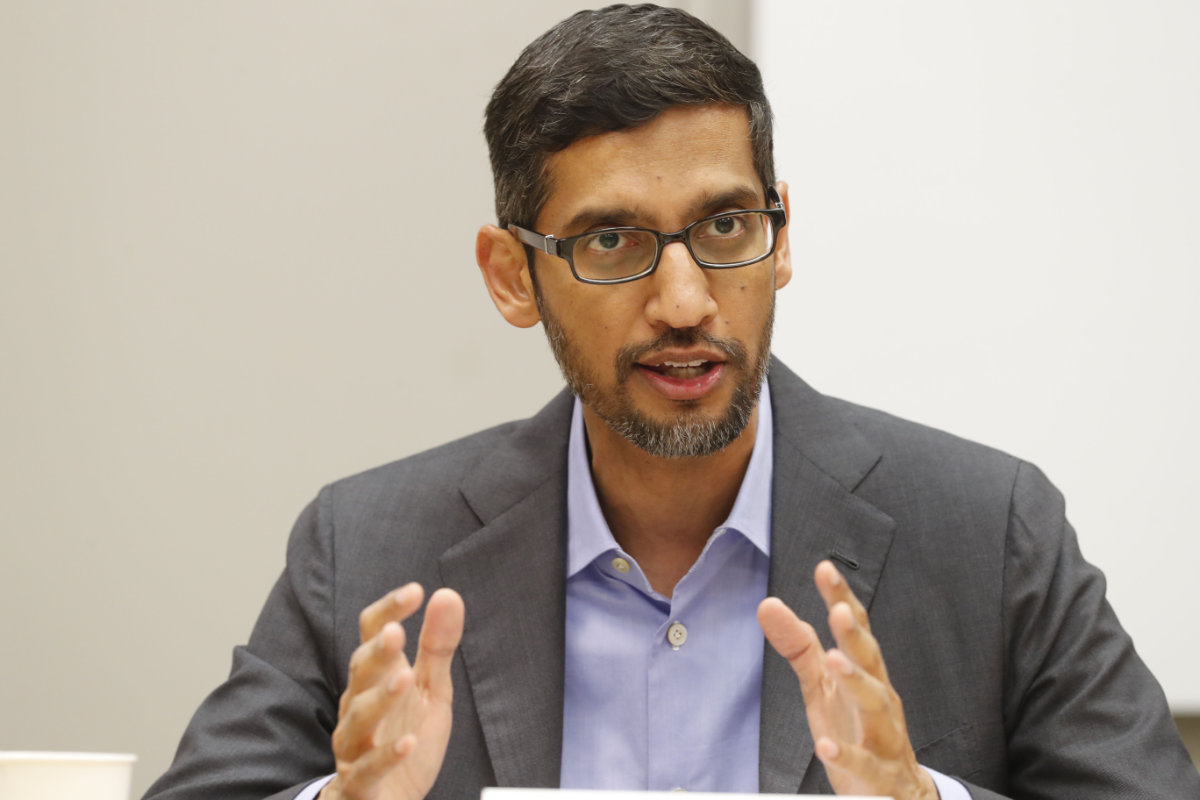


Google CEO Sundar Pichai. (AP file photo)


The documents note that the economic terms were emailed to Facebook’s CEO and he was advised: “’We’re nearly ready to sign and need your approval to move forward.’“
Google did not respond to a request for comment Friday, but has adamantly denied manipulating the digital ad market.
It was the third time the suit was amended, and did not list Facebook or its parent company Meta as defendants.
“Meta’s non-exclusive bidding agreement with Google and the similar agreements we have with other bidding platforms, have helped to increase competition for ad placements,” a spokesperson said in reply to an AFP inquiry.
“These business relationships enable Meta to deliver more value to advertisers while fairly compensating publishers, resulting in better outcomes for all.”
Google referred to the agreement internally as “Jedi Blue,” the color being a reference to Facebook’s logo, according to the filing.
“No rational developer would choose to have its auctions rigged by the market’s two largest buyers,” the suit said.
“So, Google and Facebook swore themselves to secrecy about the terms of their agreement.”
The antitrust suit is one of three engaging Google on different fronts.
The US government filed its blockbuster lawsuit in October of last year, accusing Google of maintaining an “illegal monopoly” in online search and advertising.
The country’s biggest antitrust case in decades, it opens the door to a potential breakup of the Silicon Valley titan.
While Google ad revenue has continued to grow, its share of the booming US online ad market is ebbing under pressure from competitors such as Facebook, Amazon and others, according to eMarketer.


Meta to charge Arab advertisers extra fee for reaching European audiences

Updated 11 March 2026
Follow

Meta to charge Arab advertisers extra fee for reaching European audiences

  • US tech giant told advertisers it will add fees ranging from 2 to 5 percent on image and video ads delivered on its platforms to offset digital service taxes
  • Charges are determined by where the audience is located, not where the advertiser is based

LONDON: Meta will from July 1 impose location-based surcharges on advertisers targeting audiences in six European countries, a move that will directly affect Arab businesses that run campaigns across the continent.

The US tech giant announced it will add fees ranging from 2 to 5 percent on image and video ads delivered on its platforms, including Facebook, Instagram and WhatsApp, to offset digital service taxes imposed by individual governments.

Crucially, the charges are determined by where the audience is located, not where the advertiser is based.

That means Saudi, Emirati, Egyptian or other Arab companies paying to reach consumers in the UK, France or Italy will face the additional costs regardless of their own country’s tax arrangements with Meta.

Fees will apply at 2 percent for ads reaching UK audiences, 3 percent for France, Italy and Spain, and 5 percent for Austria and Turkiye.

“If you deliver $100 in ads to Italy, where there is a 3% location fee, you will be charged $100 (ad delivery), plus $3 (location fee), for $103 total,” the company wrote in an email to an advertiser initially reported by Bloomberg. “Note that any applicable VAT will be calculated on top of the total amount.”

The taxes have been introduced at different points, starting with France in 2019, though not the EU as a bloc.

Many tech companies report substantial sales in Europe and millions of users but pay minimal tax on profits. The goal is to claw back locally derived economic value, Bloomberg reported.

The move follows similar decisions by Google and Amazon, which have also begun passing European digital tax costs on to advertisers.

For Arab brands with growing European footprints, particularly in fashion, travel, hospitality and media, the new fees add another layer of cost to campaigns already subject to currency and targeting complexities.

Digital services taxes, levied as a percentage of revenues earned by major tech platforms in individual countries, have drawn criticism from Washington, which argues they unfairly target US companies.

Meta has been reached for comments.