

US anti-trust suit says Google, Facebook chiefs approved ‘illegal’ market pact

The Big Tech giants have long been accused of holding monopolies. (Reuters file photos)
Short Url
Updated 15 January 2022
Follow

US anti-trust suit says Google, Facebook chiefs approved ‘illegal’ market pact

  • The antitrust suit is one of three engaging Google on different fronts
  • Suit says the online search colossus sought to oust competition by manipulating ad auctions

SAN FRANCISCO, US: Top bosses of Google and Facebook were directly involved in approving an allegedly illegal 2018 deal to cement their dominance of the online advertising market, US court documents revealed Friday.
The records, part of an anti-trust lawsuit by a coalition of US states targeting Google, make serious allegations against Big Tech giants long accused of holding monopolies.
According to the states’ accusations, the online search colossus sought to oust competition by manipulating ad auctions — the ultra-sophisticated system that determines which ads appear on web pages based on the anonymized profiles of Internet users.
The legal documents filed in a New York court clearly refer to Sundar Pichai, chief of Google’s parent firm Alphabet, as well as Facebook executive Sheryl Sandberg and CEO Mark Zuckerberg — even if their names were redacted.
“Google CEO Sundar Pichai also personally signed off on the terms of the deal,” the suit said.
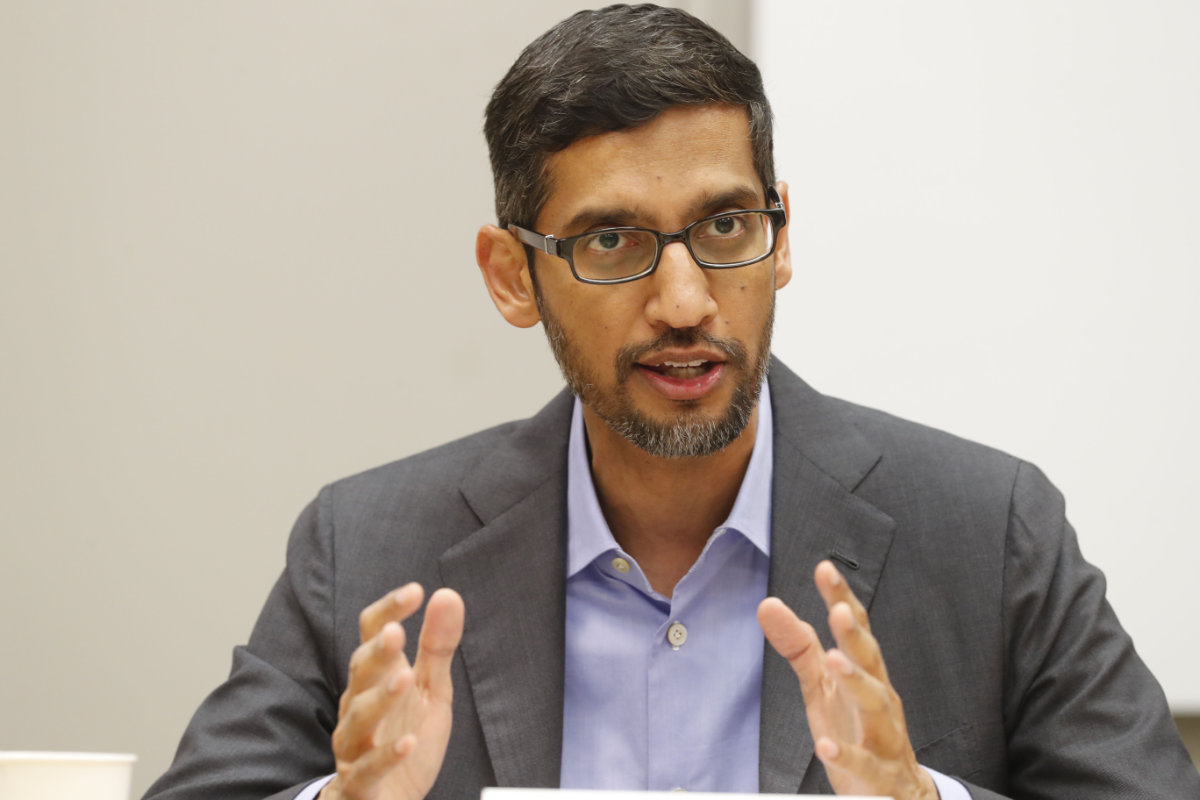


Google CEO Sundar Pichai. (AP file photo)


The documents note that the economic terms were emailed to Facebook’s CEO and he was advised: “’We’re nearly ready to sign and need your approval to move forward.’“
Google did not respond to a request for comment Friday, but has adamantly denied manipulating the digital ad market.
It was the third time the suit was amended, and did not list Facebook or its parent company Meta as defendants.
“Meta’s non-exclusive bidding agreement with Google and the similar agreements we have with other bidding platforms, have helped to increase competition for ad placements,” a spokesperson said in reply to an AFP inquiry.
“These business relationships enable Meta to deliver more value to advertisers while fairly compensating publishers, resulting in better outcomes for all.”
Google referred to the agreement internally as “Jedi Blue,” the color being a reference to Facebook’s logo, according to the filing.
“No rational developer would choose to have its auctions rigged by the market’s two largest buyers,” the suit said.
“So, Google and Facebook swore themselves to secrecy about the terms of their agreement.”
The antitrust suit is one of three engaging Google on different fronts.
The US government filed its blockbuster lawsuit in October of last year, accusing Google of maintaining an “illegal monopoly” in online search and advertising.
The country’s biggest antitrust case in decades, it opens the door to a potential breakup of the Silicon Valley titan.
While Google ad revenue has continued to grow, its share of the booming US online ad market is ebbing under pressure from competitors such as Facebook, Amazon and others, according to eMarketer.


Study finds nearly half of UK news stories on Muslims show signs of bias

Updated 09 March 2026
Follow

Study finds nearly half of UK news stories on Muslims show signs of bias

  • Centre for Media Monitoring finds 20,000 out of 40,913 articles from 30 major news outlets contain bias and 70% link Muslims to negative behaviors or themes
  • Findings reveal ‘deeply concerning evidence of structural bias’ in portrayal of Muslims by UK press and point to ‘systemic problem’ within the media, says center’s director

LONDON: Nearly half of news articles published in the UK in 2025 that referenced Muslims or Islam contained some degree of bias, according to a report issued on Monday by the Centre for Media Monitoring. It also found that about 70 percent of stories linked Muslims to negative behaviors or themes.

The nonprofit organization, which tracks the ways in which Muslims and Islam are portrayed in the media, examined 40,913 articles from 30 major news outlets and found that about 20,000 showed some form of bias.

The study looked at “structural patterns” in coverage that “shape public narratives” about Muslims amid rising hostility toward the community.

“As the largest study of its kind ever conducted in the UK, this report presents deeply concerning evidence of structural bias in how Muslims are portrayed in the UK press,” said Rizwana Hamid, the director of the organization.

It found that 70 percent of the articles it reviewed highlighted negative aspects related to Muslims, though not all of the stories were biased in themselves. The wider patterns were also troubling: 44 percent of the coverage omitted key context, 17 percent relied on generalizations, and 13 percent included outright misrepresentation.

Taken together, the monitoring center said, the findings amounted to evidence of an “information integrity crisis” that distorts public understanding, and “a deeply concerning trend” in reporting on Muslims.

The research points to a “systemic problem within our media ecosystem,” Hamid said.

“When entire communities are repeatedly framed through lenses of suspicion or threat, it inevitably shapes public attitudes, political debate and the everyday lives of British Muslims,” she added.

News brands targeting right-wing audiences were more likely to produce biased coverage, the report found.

The Spectator magazine and GB News were identified as having the highest proportion of “very biased” articles, and as the “worst across all five bias categories”: negative framing, generalizations, misrepresentation, lack of context, and problematic headlines.

Other outlets highlighted for displaying high levels of biased content about Muslims included The Telegraph, The Jewish Chronicle, Daily Express, The Sun, Daily Mail and The Times.

In contrast, the BBC, other broadcasters and left-leaning outlets recorded the lowest rates of bias in the study.

The research comes as British Muslims report rising levels of discrimination. Official figures published in October revealed that religious hate crimes against Muslims rose by 19 percent in the year to March 2025 compared with the previous 12 months.