



BEIRUT: As the people of Lebanon continue to struggle with the effects of the financial crisis in the country, the political turmoil and the aftermath of the devastating explosion at Beirut’s port, concern is growing about the toll these crises are taking on mental health.
While no accurate statistics are available for the number of people who take sedatives, psychiatrists report that the number of patients visiting their clinics in the past year exceeded 12 a day.
Meanwhile, pharmacists estimate that people wishing to buy psychotropics — drugs that affect a person’s mental state, including antidepressants, anti-anxiety medication and mood stabilizers — constitute 30 to 35 percent of their customers.
According to some medical estimates, one in five people in Lebanon feels anxiety, sadness or depression as a result of the economic and social conditions in the country but medicine and healthcare are not readily available to many.
The Lebanese pound has plummeted in value against the dollar and soaring prices are exhausting incomes and salaries. The Beirut explosion on Aug. 4, 2020, and the armed clashes in the city’s Tayouneh neighborhood last October further fueled the sense hopelessness among many people.
“Since the end of 2019, following the escalating economic and social collapse, the levels of mental disorders rose dramatically,” said Hiba Dandachli, communications director of Embrace, an organization that provides mental health services.

Hiba Dandachli, communications director of Embrace, presenting the case of Lebanon's mental health patients during a TV talk show. (Twitter photo)
In 2021, she said, 20,000 people called the Embrace Lifeline, more than in any previous year. She said that a high proportion of the callers, mostly young people and teenagers, were suffering from conditions such as anxiety, depression and insomnia as result of the effects of the declining economic and social conditions and unemployment.
“The Lebanese took to the streets in 2019 to express their anger,” Dandachli said. “However, they feel despair due to the escalating crises.
“Without social justice and securing the fundamental right of stability, our services are limited to helping people, not providing solutions. We are sedatives.”
Joelle, 33, who works at an insurance company, said that she sought help from a psychiatrist because she was suffering from anxiety as a result the dire economic situation and the fear of being unable to provide for her the family.
“I started suffocating at night and experiencing panic attacks,” she said. The treatment that was prescribed requires medicine that is either unavailable in pharmacies or very expensive, she added.
A study published in December by the Lebanese American University indicated that “16.17 percent of young people, between 18 and 24 years old, suffer from severe depression since the Aug. 4 explosion, and 40.95 percent of women suffer post-traumatic stress disorder.”
“We mainly witness mood disorder cases at our clinic,” said Dr. Hanaa Azar, a psychiatrist who works with adults and children.
She believes that “between 70 and 80 percent of people in Lebanon take sedatives as a result of sleep disorders, stomach spasm, tachycardia, eczema, phobias, body pains and other physical symptoms that are symptoms of mental disorders.”
She added: “All generations suffer in one way or another from these disorders as a result of insecurity, especially children. As everyone returned to school and work, behavioral and academic disorders have emerged and obsessive-compulsive disorder cases have increased among adults.”
Doctors and psychiatrists are particularly worried about the shortage of medicines, especially since most are no longer subsidized by the state and the rest are only partly subsidized. Only cancer medications are still fully subsidized. Subsidies on drugs for neurological conditions depend on the price of the particular medicine.
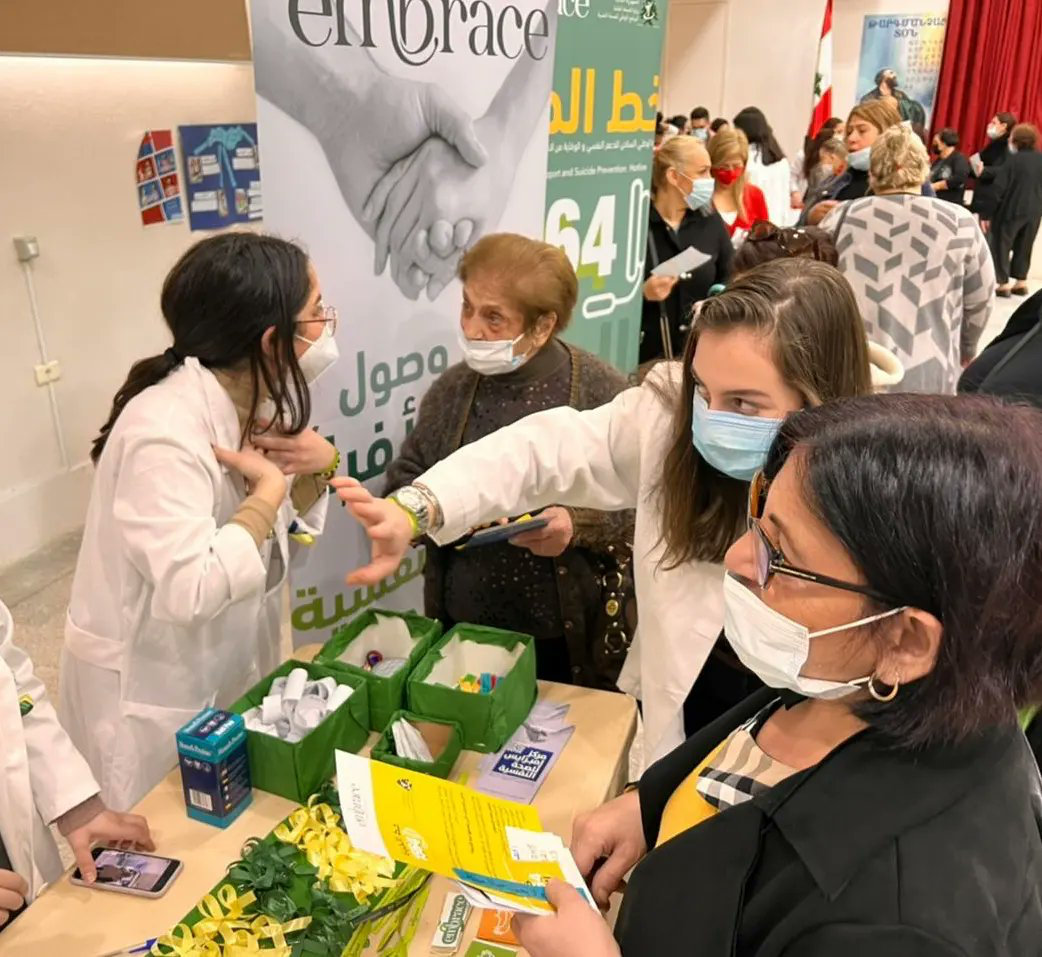
Embrace volunteer health workers providing a lifeline service to residents of Lebanon who are psychologically affected by the worsening economic crisis. (Twitter photo)
“A very large number of Lebanese take a sedative drug, the price of which has risen from 25,000 Lebanese pounds to 420,000 within just two months.” The official exchange rate remains 1,500 pounds to the dollar, but this is unavailable and the currency currently trades on the informal black market at more than 30,000 pounds to the dollar.
Pharmacist Samer Soubra said he cannot understand why there are still medicine shortages even though prices have been increased to take account of the soaring exchange rate.
“Medicine distributors were reluctant to distribute to pharmacies in light of the high exchange rate,” he said. “Today, subsidies have been lifted on many medicines and they are now priced according to the exchange rate on the black market, yet some are still missing, including infant formula.”
Thousands of people in Lebanon resort to obtaining the medicines they need, especially psychotropics, from relatives in other countries or people who bring them from Turkey, Cyprus, Greece and Jordan, or from donations made by Lebanese expatriates in France.
Still, many are going without. “Some people have stopped taking their medication and have experienced health setbacks,” said Azar.
Psychiatrist Dr. Yara Chamoun said that many Lebanese who previously showed no signs of mental disorders have begun to suffer from them amid the economic crisis, especially young people.
“In addition to cases of depression and anxiety, we find cases of alcohol and drug abuse,” she said. “Patients say that they became addicted to them because they help them sleep or forget about the harsh reality.”
Psychiatrists find themselves at an impasse in efforts to treat patients when the required medication is not readily available, Chamoun said.
“Some alternative psychotropics might not work well enough on the patient, while others may be too expensive for them to afford,” she explained.
Amal Moukarzel, a Lebanese expatriate in France, founded Les Amis du Liban de Colombes (Friends of Lebanon in Colombes) with her husband and friends to collect donations of medicines and send them to Lebanon.
“We now send around 120kg of medicines from time to time, obtained from hospitals and sent in cooperation with Middle East Airlines to local associations in Lebanon to be distributed to needy patients,” she said.
Despite the logistical issues she faces, Moukarzel said she insists on sending “more of these much-needed medicines, most of which are for diabetes and blood pressure, as well as psychotropics.”


