


DUBAI: In the ancient desert lands of AlUla, now one of Saudi Arabia’s top tourist attractions, six artists have spent the last three months creating works as part of the area’s first art residency program.
Under the theme “The Oasis Reborn,” the cohort hailing from the Kingdom, Syria, the UAE, France, and Algeria, has, since the start of November, been immersed in AlUla’s ancient sites, natural oasis, and varied landscapes of lush valleys, sandstone mountains, red-rock cliffs, canyons, and velvety sand dunes.
Their mission has been to create art that marries the rich cultural heritage of the area with its bountiful natural environment.
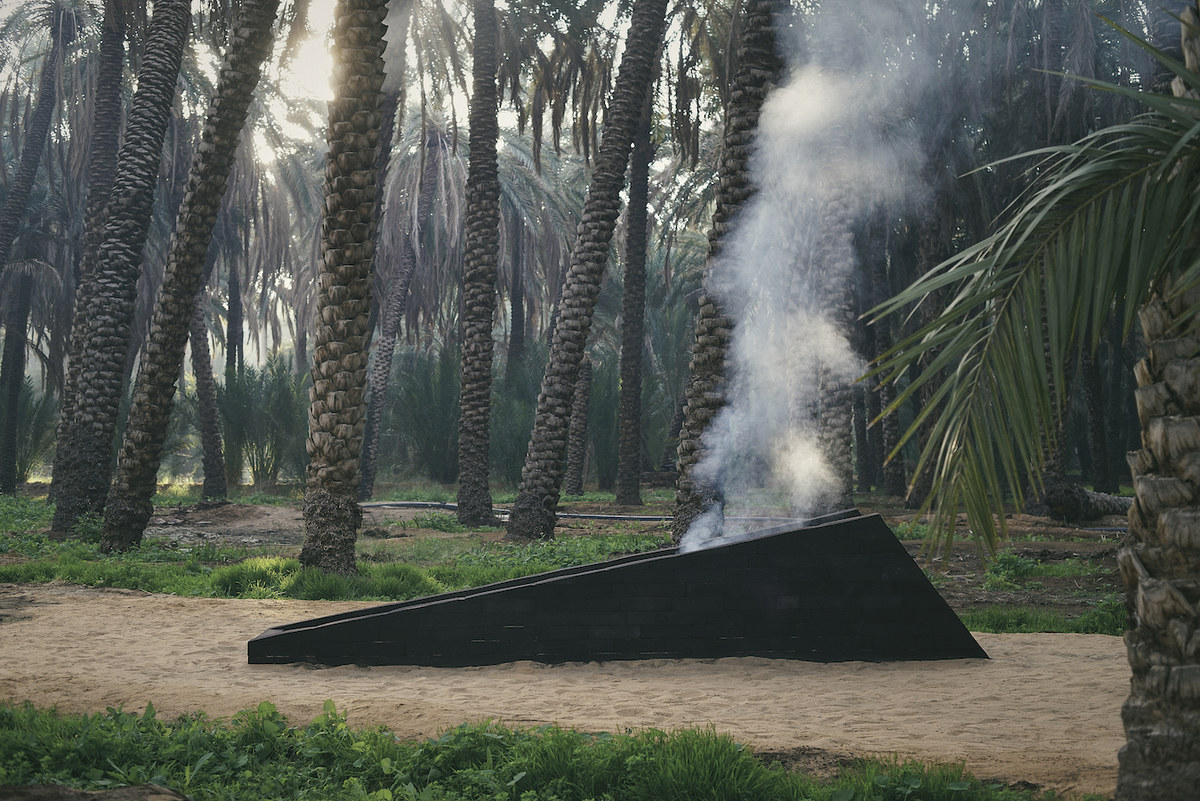
Muhannad Shono, On This Sacred Day, 2022, Mabiti AlUla, The Oasis Reborn Art residency 1. (Supplied)
They have been working in collaboration with technical, scientific, and archaeological experts developing the natural oasis into a 50-square-kilometer hospitality, heritage, and cultural venture. The artists also linked up with local community artisans and cultural practitioners to learn about AlUla’s rich heritage.
The residency initiative was the brainchild of officials from the Royal Commission for AlUla, and the French Agency for AlUla Development, and was operated by Manifesto, a French creative agency set up to help companies with artistic projects.
Laure Confavreux-Colliex, executive director at Manifesto, told Arab News: “The goal of this residency program was to work with the six artists chosen from different backgrounds and practices to be involved through art in the development and regeneration of AlUla.
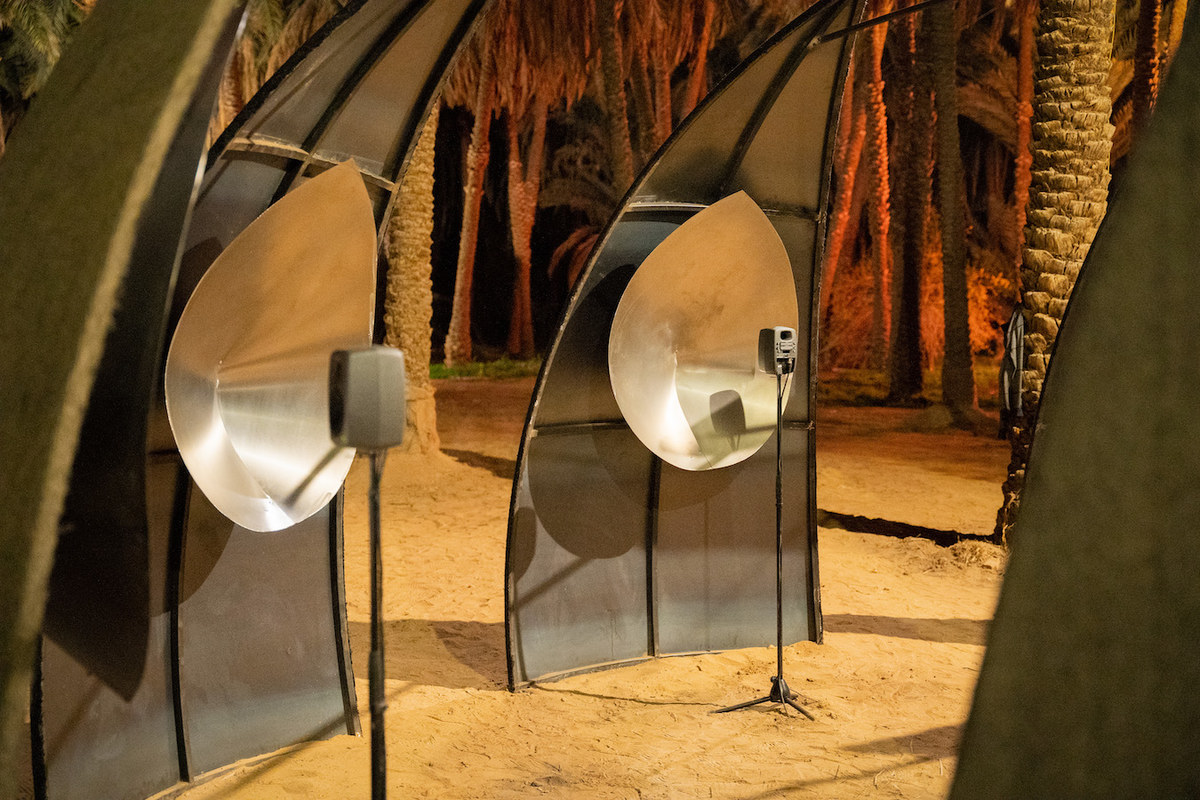
Laura Sellies, Peuplé de feuilles qui bougent (“Populated by Moving Leaves”), 2022, Mabiti AlUla, The Oasis Reborn Art residency 4. (Supplied)
“The theme dedicated to ‘The Oasis Reborn’ means we are digging into those issues of what is in the oasis, what has been in the oasis, and how to bring to light the history and heritage of the oasis so that AlUla can be regenerated.
“Our goal at Manifesto was to create those links between the artists and the local AlUla community.”
The first edition took place in Mabiti AlUla, a palm grove and guest house in the heart of AlUla’s oasis. The next edition will be held at Madrasat AdDeera, an arts and design center set to become a key space in the future Arts District of AlUla, a cluster of education and art programs aimed at providing an active and vibrant destination for communities, students, artists, and visitors.
The first cohort of artists-in-residence began collaborations with local artisans through the programs held at Madrasat AdDeera.
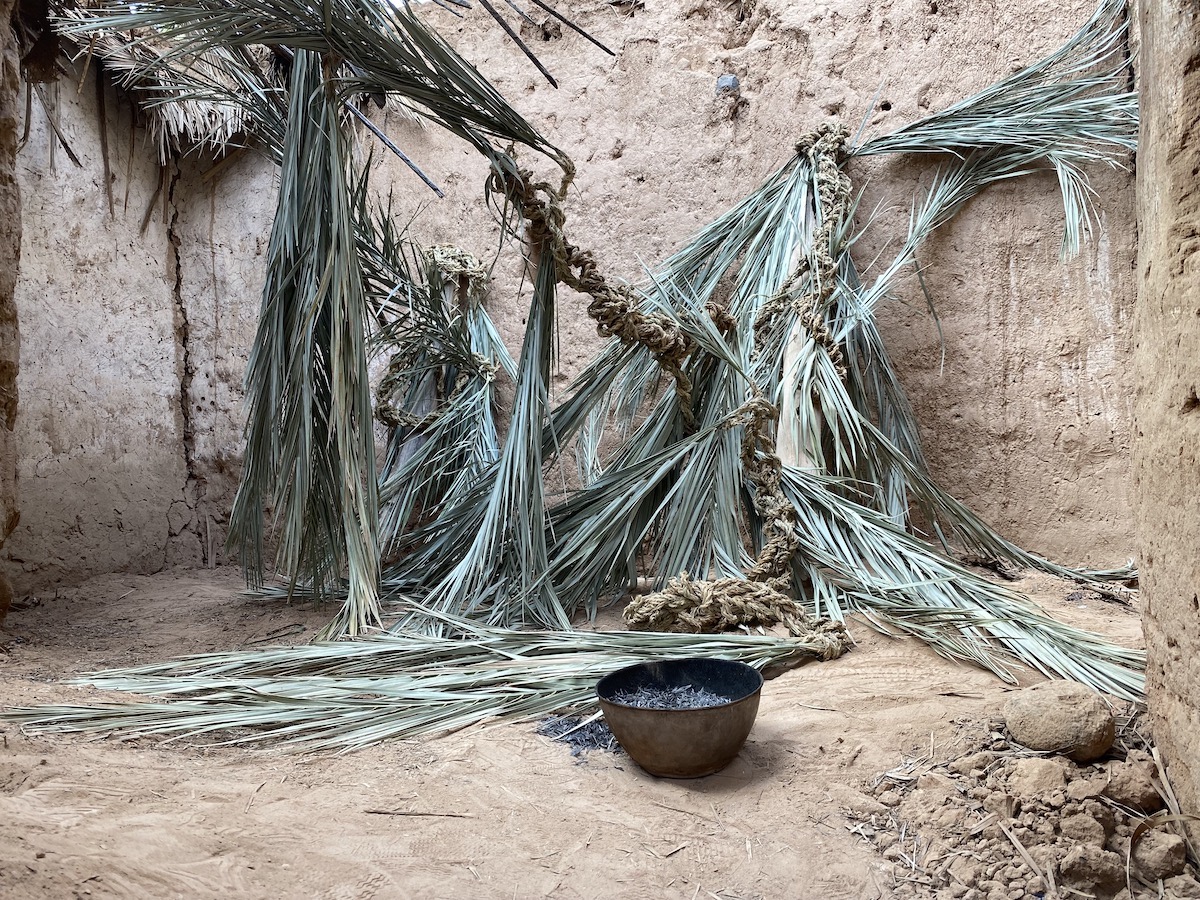
Sara Favriau, Ruban de Möbius (“Möbius Strip”), 2022, Mabiti AlUla, The Oasis Reborn Art residency 1. (Supplied)
Suspended over a pool of water and positioned in between a grove of palm trees, Saudi artist Rashed Al-Shashai’s installation, “Thuraya,” draws links between modern science and the ancient past.
Created using natural materials from the oasis, it is colored red with golden lanterns on either side that at night cast reflections on the water and illuminate the area.
Al-Shashai told Arab News that his piece had been inspired by the importance of the stars to the lives of farmers.
He said: “My grandfather used to take me with him to perform the Fajr prayer. I remember the path we used to walk together. When he was talking to me, he was always looking at the sky, at the star, at the Thuraya and its position in the sky. Farmers have always been guided by its location in the sky to start planting or harvesting. It was the start of my inspiration for my installation.”
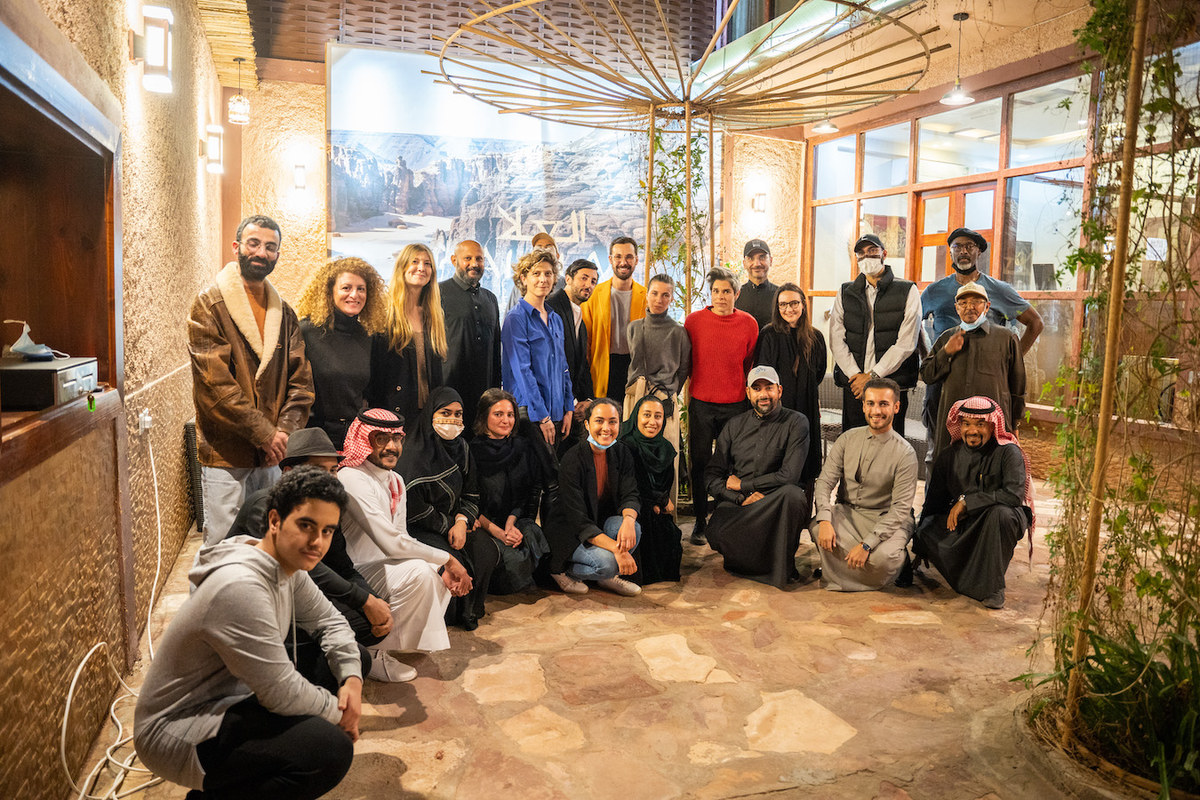
The artists spent the last three months creating works as part of the area’s first art residency program. (Supplied)
The cycle of death and renewal in the oasis was the focus of Muhannad Shono’s work, “On This Sacred Day,” with the smoke rising from the installation representing the stories of comings and goings, loss, and remembrance.
He said: “It is a ceremonial piece that transcribes the journey of plant, ash, smoke, and sky, in other words, a cycle of death and renewal unfolding inside a living oasis. It also questions purposeful change, transformation, and impacts to guard against fires that may seek to reduce the world to ash.”
French artist Sara Favriau’s artwork, titled “The Oasis is a Wadi Raised to the Sky,” takes three forms and three distinct steps corresponding to three related moments: Small sculptures called “Trifles and Trinkets,” a filmed performance titled “A Never-Ending Day,” and an installation named “Mobius Strip.” The artist created the trio of forms to question the notion of a garden of the desert and, more specifically, of the oasis, envisioning the planet as an expansive garden with the human and animal realms united as one.
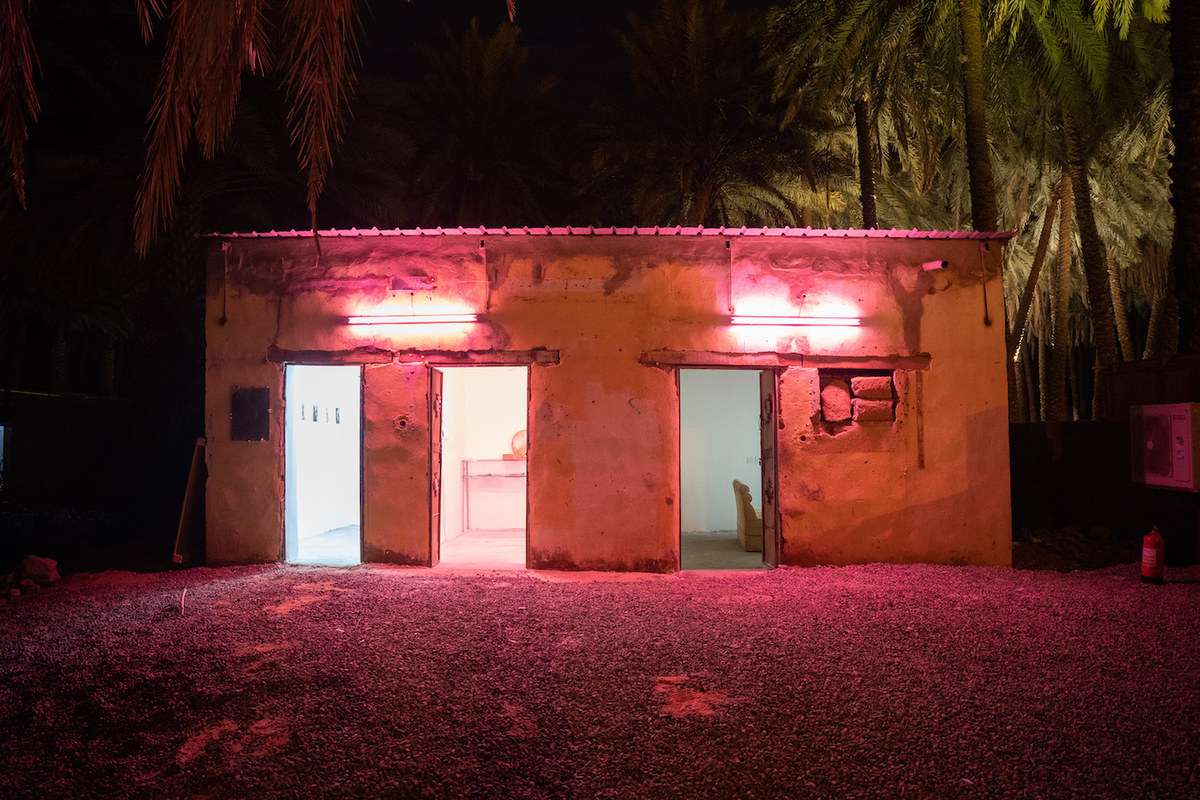
Sofiane Si Merabet (The Confused Artist), It’s Not Early Anymore, 2022, Mabiti AlUla, The Oasis Reborn Art residency 1. (Supplied)
French-Algerian artist Sofiane si Merabet looked at the oasis as a “motherly environment” that had nurtured humans throughout time.
Titled “It’s Not Early Anymore,” his work reflects on the recent development of the oasis of AlUla and the excitement surrounding wedding celebrations. Located in a small, one-story building on an oasis farm, he has produced a multimedia installation capturing the Saudi traditions of the Tagagat, or female wedding singers, and regional elements documenting urban signs and shops referring to weddings.
Si Merabet told Arab News that AlUla was also known as the “bride of the mountains.”
He said: “Working closely with Nujood, the only Tagaga of AlUla, is a very powerful way of documenting the sociology of the oasis, the current dynamic of change, and how both are linked to spaces.
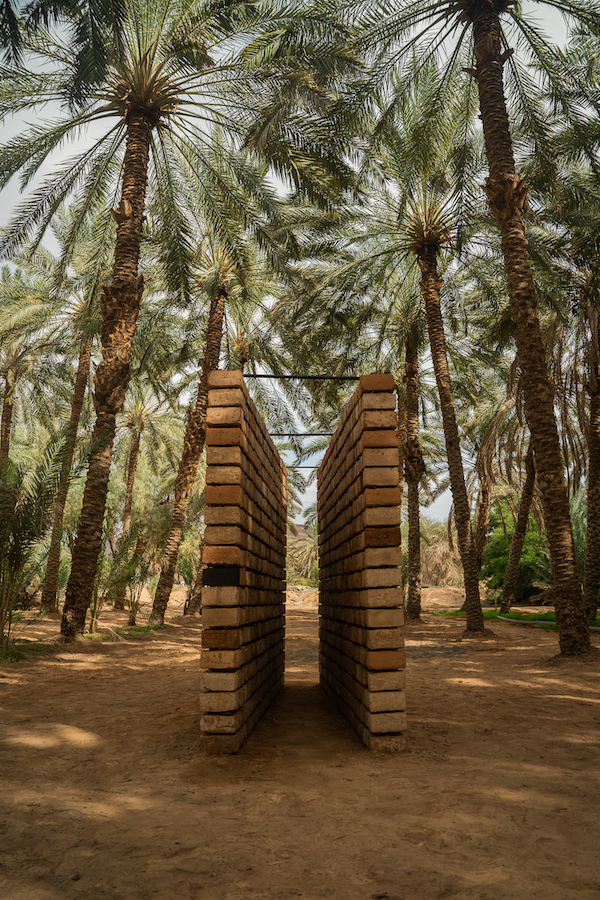
Talin Hazbar, Earth Readings, 2022, Mabiti AlUla, The Oasis Reborn Art residency 1. (Supplied)
“The oasis as a motherly space, nourishing, full of greenery, and the desert, it reminds me of the dichotomy that you can find during weddings: A mirror of how interactions between genders or different social groups occur.
“This work searches for the permanence of local traditions and questions the meaning of preservation and authenticity and how they can be reinvented,” he added.
Talin Hazbar, an artist born in Syria and based in the UAE, created “Earth Readings,” a piece exploring the myriad of relationships between the past and the present, the imperceptible and the material. The work delves into the meaning of the land through “mark-making and map-making narratives.”
She said: “I worked with a living material which can be reshaped, remolded, reconstructed, and that constantly adapts, and evolves. It becomes a trace of its lifetime and of its space while also becoming a key to understand AlUla in its own elements, stories, and practices.”
In a powerful nod to the expansive and varied landscape of the AlUla oasis, French artist Laura Sellies’ “Populated by Moving Leaves” showcases an installation made up of sculptures, sounds, and texts. She said it invoked a “palace of memories” whereby metal structures invite visitors to listen to the voices of the oasis — both real and fictional —including women, men, birds, camels, winds, water, rocks, and sand.
The artists’ works were presented to the public over three days of open studios in January and will be on display during AlUla Arts festival taking place from Feb. 13 to 26.


