



JEDDAH: Saudi walking wonder Nayef Shukri has been putting his best foot forward in a solo mission to promote fitness and his country’s rich heritage.
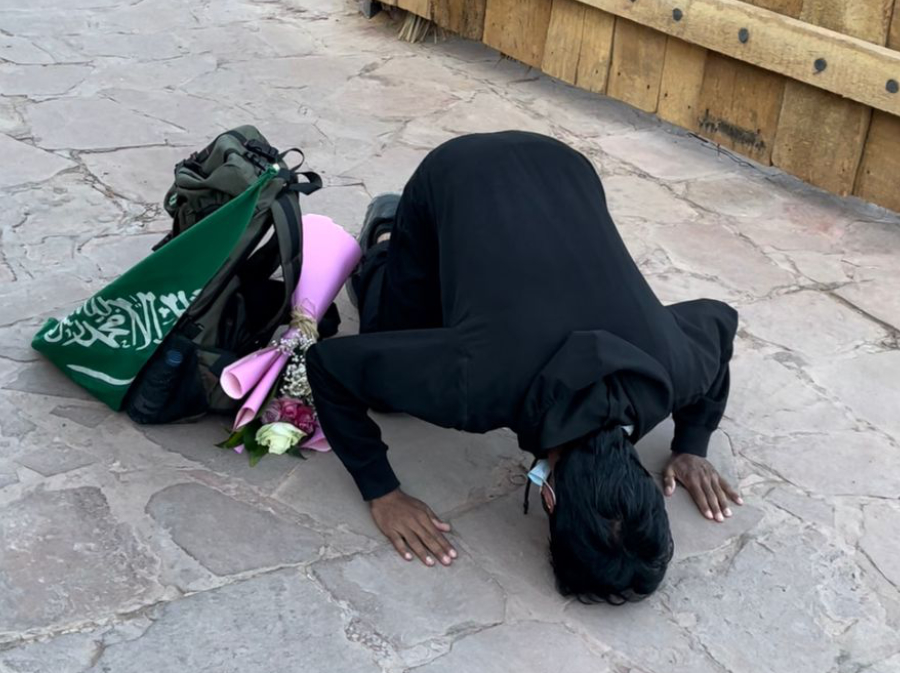
In his latest marathon meander around the Kingdom, the 33-year-old adventurer recently completed a 760-kilometer trek from Jeddah to AlUla to highlight the desert tourist destination.
Battling through extreme weather conditions and the pain barrier, Shukri covered the distance in 22 days, sleeping along the way in places including gas stations and under trees, and proudly carrying the Saudi national flag.
With just a backpack and a change of clothes, his only companion was manager Abu Hatem who shadowed him by car to light the route during the night.
Shukri, from Jeddah, said his walk to AlUla had been prompted for two main reasons. “First, out of absolute love for my country and to support tourism in AlUla with the start of the AlUla Season. Another reason for the march, was fitness. I wanted to promote the idea of keeping fit and setting an example for both young and old.
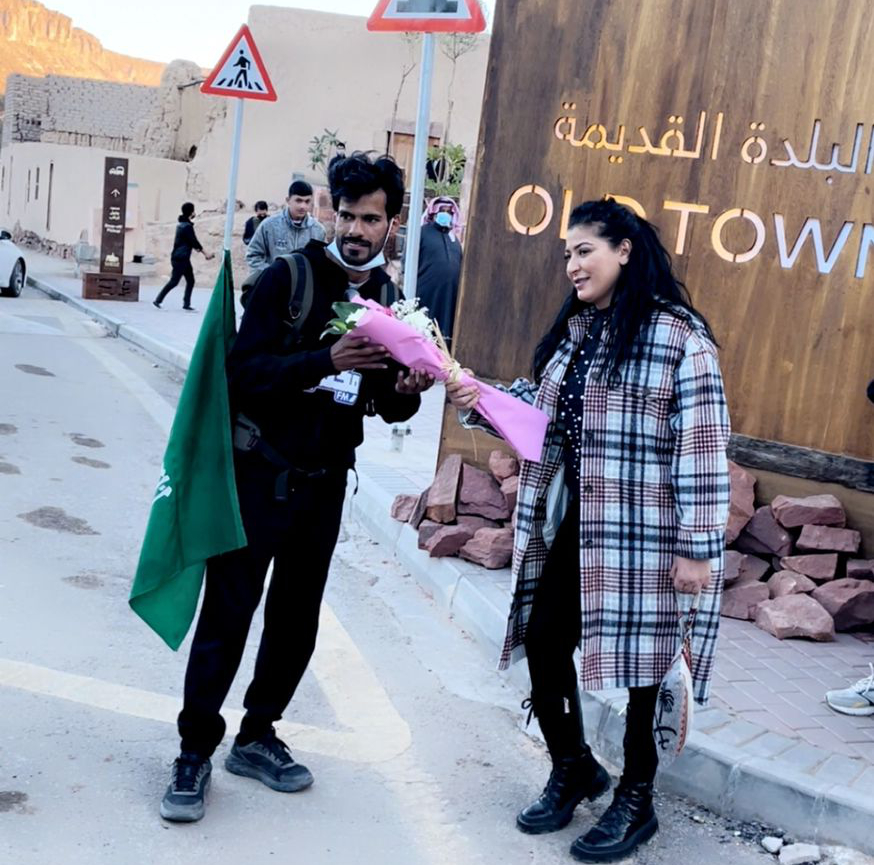
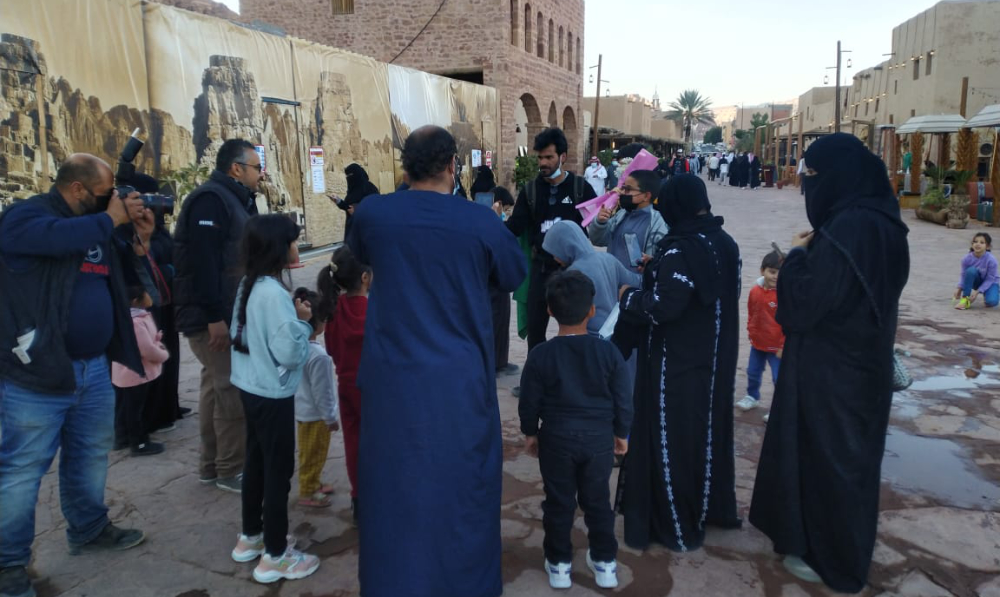
“It wasn’t just my family and friends who supported this trip. Wherever I went, people would come out in droves to wave and cheer for me. They didn’t know me, nor did I know them, but everyone who saw me walking the flag wished me luck and encouraged me. I felt the true spirit of Saudi Arabia on this trip,” he added.
He pointed out that he wanted to encourage young people to travel within the Kingdom, visit historic sites, learn more about the country’s heritage, and enjoy experiences away from the daily routines of city life.
“Everyone has to discover the abilities in their own body and challenge themselves to discover new skills,” he said.
In 2020, Shukri walked in the footsteps of the Prophet Muhammad (peace be upon him) following the old Hijrah road, and last year he hiked from Jeddah to NEOM on what he dubbed his Vision 2030 trip.
During his walks he has visited many archaeological, historical, and cultural sites including in Makkah, Madinah, Jeddah, Taif, Yanbu, Dammam, Jubail, Al-Ahsa, Asfan, and Badr.
“It relates to the biography of the Messenger (peace be upon him), and I completed my journey walking in the footsteps of the Messenger, and across the Hijrah Road, the old road, where I covered the distance in eight days and nine nights,” he added.
On his recent AlUla walk, Shukri said: “The hospitality was overwhelming. We knew we would be welcome but the hospitality we received along the way was amazing.”
And posting on social media, he told followers of his joy at arriving in the old city of AlUla. “Finally, we reached it, thanks to God. Thank you all for your support.”


