

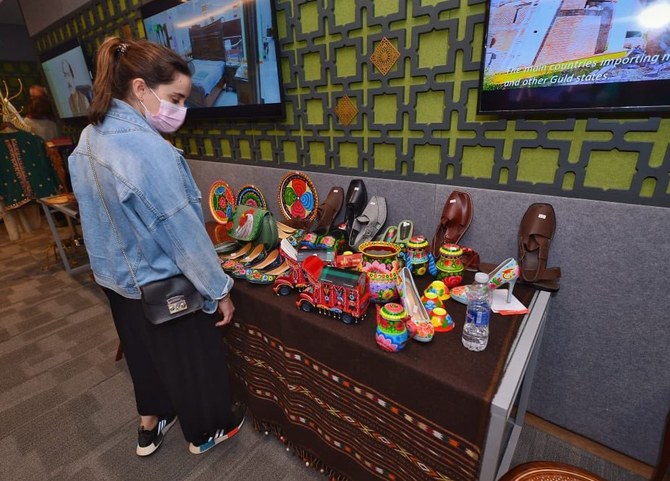

PESHAWAR: World-famous northwestern Pakistani shawls and leather slippers have taken the stage at Expo 2020 Dubai as Khyber Pakhtunkhwa province set up its stalls at the Pakistan Pavilion to introduce the local culture to the international audience.
Described as “the event of the century,” the expo kicked off in October, bringing together representatives from more than 190 countries. The exhibition is the largest global gathering since the emergence of the coronavirus pandemic and will run until April 2022.
Pakistan’s pavilion at the expo has been highlighting investment opportunities, tourism potential and cultural magnificence of the country. In January, its highlight is the northwestern Khyber Pakhtunkhwa province.
Khyber Pakhtunkhwa Culture and Tourism Authority (KPCTA) director-general Kamran Ahmed Afridi told Arab News the provincial tourism authority and the board of investment were working together as a team at the Pakistan Pavilion.
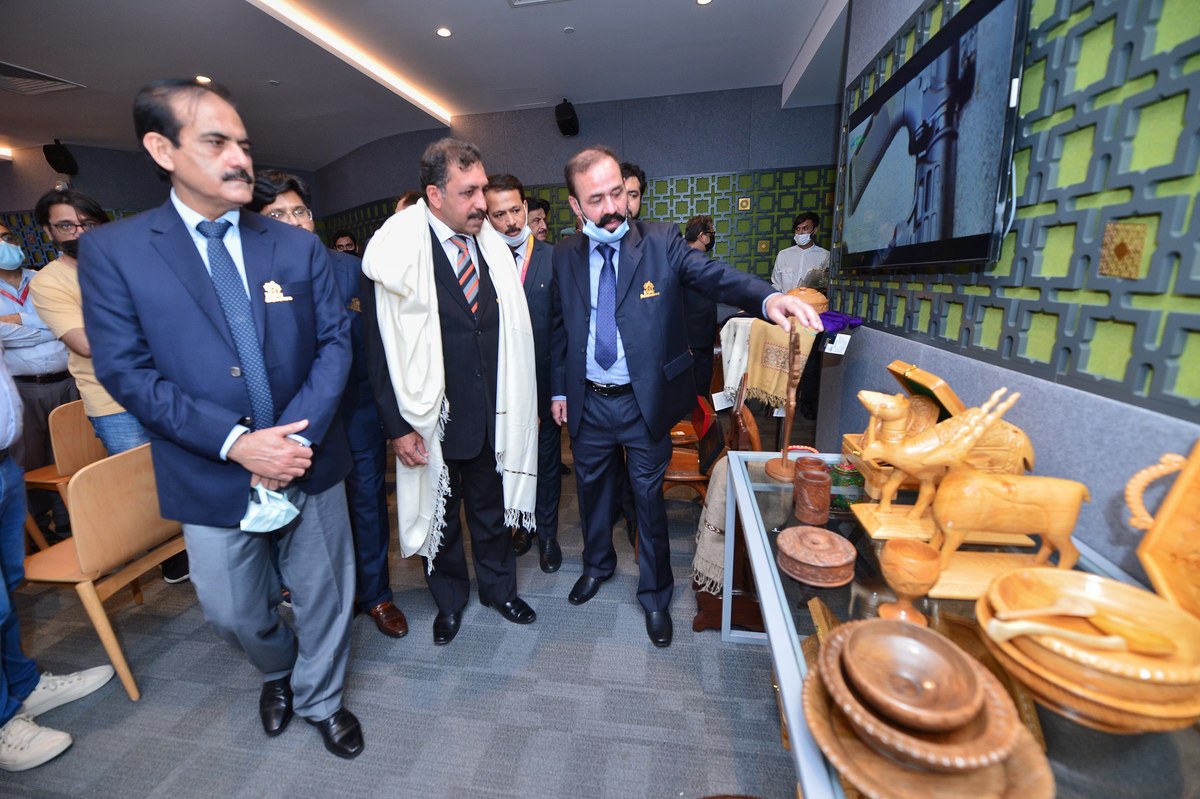
Pakistan’s ambassador to the United Arab Emirates Afzaal Mahmood visits different stalls set up by the Khyber Pakhtunkhwa Culture and Tourism Authority at the Pakistan Pavilion at Expo 2020 Dubai in Dubai, United Arab Emirates on January 2, 2022. (Photo courtesy: KP Tourism)
“God has blessed Pakistan with so many beautiful places and we should present them in a better way to further boost our tourism,” he said. “We are in Dubai to cash the opportunity and are thankful to the Dubai authorities and the management of the expo for providing us an opportunity.”
He expressed hope that a better presentation of the country’s northern areas would attract investors from all over the world.
“We are holding different programs about our projects for the investors and many of them have shown a keen interest after our briefings,” Afridi said. “We are holding meetings with all potential investors at the expo as this could be a major source of trade and investment in Khyber Pakhtunkhwa in the future.”
He added the province could attract foreign tourists with remnants of ancient civilizations. “Peshawar itself is known as the one of the oldest cities in Asia for its centuries-old civilization, art and culture. The Gandhara region is famous for Buddhist sacred places and people from Japan, Thailand, Korea and other parts of the world come to KP’s Swat, Taxila, Charsadda and Mardan to visit these famous places relating to the one of the oldest civilizations.”
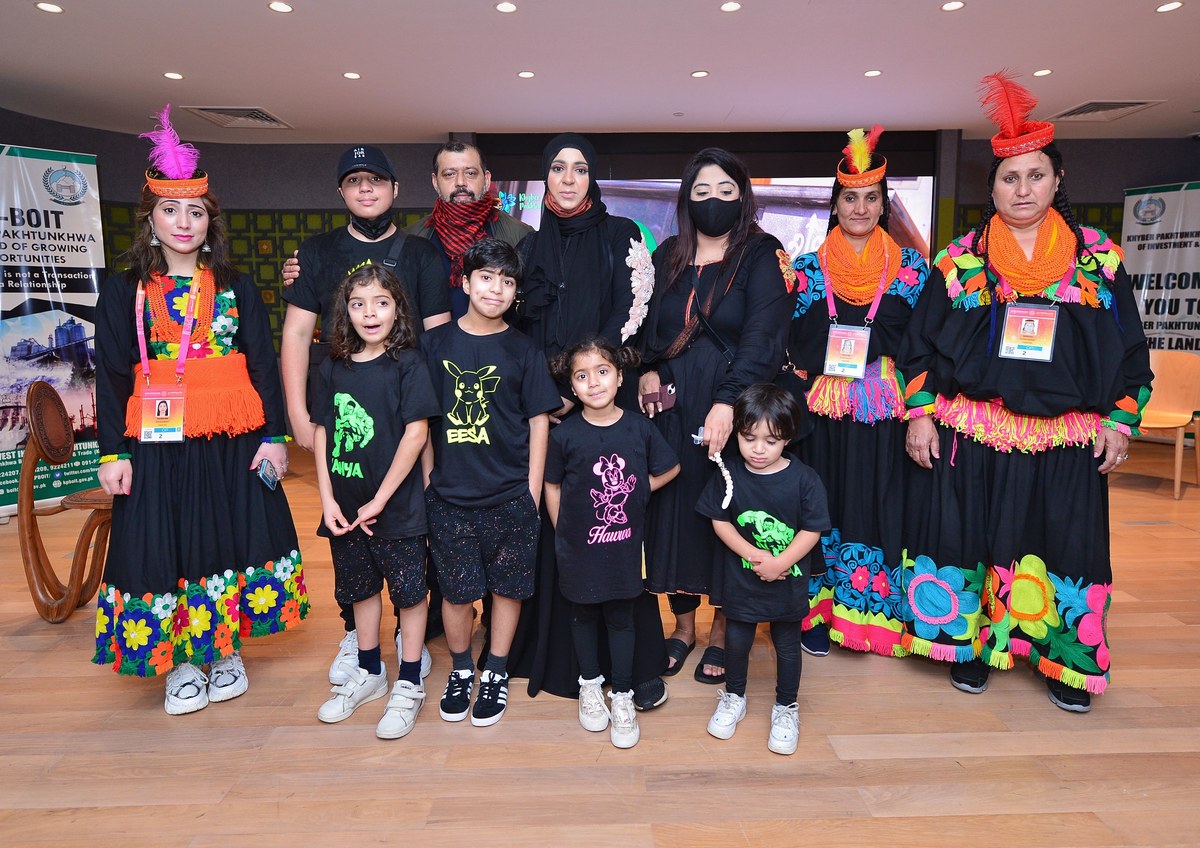
Kalash troupe poses for pictures with visitors Pakistan Pavilion at Expo 2020 Dubai in Dubai, United Arab Emirates on January 3, 2022. (Photo courtesy: KP Tourism)
Pakistani Prime Minister Imran Khan’s government has been actively working to promote tourism in Pakistan, particularly in Khyber Pakhtunkhwa and Gilgit-Baltistan.
The country has witnessed a steady increase in the number of foreign visitors in the past few years. In December 2019, it topped the Condé Nast Traveler luxury travel magazine’s list of best holiday destinations for 2020, but fewer than expected tourists could visit it because of the outbreak of the COVID-19 pandemic across the world.
Siyar Khan, an artist who has set up a stall of truck art at Expo Dubai, told Arab News his participation in the expo was aimed at bringing a good name to Pakistan through the traditional art.
“Visitors from all over the world are taking great interest in my stall and have purchased a large number of souvenirs,” Khan said.
As the Pakistan Pavilion screened video clips showing Khyber Pakhtunkhwa’s most scenic sites, Majid Khan, a visitor of Pakistani origin, told Arab News coming to the exhibition helped him learn more about his country.
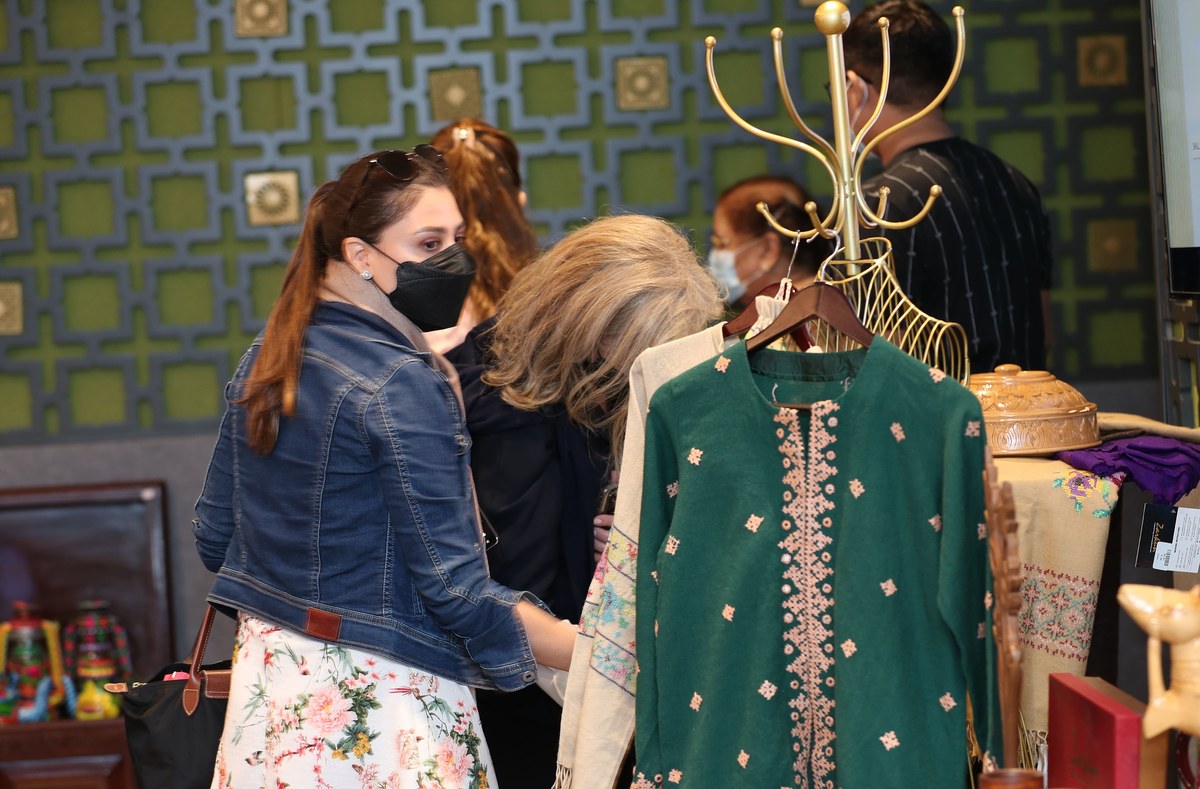
A woman views traditional Swat embroidery displayed at the Pakistan Pavilion at Expo 2020 Dubai in Dubai, United Arab Emirates on January 3, 2022. (Photo courtesy: KP Tourism)
“Virtual art and videos of beautiful sceneries screened here at the expo helped me get more information about scenic areas of Khyber Pakhtunkhwa, especially Chitral and Swat Valley,” he said.
Marina Maskolova, a Russian national who has been living in the UAE for more than 27 years, said she discovered Pakistan after participating in the expo.
“I really found a lot of attraction in the stalls set up by the KP Culture and Tourism Authority,” she said. “I would be really happy to visit Pakistan.”


