Reparations for downed jet: Canada, other nations vow action against Iran

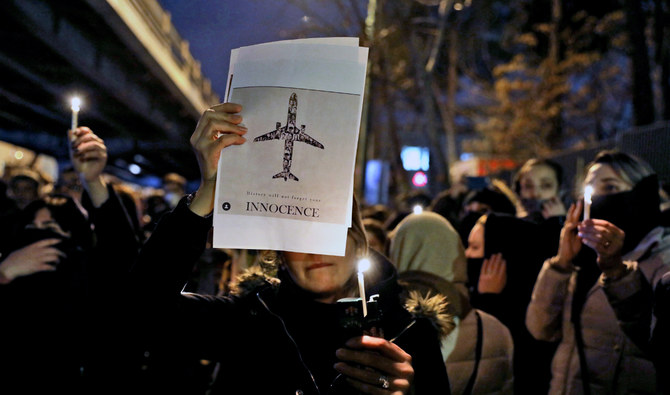
People gather for a candlelight vigil to remember the victims of a Ukraine plane crash, at the gate of Amri Kabir University in Tehran, Iran, Jan. 11, 2020. (AP/File)
Short Url
Updated 06 January 2022
Follow

Reparations for downed jet: Canada, other nations vow action against Iran

  • Most of the 176 people killed when Iran shot down the Ukrainian jet in January 2020 were citizens from Canada, Britain, Sweden and Ukraine

OTTAWA: Canada, Britain, Sweden and Ukraine on Thursday said they had abandoned efforts to talk to Tehran about reparations for an airliner downed by Iran and would try to settle the matter according to international law.

Most of the 176 people killed when Iran shot down the Ukrainian jet in January 2020 were citizens from those four countries, which created a coordination group that seeks to hold Tehran to account.

“Despite our best efforts over the past two years and multiple attempts to resolve this matter through negotiations, the Coordination Group has determined that further attempts to negotiate with Iran ... are futile,” it said in a statement.

“The Coordination Group will now focus on subsequent actions to take to resolve this matter in accordance with international law,” it continued, but did not give details.

Tehran says Revolutionary Guards accidentally shot down the Boeing 737 jet and blamed a misaligned radar and an error by the air defense operator at a time when tensions were high between Tehran and the US.

A court in Ontario, Canada, this week awarded C$107 million ($83.8 million), plus interest, to the families of six people who died.

In June, Canada said it had found no evidence that the downing of the plane had been premeditated.


UK drops plans for mandatory digital ID for workers in latest U-turn, media reports

Updated 4 sec ago
Follow

UK drops plans for mandatory digital ID for workers in latest U-turn, media reports

  • The ‌digital ID would be held ‌on ⁠people’s mobile ​phones, the government ‌said
  • The plan drew criticism from political opponents and warning it could infringe on civil liberties

LONDON: Britain is set to drop plans to make it mandatory for workers to hold a digital identity document, The Times newspaper, the BBC and ​other media reported on Tuesday, potentially marking another policy U-turn for the Labour government.
Prime Minister Keir Starmer announced in September last year that his government would require every employee to hold a digital ID in an attempt to tackle illegal migration and reduce the threat from the populist Reform UK party.
The government ‌said the ‌digital ID would be held ‌on ⁠people’s mobile ​phones ‌and become a mandatory part of checks employers must make when hiring staff.
The plan drew criticism from political opponents, with some arguing it would not deter illegal migration and others warning it could infringe on civil liberties.
The Times said the government abandoned the plan amid concerns ⁠it could undermine public trust in the scheme, noting that when introduced ‌in 2029, digital IDs would ‍be optional rather than mandatory.
Other ‍forms of documentation, such as an electronic visa ‍or passport, would still be valid, The Times said.
“We are committed to mandatory digital right to work checks,” a government spokesperson said. “We have always been clear that details on the ​digital ID scheme will be set out following a full public consultation which will launch ⁠shortly.”
The spokesperson said current checks rely on a “hodgepodge” of paper-based systems, with no record of whether they were ever carried out, leaving the process open to fraud and abuse.
If plans for a mandatory digital ID are dropped, it would mark another policy climbdown for Starmer.
In December, the government scaled back a plan to raise more tax from farmers, months after it backed down on cuts to welfare spending and scaled back a ‌proposal to reduce subsidies on energy bills for the elderly.