MOSCOW: Russia hopes a pledge it signed Monday with four other global nuclear powers to prevent atomic weapons spreading will reduce world tensions, while saying a summit of permanent Security Council members remains necessary.
“We hope that, in the current difficult conditions of international security, the approval of such a political statement will help reduce the level of international tensions,” Moscow’s foreign ministry said in a statement.
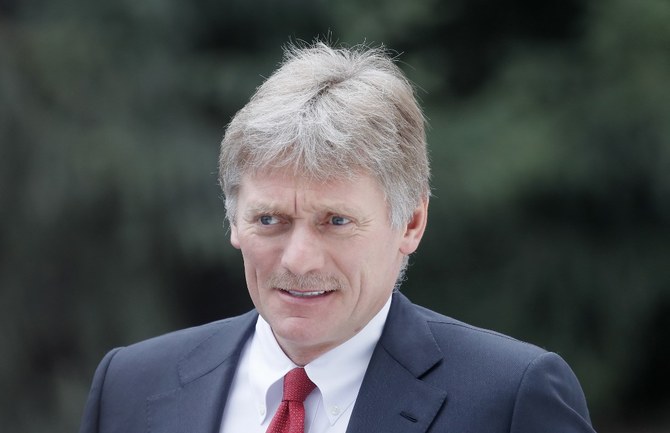
Kremlin spokesman Dmitry Peskov told the RIA Novosti news agency that Moscow still considered a summit between the world’s major nuclear powers to be “necessary.”
The rare joint statement was signed by China, France, Russia, the UK and the United States. It pledged to ensure a nuclear war is never fought.
The foreign ministry also said it hoped the agreement will “help build confidence and form the foundations of future control over offensive and defensive arms.”
It claimed the pledge was the result of Moscow’s initiative.
“This document was prepared on our initiative and with the most active participation of Russian representatives,” the statement said.

Russia, China, Britain, US and France say no one can win nuclear war
Short Url
https://arab.news/5fzm3
Russia, China, Britain, US and France say no one can win nuclear war
- The rare joint statement was signed by China, France, Russia, the UK and the United States
- It pledged to ensure a nuclear war is never fought
Taiwan says reached ‘general consensus’ with US on trade deal
- Taiwan has reached a “general consensus” with the United Sates on a trade deal, the democratic island’s negotiators said Tuesday, after months of talks
TAIPEI: Taiwan has reached a “general consensus” with the United Sates on a trade deal, the democratic island’s negotiators said Tuesday, after months of talks.
Taiwan and the United States began negotiations in April to hash out a trade deal after US President Donald Trump slapped a 32 percent tariff on Taiwanese exports, which was later lowered to 20 percent, as part of his sweep of measures against dozens of trade partners.
Taiwanese President Lai Ching-te has pledged to boost investment in the United States and increase defense spending as his government tries to further reduce the levy on its shipments, as well as avoid a toll on its semiconductor chip exports.
“The goal of the US-Taiwan tariff negotiations has always been to seek reciprocal tariff reductions without stacking tariffs, and to obtain preferential treatment under Section 232 for semiconductors, semiconductor derivatives, and other items,” the Office of Trade Negotiations said in a statement, adding there was a “general consensus” on these issues.
Section 232 refers to part of the US Trade Expansion Act that allows tariffs to be imposed when national security is found to be at risk.
“Both sides are currently discussing the schedule for a concluding meeting, and an announcement will be made once it is confirmed,” the statement said.
Taiwan’s trade officials also vowed to provide “a complete explanation of the negotiations and the agreement” to the opposition-controlled parliament and the public.
American soil
Taiwan is a powerhouse in the manufacturing of semiconductor chips, which are the lifeblood of the global economy, as well as other electronics.
Trump has previously accused Taiwan of stealing the US chip industry and his administration had made clear it wants more of the critical technology made on American soil.
The US government launched investigations under Section 232 into semiconductors and chip-making equipment last year.
Taiwan’s trade surplus with the United States was the seventh highest of any country in 2024, reaching $73.9 billion.
More than half of its exports to the United States are information and communications technology products, including semiconductors.
Lai has been at pains to find favor with Trump, vowing to raise defense spending to more than three percent of GDP this year and five percent by 2030.
TSMC, which is the world’s largest contract chip maker, also has pledged to invest an additional $100 billion in the United States.
But Taiwanese Deputy Foreign Minister Francois Chih-chung Wu told AFP recently that Taiwan planned to keep making the “most advanced” chips on home soil.
Taiwan and the United States began negotiations in April to hash out a trade deal after US President Donald Trump slapped a 32 percent tariff on Taiwanese exports, which was later lowered to 20 percent, as part of his sweep of measures against dozens of trade partners.
Taiwanese President Lai Ching-te has pledged to boost investment in the United States and increase defense spending as his government tries to further reduce the levy on its shipments, as well as avoid a toll on its semiconductor chip exports.
“The goal of the US-Taiwan tariff negotiations has always been to seek reciprocal tariff reductions without stacking tariffs, and to obtain preferential treatment under Section 232 for semiconductors, semiconductor derivatives, and other items,” the Office of Trade Negotiations said in a statement, adding there was a “general consensus” on these issues.
Section 232 refers to part of the US Trade Expansion Act that allows tariffs to be imposed when national security is found to be at risk.
“Both sides are currently discussing the schedule for a concluding meeting, and an announcement will be made once it is confirmed,” the statement said.
Taiwan’s trade officials also vowed to provide “a complete explanation of the negotiations and the agreement” to the opposition-controlled parliament and the public.
American soil
Taiwan is a powerhouse in the manufacturing of semiconductor chips, which are the lifeblood of the global economy, as well as other electronics.
Trump has previously accused Taiwan of stealing the US chip industry and his administration had made clear it wants more of the critical technology made on American soil.
The US government launched investigations under Section 232 into semiconductors and chip-making equipment last year.
Taiwan’s trade surplus with the United States was the seventh highest of any country in 2024, reaching $73.9 billion.
More than half of its exports to the United States are information and communications technology products, including semiconductors.
Lai has been at pains to find favor with Trump, vowing to raise defense spending to more than three percent of GDP this year and five percent by 2030.
TSMC, which is the world’s largest contract chip maker, also has pledged to invest an additional $100 billion in the United States.
But Taiwanese Deputy Foreign Minister Francois Chih-chung Wu told AFP recently that Taiwan planned to keep making the “most advanced” chips on home soil.
© 2026 SAUDI RESEARCH & PUBLISHING COMPANY, All Rights Reserved And subject to Terms of Use Agreement.


