ISLAMABAD: Pakistan on Monday condemned what it called “violent calls” by the Hindu right in India to carry out the ‘genocide’ of Muslims living in the neighboring country.
Hundreds of right-wing Hindu activists and monks rose in unison at a three-day conference last week and called for Hindus to arm themselves and kill Muslims. Videos of the event have spread widely on social media in India but the government has remained silent.
People in attendance included influential religious leaders with close ties to Prime Minister Narendra Modi’s governing party, the Bharatiya Janata Party, and even some members of the party itself.
On Monday, Islamabad summoned the Indian Charge d’ Affaires to the Ministry of Foreign Affairs and conveyed the government of Pakistan’s “serious concerns,” the foreign office said in a statement.
“Violent hate speeches were made during the ‘Dharma Sansad’ held at Haridwar, Uttarakhand from 17-20 December 2021,” the foreign office said. “It was highly reprehensible that ... the Indian government has [not] condemned or taken any action against them so far.”
“Regrettably, the toxic narrative against minorities, particularly Muslims and their persecution understate patronage has become a norm under the current ... government in India,” the statement said.
Pakistan called on the international community including the United Nations, Organization of Islamic Corporation and other human rights organizations to hold India accountable “for its gross and systematic human rights violations against minorities, particularly Muslims and take immediate measures to save them from impending genocide.”
Pakistan also said India should investigate the hate speeches and incidents of violence against minorities and take measures to curb such events in the future.


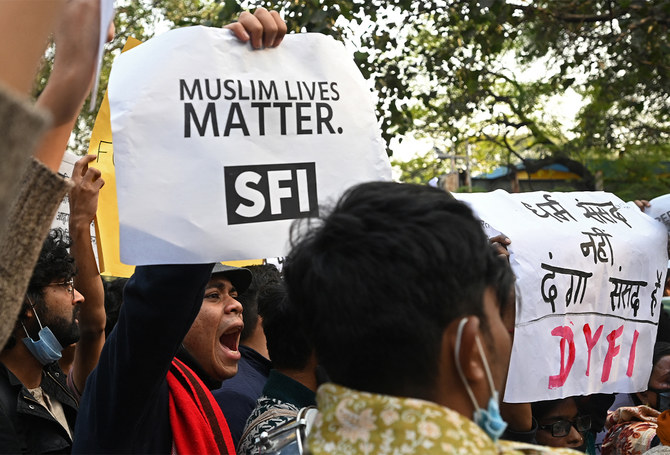
![]()

Pakistan condemns ‘violent calls’ by Hindu right to commit mass killing of Indian Muslims
Short Url
https://arab.news/8whav
Pakistan condemns ‘violent calls’ by Hindu right to commit mass killing of Indian Muslims
- Hundreds of right-wing Hindus held a conference in India last week, called for Hindus to arm themselves and kill Muslims
- The meeting was attended by influential religious leaders with close ties to PM Narendra Modi’s BJP party
Latest updates


Recommended


© 2026 SAUDI RESEARCH & PUBLISHING COMPANY, All Rights Reserved And subject to Terms of Use Agreement.