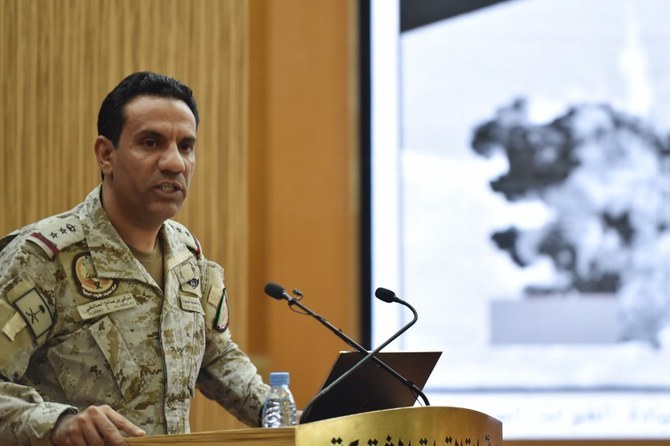
RIYADH: The Saudi-led coalition began a large-scale assault on Houthi targets in Yemen on Saturday after two people died in missile strikes by the Iran-backed militia in the southwestern region of Jazan.
The attack on the Kingdom late on Friday targeted the town of Samtah, and killed a Saudi citizen and a Yemeni. Six Saudis and a Bangladeshi were injured, and two shops and 12 vehicles were destroyed.
The Houthis launch frequent attempted missile and drone strikes on Saudi civilians and infrastructure, but this was the first deadly attack since one person died when a missile struck Riyadh in 2018.
The coalition said on Saturday that it was “preparing for a large-scale military operation,” and later launched an airstrike against Houthi targets in northern Yemen.
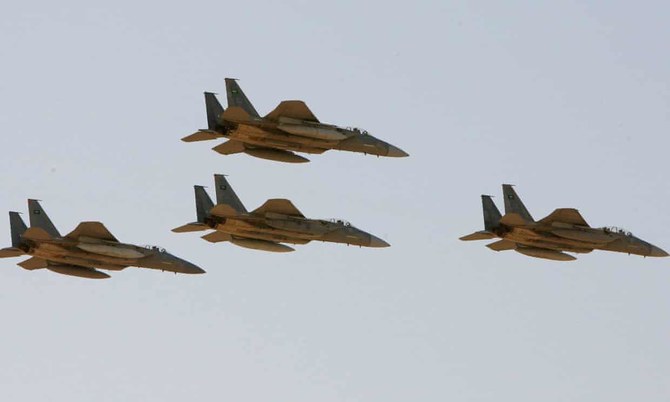
Saudi fighters jets, shown in this file photo , have been supporting Coalition forces in Yemen in the campaign against Houthi terrorists. (AP)
Later, it launched precision airstrikes on legitimate military targets in Yemen’s Sanaa in response to a threat, Al-Ekhbariya reported on Saturday.
The coalition called on civilians not to assemble at or approach the targeted sites, adding the operation in Sanaa was in line with international humanitarian law and its customary rules.
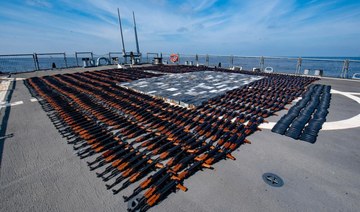
“We destroyed weapons depots in the Tashreefat military camp, and the operation was an immediate response to the attempt to transfer weapons from the camp in Sanaa,” the coalition also said.
It added that the Houthis should start removing weapons from civilian objects that are protected under international law.
Earlier on Saturday, the coalition said it had carried out 40 operations targeting the Iran-backed Houthi militia in Marib and Al-Jouf, killing 223 fighters and destroying 17 military vehicles during the last 24 hours.
It also said it would hold a a comprehensive briefing on the Yemeni crisis on Sunday, when it will present evidence of Hezbollah’s involvement in Yemen and its use of Sanaa airport to target the Kingdom.
It addded that it would present evidence that the airport is being converted into a launch pad for missiles and drones.