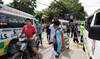
CHICAGO: Teachers and educators in Iran continued to protest in more than 100 cities this week against the clerical regime’s oppressive policies that target educators, officials from the US-based National Council of Resistance of Iran said Friday.
NCRI officials said the protests began on Dec. 15, demanding better treatment of teachers and educators. The Mullah-controlled Iranian parliament responded by introducing and adopting a law that provides a “ranking” of teachers that protestors and the NCRI called “deceptive.”
In a resolution unanimously endorsed by teachers’ groups, they vowed to not remain silent against the oppression and arrests of teachers and educators.
The resolution demands “the unconditional release of all imprisoned teachers, the halt to summoning, interrogating, and fabricating cases in unjust courts against the teachers.” It also pledged to support the imprisoned teachers.
“With their courageous protests today, Iranian teachers showed that they will not back down despite the clerical regime’s deceptive plans, threats, and suppressive measures. The teachers’ movement will carry on until their demands are met,” said NCRI President Maryam Rajavi.
Even if implemented, Rajavi said, the legislation “would not have met the minimum demands of teachers.” Protest leaders called the bill “a dagger” to the freedom of teachers and educators and they vowed to continue protests.
Despite threats and repressive measures implemented by the regime in response to the protests, teachers staged a large-scale protest in Tehran outside the Planning and Budget Organization and in as many as 100 other cities and villages outside of the local Education Ministry offices.
Protesters chanted “free all imprisoned teachers”, “free all political prisoners”, “we have heard too many promises, but no justice”, and “livelihood, dignity are our inalienable right,” as they protested the regime.
In several cities, such as Tehran, Mashhad and Shiraz, the suppressive forces charged at the teachers to disperse them, but were forced to retreat in the face of the teachers’ resistance and chants of “you, shameless.”
In Tehran, the State Security Force attempted to disperse teachers at the metro station exits to prevent them from joining together. But the teachers gathered outside the metro stations.
Many teachers had been summoned by intelligence and security agents and warned against staging protests.
In Mashhad, the SSF prevented the teachers from entering or leaving the protest site. In Shiraz, the Prosecutor’s Office had sent text messages to teachers, warning them against participating in the protest gathering.
Rajavi urged Iranian youths, particularly high school and university students, to join their teachers’ protests.
“The first lesson of the arisen teachers of Iran is to be free and courageous in the face of the mullahs’ oppression. The teachers’ movement will carry on until their demands are met,” Rajavi said.
She added: “The protests manifest the determination of the Iranian people to overthrow the clerical regime, which is the main cause of oppression, corruption, unemployment and poverty.”
The breadth of the protests has stymied the Iranian Mullahs. Protests were reported in Shiraz, Isfahan, Kermanshah, Kerman, Ramhormoz, Marivan, Ardabil, Lahijan, Yazd, Qazvin, Ilam, Karaj, Hamedan, Arak, Mashhad, Ahvaz, Rasht, Bandar Abbas, Neyshabur, Bushehr, Tabriz, Qom, Khorramshahr, Kashan, Sari, Najafabad, Nowshahr, Javanrud, Sanandaj, Kazerun, Firuzabad, Golpayegan, Borujerd, Khorramabad, Zanjan, Semnan, Neyriz, Bahmai, Mamasani, Jahrom, Shirvan, Izeh, Malayer, Babol, Shush, Gorgan, Abadeh, Borazjan, Darab, Lordegan, Mahshahr, Shahreza, Shahrekord, Sarbandar, Andimeshk, Bandar Khomeini, Pol Dokhtar, Lamerd, Sabzevar, Amol, Bukan, Bojnurd, Ferdows, Ashkanan, Nourabad, Aligudarz, Gachsaran, Shahin Shahr Dashtestan, Eslamabad-e Gharb, Azna, Torbat Heydariyeh, Gotvand, Behbahan, Bandar Ganaveh, Delfan, Sardasht, Semirom, Bijar, Bafgh, Qorveh, Dehgolan, Divanderreh, Shahrud, Torbat Jam, Chalus, Baneh, Farashband, Shahrbabak, and Abhar, Rajavi said.