

Animal group finds loving homes overseas for Syria’s stray cats, dogs

1 / 10
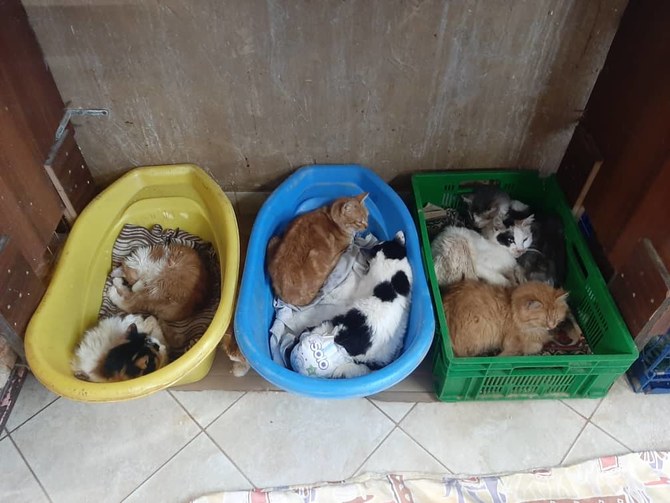
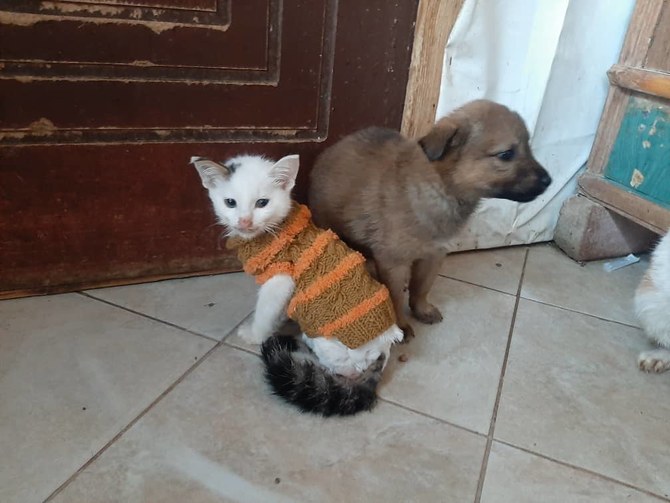
STAR provides shelter to nearly 2,000 cats and dogs in southern Syria. (@syrianteamanimalrescue)
2 / 10
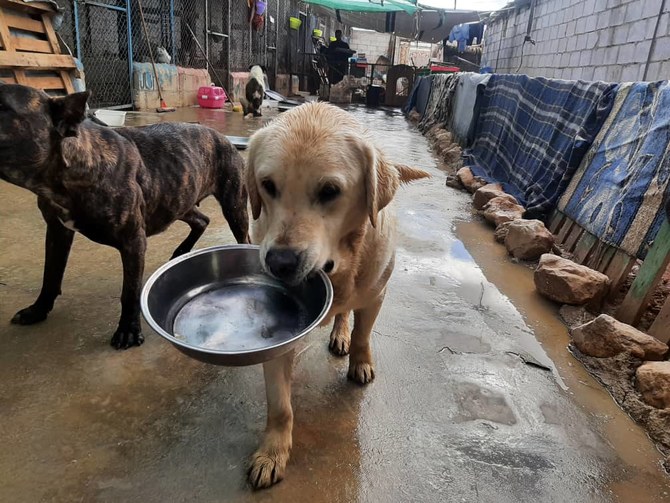
STAR provides shelter to nearly 2,000 cats and dogs in southern Syria. (@syrianteamanimalrescue)
3 / 10
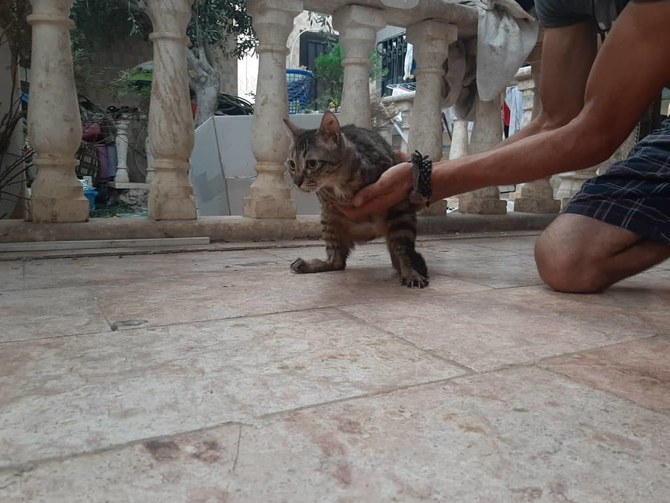
STAR provides shelter to nearly 2,000 cats and dogs in southern Syria. (@syrianteamanimalrescue)
4 / 10
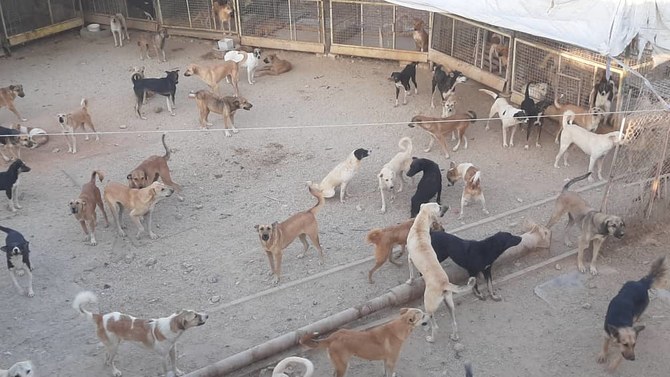
STAR provides shelter to nearly 2,000 cats and dogs in southern Syria. (@syrianteamanimalrescue)
5 / 10
STAR provides shelter to nearly 2,000 cats and dogs in southern Syria. (@syrianteamanimalrescue)
6 / 10
STAR provides shelter to nearly 2,000 cats and dogs in southern Syria. (@syrianteamanimalrescue)
7 / 10
STAR provides shelter to nearly 2,000 cats and dogs in southern Syria. (@syrianteamanimalrescue)
8 / 10
STAR provides shelter to nearly 2,000 cats and dogs in southern Syria. (@syrianteamanimalrescue)
9 / 10
STAR provides shelter to nearly 2,000 cats and dogs in southern Syria. (@syrianteamanimalrescue)
10 / 10
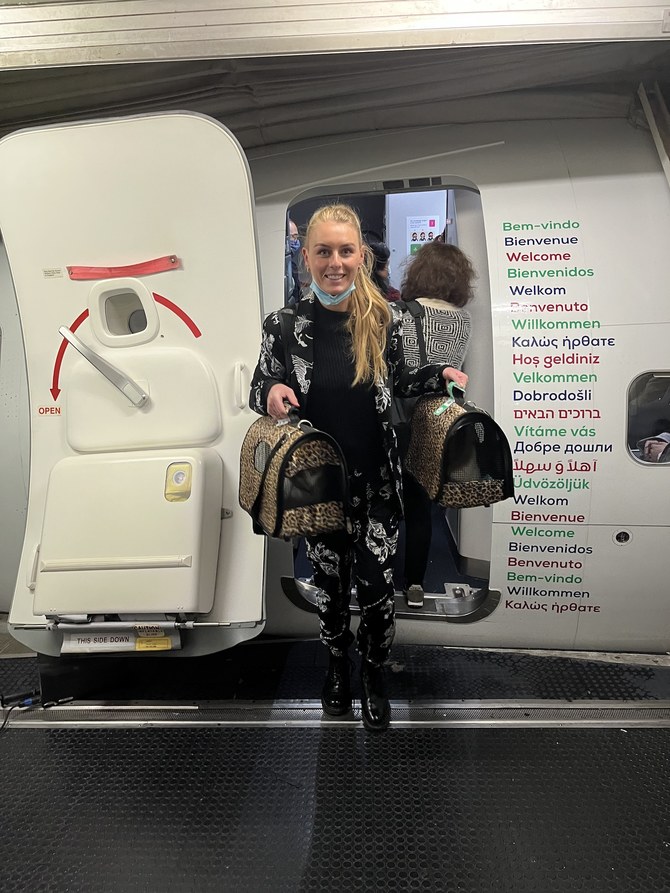
Dutch student Celine de Jong with her two-legged cats Zaina and Holly. (@syrianteamanimalrescue)
Short Url
Updated 20 December 2021
Follow

Animal group finds loving homes overseas for Syria’s stray cats, dogs

  • Syrian Team for Animal Rescue cares for almost 2,000 animals, many of them seriously injured
  • Group says some of its former charges are now living in Europe, US

DUBAI: Syria might not be the first place people think of when looking to adopt a stray dog or cat, but Dutch student Celine de Jong recently did just that and she could not be more pleased.

It all started with an internet search that led De Jong, who volunteers at an animal ambulance service, to the Facebook page of the Syrian Team for Animal Rescue.

Established five years ago, the nonprofit organization provides shelter for nearly 2,000 cats and dogs in southern Syria. Its Facebook page has more than 100,000 followers.

“They’re having a hard time in Syria, also the animals,” De Jong told Arab News from Assendelft, about 15 km northwest of Amsterdam.


Dutch student Celine de Jong with her two-legged cats Zaina and Holly. (@syrianteamanimalrescue)

“Star has a lot of cats and dogs that have been hit by cars or shot at. Many have missing legs. We have disabled cats in Holland, but not stray animals. I wanted to adopt a stray cat.”

De Jong contacted the Star team and this month her new pets — two-legged cats Zaina and Holly — arrived at their new home in the Netherlands.

Although the adoption process took almost six months to complete, as the animals had to have a rabies shot and a blood test, which then had to be approved by a laboratory in Europe, De Jong said it was worth the wait.

“You’re really saving their lives,” she said, adding that she hopes one day Zaina and Holly will be able to be fitted with prosthetic legs.

De Jong and her mother Petra traveled to Beirut to collect the animals, where they were taken after leaving Syria.

The pair also met representatives from Star and donated food, medicine and toys to help other sick animals.

The De Jongs are not the only foreign family to come to Star’s aid. Its founder Hanadi Al-Mouhtaseb said other animals once cared for by Star are now living in Belgium, Germany and the US. “They’re very cooperative, there’s great humanity,” she told Arab News of the foreign adopters.

Al-Mouhtaseb began looking after injured animals at her home before setting up an open-air shelter in the Sahnaya area outside Damascus. Today, Star is run by volunteers and funded by public donations, but it is not easy.

The shelter struggles to get the veterinary equipment and medication it needs to treat its animals, many of which have serious injuries when they arrive.

While the war and political unrest in Syria has made it difficult to get support for Star, Al-Mouhtaseb said she was also trying to educate people, especially children, about the need to care about animals and not abuse them.

“If you walk up to a child and tell them what they’re doing is bad, they say, ‘Does an animal feel anything anyway?’” she said. “But if there wasn’t all this harm, we wouldn’t need an association.”


South Sudan says its troops are guarding strategic Heglig oil field in Sudan

Updated 59 min 13 sec ago
Follow

South Sudan says its troops are guarding strategic Heglig oil field in Sudan

  • Sudanese government forces and workers at the Heglig oil field withdrew from the area on Sunday to avoid fighting that could have damaged facilities there

NAIROBI: South Sudan has sent its troops to neighboring Sudan to guard the strategic Heglig oil field near the border, its military head said on Thursday, days after the paramilitary Rapid Support Forces (RSF) took control of it.
Heglig houses the main processing facility for South Sudanese oil, which makes up the bulk of South Sudan’s public revenues. Some oil has continued to flow through Heglig, though at much reduced volumes.
Sudanese government forces and workers at the Heglig oil field withdrew from the area on Sunday to avoid fighting that could have damaged facilities there, government sources told Reuters on Monday.
General Paul Nang, South Sudan chief of defense forces, said the troop deployment was agreed between South Sudan’s President Salva Kiir, Sudan Army Chief General Abdel Fattah Al-Burhan and RSF head Mohamed Hamdan Dagalo.
“The three agreed that the area of Heglig should be protected because (it) is a very important strategic area for the two countries,” Nang said in comments on state-owned South Sudan Broadcasting Radio.
“Now it is the forces of South Sudan that are in Heglig.”
Oil is transported through the Greater Nile pipeline system to Port Sudan on the Red Sea for export, making the Heglig site critical both for Sudan’s foreign exchange earnings and for South Sudan, which is landlocked and relies almost entirely on pipelines through Sudan.
Another pipeline, Petrodar, runs from South Sudan’s Upper Nile State to Port Sudan.
The war that started in April 2023 between the Sudanese army and the RSF has repeatedly disrupted South Sudan’s oil flows, which before the conflict averaged between 100,000 and 150,000 barrels per day for export via Sudan.