DUBAI: The United Nations cultural agency on Wednesday added performances from Bahrain and Morocco to its list of “intangible” heritage.
Bahrain, a Gulf country with a population of about 1.5 million, presented its nomination for Fjiri musical performance, which commemorates the history of pearl diving.
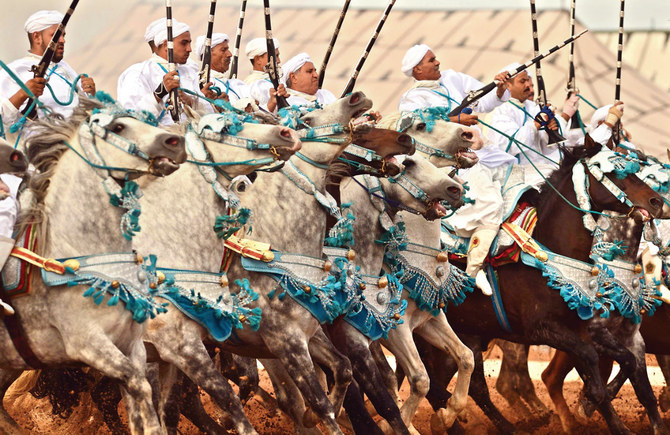
The UN Educational, Scientific and Cultural Organization (UNESCO) announced the listing on Twitter, along with that of Morocco’s tbourida equestrian performance.
They were among 48 nominees from around the world considered for inscription on the Intangible Cultural Heritage of Humanity list at an annual UNESCO-led meeting.
Bahrain’s Fjiri dates to the late 19th century when “it was traditionally performed by pearl divers and pearling crews to express the hardships faced at sea,” UNESCO said on its website.
“The performers sit in a circle, singing and playing different types of drums, finger chimes and a jahl, a clay pot used as an instrument,” it added.
“The center of the circle is occupied by the dancers and the lead singer.”
Fjiri “is viewed as a means of expressing the connection between the Bahraini people and the sea,” UNESCO said.
Tbourida, also known as “fantasia,” is even older.
It dates from the 16th century and “simulates a succession of military parades, reconstructed according to ancestral Arab-Amazigh conventions and rituals,” UNESCO said.
Performances conclude with a round of gunfire.
“The riders’ customs and costumes represent their tribe or region, and transmission takes place from generation to generation within families, through oral traditions and by observation.”
Bahrain and Morocco were also among 16 Muslim-majority countries that presented the nomination of Arabic calligraphy, a tradition in the Arab and Islamic worlds, which was earlier added to the heritage list during this week’s meeting.
Also listed Wednesday was “the art of Palestinian embroidery.”
In its recognition, the UN agency said the craft of intricate stitching began in villages, where women wear long dresses, trousers, a jacket, a headdress and a veil, each styled with embroidery.
“Originally made and worn in rural areas, the practice is now common in all of Palestine and among members of the diaspora,” the UN agency wrote.
The list of intangible heritage now includes almost 500 inscriptions.


![]()

Moroccan, Bahrain performances join UN heritage list
Short Url
https://arab.news/pvszu
Moroccan, Bahrain performances join UN heritage list
- Bahrain's Fjiri and Morocco's tbourida among 48 nominees considered for inscription on the Intangible Cultural Heritage of Humanity list


Latest updates


Recommended


© 2026 SAUDI RESEARCH & PUBLISHING COMPANY, All Rights Reserved And subject to Terms of Use Agreement.